Why Are Young Men Falling Behind in America?
TL;DR
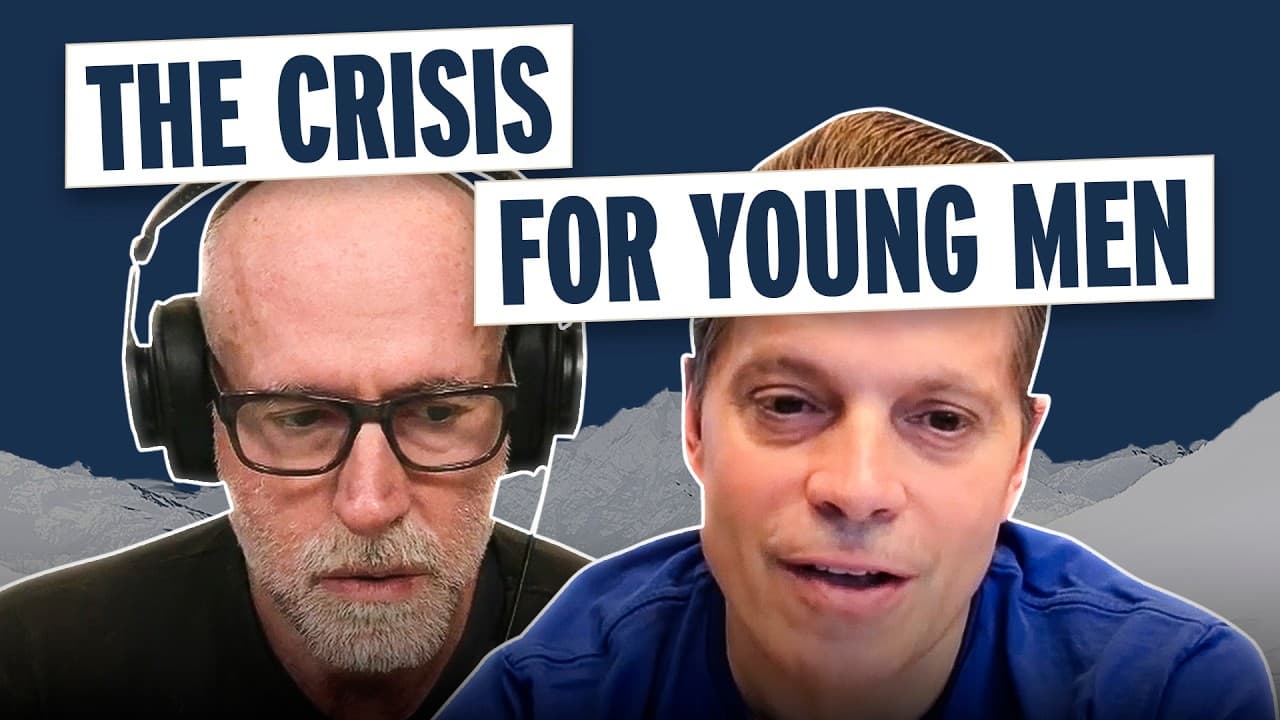
Young men are falling behind across education, employment, health, and social outcomes, while society has not created a positive modern role for them. Richard Reeves argues that economic restructuring and the disappearance of a clear male script have left many men improvising, with public messages emphasizing what men should avoid instead of offering constructive expectations, opportunities, and support.
Transcript
We've outsourced a lot of our our manufacturing jobs. One-third of jobs used to require a college degree. Now it's 2/3. What happened to wood shop, metal shop, auto shop? Now that we've leveled the playing field in education in my industry, women have just blown by men. You know, at NYU, we don't like to talk, we don't say this out loud, there are ... Read More
Key Insights
- Young men's difficulties are visible across multiple outcomes, including education, wages, employment, suicide, addiction, and incarceration. The discussion presents these connected problems as evidence of a broad social crisis rather than a single failure of motivation, manners, or individual character.
- Male suicide is disproportionately common among young people, according to a statistic cited by Scott Galloway. He says that if five young people in a morgue died by suicide, four of them would be men, illustrating the severity of male distress.
- Economic restructuring has reduced pathways that previously supported many men without college degrees. The conversation points to outsourced manufacturing jobs and says that the share of jobs requiring a college degree increased from one-third to two-thirds.
- Practical education has lost prominence in schools, as reflected in the disappearance of wood shop, metal shop, and auto shop. The opening argument connects this change to shrinking opportunities for young men whose strengths or interests may not align with a college-centered pathway.
- Women's educational progress is described as a major and positive expansion of opportunity. Galloway notes that more women than men seek tertiary education globally, while Reeves argues that empowering girls with autonomy, independence, and assertiveness helped replace their former restrictive social script.
- The traditional male script centered on being the breadwinner, economic provider, and head of household. Reeves argues that society rejected this model without establishing a positive replacement, leaving many young men to improvise their identities and responsibilities.
- Modern messages about masculinity are often framed as prohibitions, according to Reeves. Instructions not to be toxic or mansplain may address real concerns, but they do not answer his central question about what a 24-year-old man should positively do with his life.
- Societal and economic forces are presented as the primary causes of young men's decline. The opening rejects the idea that insufficient respect for men is a complete explanation, emphasizing that several larger dimensions contribute to their worsening position.
Install to Summarize YouTube Videos and Get Transcripts
Explore YouTube Video Summarizer or Get YouTube Transcript Extractor
Questions & Answers
Q: Why are young men falling behind in America?
Young men are falling behind because several economic, educational, and cultural changes are operating together. The discussion identifies outsourced manufacturing, a labor market increasingly requiring college degrees, and the decline of practical school subjects as major factors. Reeves also argues that society removed the traditional male role of breadwinner and provider without offering an affirmative modern replacement, leaving many men without clear direction.
Q: How has the changing labor market affected young men?
The changing labor market has weakened routes that once allowed men without college degrees to build stable working lives. The transcript says many manufacturing jobs were outsourced and that the proportion of jobs requiring a college degree rose from one-third to two-thirds. These shifts place greater importance on academic credentials while reducing access to the kinds of industrial and practical work that previously supported many men.
Q: What happened to vocational education for young men?
Vocational and practical subjects became less visible as education moved toward a college-centered model. The discussion specifically asks what happened to wood shop, metal shop, and auto shop, presenting their disappearance as part of the problem. The implication is that schools now provide fewer recognized pathways for students who might thrive through practical skills rather than through the academic route associated with earning a college degree.
Q: What does Richard Reeves mean by the male script?
The male script refers to the traditional expectation that a man would become the economic provider, breadwinner, and head of his household. Reeves says earlier generations often understood this role without needing to negotiate it explicitly. Society later rejected that restrictive script, but unlike the empowering replacement offered to women, it did not give men a clear and positive account of modern masculinity, responsibility, and purpose.
Q: Why does Reeves say young men are improvising their identities?
Reeves says young men are improvising because the traditional expectations attached to manhood were removed without being replaced by a constructive modern model. Women received an expanded message that they could become leaders, chief executives, or anything else they chose. Men, by contrast, often hear a list of behaviors to avoid. That negative guidance does not provide a practical answer about what a young man should pursue or contribute.
Q: How does women's progress relate to men's struggles?
Women's progress provides important context, but the discussion does not treat it as a mistake or as something that should be reversed. Galloway calls women's global advancement wonderful, noting growth in parliamentary representation and tertiary education. Reeves describes it as a major economic liberation. The concern is that institutions successfully developed an empowering new script for women while failing to create a similarly constructive modern framework for men.
Q: What evidence suggests young men are in crisis?
The participants point to disadvantages across education, wages, and employment, along with stark health and social outcomes. Galloway says four out of five young people who die by suicide are men. He also says men are three times as likely to be addicted and 12 times as likely to be incarcerated. Together, these cited patterns support the claim that the problem extends beyond uncertainty about identity.
Q: What kind of guidance does Reeves think young men need?
Reeves argues that young men need a positive list of responsibilities and possibilities, not only warnings about unacceptable conduct. Messages such as avoiding toxicity or mansplaining may identify behaviors people want to discourage, but they offer no affirmative direction. His central challenge is to define the constructive things a 24-year-old man should do, giving young men clearer expectations around identity, contribution, and adult life.
Summary & Key Takeaways
-
Young men face serious disadvantages across several measured outcomes. The discussion cites their overrepresentation in suicide, addiction, and incarceration, alongside difficulties in education, wages, and employment. The participants frame these patterns as an overlooked social problem that deserves careful research, public attention, and solutions that do not diminish women's progress.
-
Economic and educational conditions have changed substantially. Manufacturing jobs have been outsourced, more jobs now require college degrees, and practical school subjects such as wood shop, metal shop, and auto shop have disappeared. Meanwhile, women have advanced rapidly in tertiary education, producing a widening imbalance between male and female educational outcomes.
-
Traditional gender scripts once gave men a defined role as breadwinners, economic providers, and heads of households. Society discarded that script but did not replace it with an affirmative modern alternative. Reeves argues that young men now receive many warnings about unacceptable behavior but too little guidance about constructive responsibilities, relationships, and purpose.
Read in Other Languages (beta)
Share This Summary 📚
Summarize YouTube Videos and Get Video Transcripts with 1-Click
Try YouTube Summary with ChatGPT & Claude or YouTube Transcript Generator
Explore More Summaries from The Prof G Pod – Scott Galloway 📚






Summarize YouTube Videos and Get Video Transcripts with 1-Click
Try YouTube Summary with ChatGPT & Claude or YouTube Transcript Generator