How to Learn Cloud Computing and AWS Basics
TL;DR
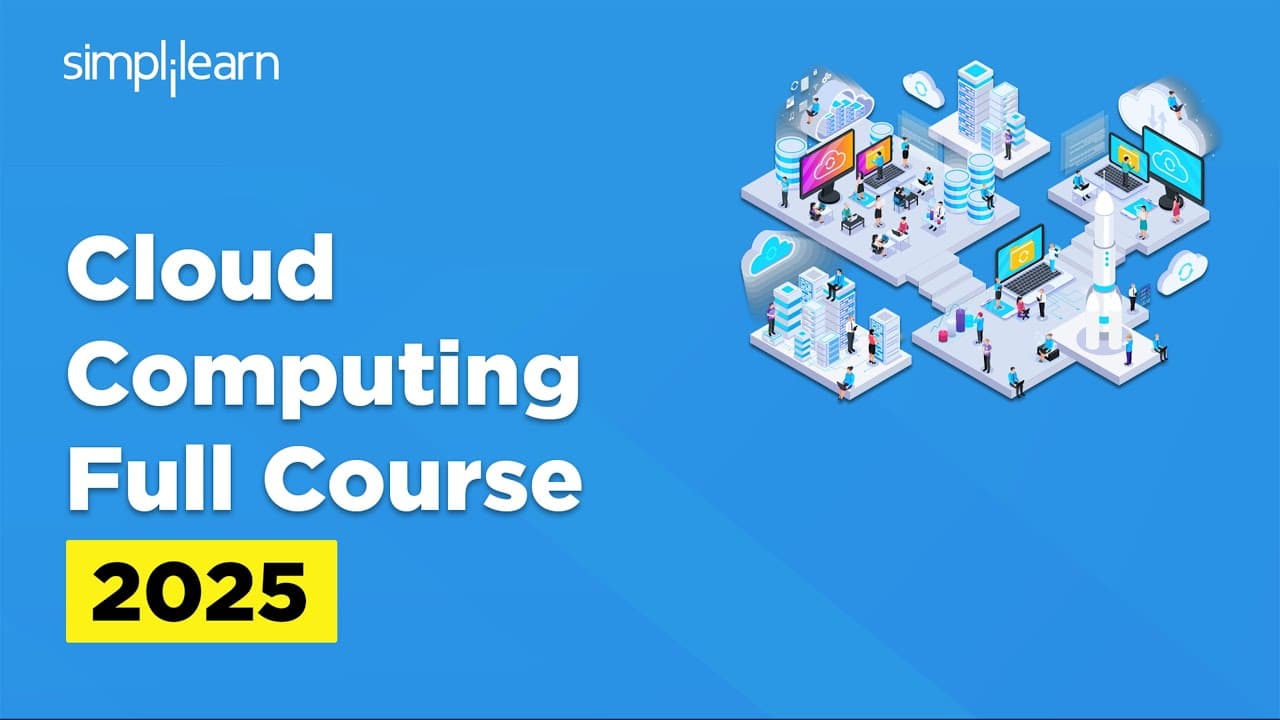
Cloud computing delivers storage, processing, networking, and other computing services over the internet with pay-as-you-go pricing. Organizations can scale resources more easily than with on-premises infrastructure, while providers handle varying amounts of maintenance depending on whether customers choose infrastructure, platform, or software as a service.
Transcript
hello and welcome to this cloud computing full course by simply learn did you know that the cloud Engineers are among the most inine professionals today as more companies shift online cloud computing is rapidly expanding making skilled Cloud professional highly valuable with excellent salaries and career growth opportunities it's great time to ente... Read More
Key Insights
- Cloud computing is the delivery of on-demand computing services over the internet using pay-as-you-go pricing. It allows organizations to manage files, applications, processing, storage, and networking without relying entirely on local devices or infrastructure.
- On-premises infrastructure is harder to scale down after capacity has been purchased. Cloud computing provides faster options for increasing or decreasing resources, helping businesses accommodate unpredictable demand while paying according to their actual service usage.
- Cloud providers are responsible for managing and maintaining the physical servers behind their services. This arrangement can save customers space, power, maintenance effort, and the expense of employing additional teams to support hardware and software.
- Public, private, and hybrid clouds are the three deployment models presented. Public infrastructure is available over the internet, private infrastructure is dedicated to one organization, and hybrid infrastructure combines the functions of both approaches.
- Infrastructure as a service provides access to basic resources such as storage and virtual machines. Customers manage applications, data, runtime, middleware, and operating systems, while the cloud provider handles the remaining underlying infrastructure components.
- Platform as a service provides environments for developing, testing, deploying, and managing applications. Customers are responsible for applications and data, while providers manage runtime, middleware, operating systems, servers, storage, and other supporting components.
- Software as a service places all solution components under the cloud provider's management. It is suited to organizations that want hosted software applications without taking responsibility for the associated hardware, software requirements, or IT equipment.
- AWS is a secure cloud platform offering compute, storage, database, networking, and additional services through pay-as-you-go pricing. Named examples include EC2, Lambda, S3, RDS, DynamoDB, VPC, Route 53, and Elastic Load Balancing.
Install to Summarize YouTube Videos and Get Transcripts
Explore YouTube Video Summarizer or Get YouTube Transcript Extractor
Questions & Answers
Q: What is cloud computing and how does it work?
Cloud computing is the delivery of on-demand computing services over the internet using pay-as-you-go pricing. Instead of managing files, applications, storage, processing power, and networking only through local infrastructure, customers obtain those capabilities from cloud providers. The provider operates the supporting systems, while customer responsibilities vary according to the selected deployment and service model.
Q: How does cloud computing compare with on-premises infrastructure?
Cloud computing offers easier scaling, usage-based pricing, provider-managed servers, and reduced internal maintenance requirements. On-premises systems require space, power, hardware, software, and dedicated maintenance resources. They can also be expensive to scale and difficult to reduce after expansion. Cloud services allow capacity to increase or decrease more quickly as business demand changes.
Q: What are public, private, and hybrid cloud deployment models?
A public cloud makes provider-owned infrastructure available over the internet. A private cloud is operated exclusively for one organization and may be managed by that organization or a third party. A hybrid cloud combines functions from public and private clouds. The course compares these choices to traveling by bus, personal car, or cab.
Q: What is infrastructure as a service in cloud computing?
Infrastructure as a service, or IaaS, gives customers access to basic computing infrastructure such as virtual machines and storage. The customer manages applications, data, runtime, middleware, and the operating system. The cloud provider manages the remaining infrastructure. The model is commonly used by IT administrators when an organization needs foundational computing resources.
Q: What is platform as a service used for?
Platform as a service, or PaaS, supplies cloud platforms and runtime environments for developing, testing, deploying, and managing applications. Customers manage their applications and data rather than acquiring and maintaining the related architecture. The provider handles runtime, middleware, operating systems, servers, storage, and other components supporting the application development environment.
Q: What is software as a service and who manages it?
Software as a service, or SaaS, provides hosted and managed software applications through the cloud. The vendor satisfies the associated software and hardware requirements, so the customer does not manage those parts of the solution. Under this model, the cloud provider handles every component required to deliver the software service to the organization.
Q: What is AWS and what benefits does it provide?
AWS, or Amazon Web Services, is a secure cloud computing platform that offers computing power, databases, networking, content storage, and other capabilities. It uses pay-as-you-go pricing, so customers pay according to service usage. The platform is presented as secure, flexible, easy to use, and scalable, with options for selecting operating systems, languages, and databases.
Q: Which AWS services support compute, storage, databases, and networking?
AWS compute services named in the course include EC2, AWS Lambda, Amazon Lightsail, and Elastic Beanstalk. Storage examples include Amazon S3, EBS, S3 Glacier, and Elastic File Storage. Database offerings include Amazon RDS, DynamoDB, and Redshift. Networking examples include Amazon VPC, Route 53, and Elastic Load Balancing.
Summary & Key Takeaways
-
Cloud computing replaces locally managed resources with on-demand services delivered over the internet. Compared with on-premises infrastructure, it supports faster scaling, usage-based costs, provider-managed servers, stronger disaster recovery measures, and reduced maintenance requirements. These characteristics help organizations respond to changing demand without permanently purchasing capacity for peak usage.
-
Cloud deployment models include public, private, and hybrid clouds. A public cloud offers provider-owned infrastructure over the internet, while a private cloud serves one organization and may be managed internally or by a third party. A hybrid cloud combines capabilities from public and private environments to address different organizational requirements.
-
Cloud service models divide management responsibilities among customers and providers. IaaS supplies foundational infrastructure while customers manage several software layers. PaaS lets customers focus mainly on applications and data. SaaS places responsibility for every solution component with the provider. AWS demonstrates these models through scalable compute, storage, database, and networking services.
Read in Other Languages (beta)
Share This Summary 📚
Summarize YouTube Videos and Get Video Transcripts with 1-Click
Try YouTube Summary with ChatGPT & Claude or YouTube Transcript Generator
Explore More Summaries from Simplilearn 📚



Summarize YouTube Videos and Get Video Transcripts with 1-Click
Try YouTube Summary with ChatGPT & Claude or YouTube Transcript Generator