What Is Supply Chain Management and How Does It Work?
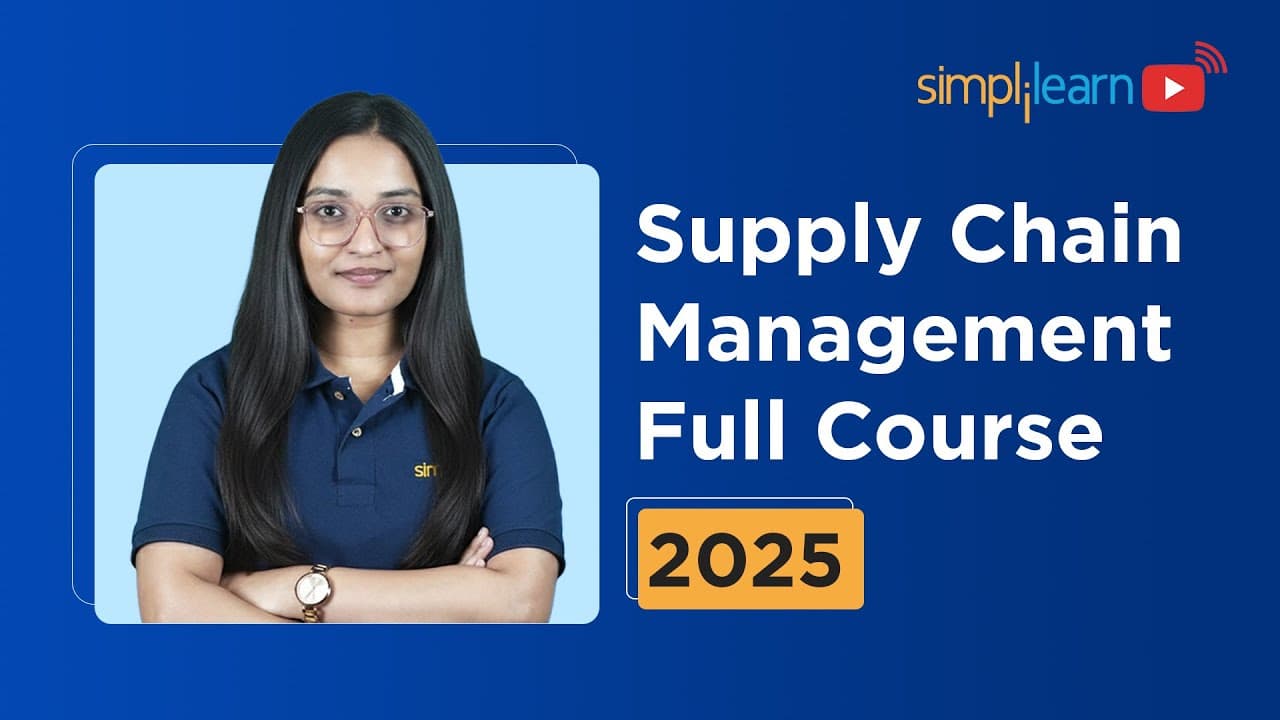
TL;DR
Supply chain management is a coordinated network of people, companies, resources, and technology that moves products from raw materials to the customer's hands. It runs through five stages: planning, sourcing, manufacturing, delivery, and returns. Pioneered by Henry Ford in the early 1900s, it cuts costs, boosts efficiency, and gives businesses a competitive edge.
Transcript
Welcome to our supply chain management full course by Simply. Every product you've ever bought has been an incredible journey to reach you. From raw materials in a factory to the moment you unbox your purchase, there's a whole system making it happen. That system is called supply chain management and it's one of the most important skills in busines... Read More
Key Insights
- Supply chain management is a coordinated network of people, companies, resources, activities, and high-tech systems working together to create and deliver products and services from raw materials to the finished product in the buyer's hands.
- Henry Ford and his team at Ford Motor Company originated modern supply chain management in the early 1900s, integrating every stage from sourcing raw materials to assembling cars and distributing them to dealerships to meet soaring demand.
- The five key stages of most supply chains are planning, sourcing, manufacturing, delivery, and returns, with returns covering repairs, reconditioning, recycling, and reverse logistics for unwanted goods.
- The core players in a supply chain are suppliers, manufacturers, distributors, retailers, and customers, all connected through procurement, manufacturing, warehousing, and transportation networks.
- Supply chain management professionals typically earn between $110,000 and $141,000 per year or more because companies rely heavily on their expertise to coordinate the complex moving pieces of getting products made and delivered.
- Supply chains come in different types: continuous or lean chains focused on minimizing waste, agile chains built for fast-changing needs, sustainable chains emphasizing ethical sourcing, and humanitarian chains delivering emergency relief.
- Effective supply chain management drives economic growth by keeping prices stable, preventing shortages, promoting innovation, and encouraging collaboration and communication across industries.
- The supply chain industry is undergoing a major digital transformation, with companies embracing technologies like AI, IoT, automation, and blockchain to deliver products faster, cheaper, and more efficiently than competitors.
Install to Summarize YouTube Videos and Get Transcripts
Explore YouTube Video Summarizer or Get YouTube Transcript Extractor
Questions & Answers
Q: What is supply chain management?
Supply chain management is a well-coordinated network of people, companies, resources, activities, and high-tech systems all working together to create and deliver products and services to customers. It covers everything from sourcing raw materials to getting the finished product into the buyer's hands. The key players are suppliers, manufacturers, distributors, retailers, and customers, and professionals oversee the entire supply and demand process to keep it running smoothly from start to finish.
Q: Who invented modern supply chain management?
Henry Ford and his team at Ford Motor Company came up with the concept of supply chain management in the early 1900s. As demand for their cars went through the roof, they needed a better way to coordinate the many suppliers, manufacturers, and distributors involved. They developed strategies to integrate and coordinate every stage of production, from sourcing raw materials to assembling cars and distributing them to dealerships and customers, which slashed costs and raised efficiency.
Q: What are the five stages of a supply chain?
Most supply chains can be divided into five key stages. Planning is where teams predict demand and decide what they will need. Sourcing involves identifying suppliers, negotiating contracts, and procuring materials. Manufacturing transforms raw materials into finished products with quality control. Delivery focuses on transportation, warehousing, and distributing goods to retailers and customers. Returns handles product returns, repairs, reconditioning, recycling, or disposal, putting reverse logistics into action.
Q: How much do supply chain management professionals earn?
Supply chain management professionals typically earn a salary ranging from $110,000 to $141,000 per year, or even more. Companies pay them well because they rely heavily on their expertise to choreograph and coordinate all the complex moving pieces involved in getting products made and delivered without hiccups. Their special skills in keeping products and services moving efficiently from suppliers to customers are highly prized, and they are paid top dollar to be the mastermind behind the scenes.
Q: What are the different types of supply chains?
Supply chains can be categorized by their structure and purpose. Continuous or lean supply chains focus on minimizing waste and maximizing efficiency, common in manufacturing. Agile supply chains are nimble and responsive to rapidly evolving customer needs, seen in fast-paced industries like fashion and retail. Sustainable supply chains emphasize ethical sourcing and minimizing ecological impact. Humanitarian supply chains focus on delivering life-saving aid, supplies, and relief efforts during emergencies and natural disasters worldwide.
Q: Why does effective supply chain management matter for businesses?
Effective supply chain management is a game-changer for businesses because it lets them optimize their processes, reduce costs, and improve efficiency. With a well-managed supply chain, companies can deliver products to customers faster and more reliably, gaining a competitive edge in the market. It also drives economies forward by ensuring the smooth flow of goods and services, keeping prices stable, preventing shortages, promoting innovation, and fostering economic growth on both local and global scales.
Q: How does a supply chain actually work?
Supply chain management is a chain of interconnected processes. It starts with procurement, where companies source raw materials and supplies from suppliers. Next is manufacturing, which transforms those raw materials into finished products. From there, the goods are distributed through a network of warehouses and transportation channels until they reach retailers and customers. Effective inventory management, demand forecasting, and smart logistics are crucial components that keep everything running smoothly throughout the entire journey.
Q: How is technology changing supply chain management?
The supply chain industry is undergoing a massive digital transformation, and companies that embrace new technology are outpacing competitors by delivering products faster, cheaper, and more efficiently. With smart software and advanced systems, the way products move around the world is changing, and businesses need people who understand this new digital landscape. Emerging skills in AI, IoT, automation, and blockchain, such as using AI to predict demand and building smart contracts, are becoming central to modern supply chain work.
Summary & Key Takeaways
-
Supply chain management is the coordinated system that moves every product from raw materials in a factory to the moment you unbox your purchase. It is a network of suppliers, manufacturers, distributors, retailers, and customers using resources and high-tech systems to deliver goods and services efficiently.
-
The concept originated with Henry Ford at Ford Motor Company in the early 1900s, when soaring car demand forced them to coordinate thousands of parts and suppliers. Their strategies to integrate every production stage slashed costs and ramped up efficiency, spreading the practice across industries.
-
Most supply chains run through five stages: planning demand, sourcing suppliers and materials, manufacturing finished products, delivering through warehousing and transportation, and handling returns. Chains vary by type, including lean, agile, sustainable, and humanitarian, and a digital transformation using AI, IoT, and blockchain is reshaping the field.
Read in Other Languages (beta)
Share This Summary 📚
Summarize YouTube Videos and Get Video Transcripts with 1-Click
Try YouTube Summary with ChatGPT & Claude or YouTube Transcript Generator
Explore More Summaries from Simplilearn 📚

![Digital Marketing Full Course 2026 [FREE] | Digital Marketing Tutorial for Beginners | Simplilearn thumbnail](/_next/image?url=https%3A%2F%2Fi.ytimg.com%2Fvi%2F5altc8xTzBg%2Fhqdefault.jpg&w=750&q=75)

Summarize YouTube Videos and Get Video Transcripts with 1-Click
Try YouTube Summary with ChatGPT & Claude or YouTube Transcript Generator