How to Use Common English Phrasal Verbs
TL;DR
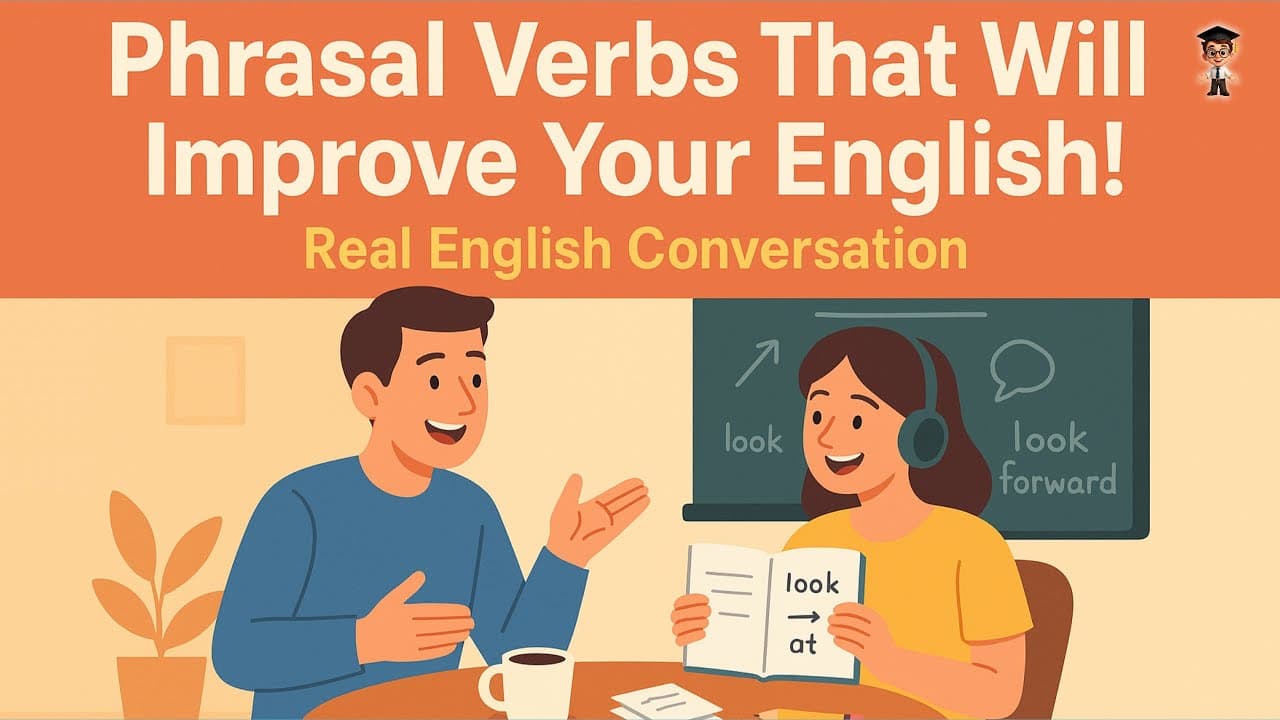
Phrasal verbs combine a verb with one or more small words to create a new meaning, such as “look for” meaning search and “put off” meaning delay. Beginners can improve their natural English by learning them through clear situations, listening for them in movies or songs, and practicing one useful expression at a time.
Transcript
Hello everyone and welcome back to Mr. English Channel where learning English is easy and fun. I'm Emily. Hello Emily. Hello to everyone listening. It's wonderful to be back with you today. It is. How are you doing Paul? I am doing very well, thank you. I had a nice quiet weekend. I feel very relaxed. Oh, that sounds perfect. How about you? I am gr... Read More
Key Insights
- A phrasal verb is a verb combined with one or more small words, such as “for,” “after,” “on,” or “off.” The combination creates a new meaning that may differ considerably from the meaning of the original verb by itself.
- “Look for” means to search, while “look after” means to take care of a person, animal, or plant. “Look forward to” expresses positive excitement about something expected in the future, such as a birthday, meeting, or weekend.
- “Put on” means to place clothing on your body, and “put away” means to return objects to their proper places. “Put off” means to delay an activity or event until a later time and is an everyday alternative to “postpone.”
- Transport phrasal verbs depend on the vehicle. People get on and get off buses, trains, bicycles, and airplanes, while they get in and get out of cars or taxis. The lesson associates larger transport with “on” and smaller vehicles with “in.”
- “Get along with” means to have a good relationship with another person. Someone who gets along with a sibling or colleague likes that person and has few problems, while people who do not get along may argue or lack friendship.
- “Turn on” and “turn off” control lights, televisions, computers, and other machines. “Turn up” makes volume louder, while “turn down” makes it quieter. In another common use, “turn up” means to arrive, especially unexpectedly or late.
- “Give up” means to quit or stop trying when an activity becomes difficult. The lesson encourages English learners not to give up, but to continue practicing even when puzzles, habits, or language study present challenges.
- “Find out” means to discover a fact or obtain information, while “find” is presented as locating an object. A person may find some keys, but find out a restaurant’s name, what happened in the news, or when a train leaves.
Install to Summarize YouTube Videos and Get Transcripts
Explore YouTube Video Summarizer or Get YouTube Transcript Extractor
Questions & Answers
Q: What is a phrasal verb in English?
A phrasal verb combines a verb, such as “look” or “put,” with one or more small words, such as “for,” “after,” “on,” or “off.” Together, the words create a new meaning. For example, “look” relates to using your eyes, but “look for” means to search for something, such as your keys or phone.
Q: How do I use look for, look after, and look forward to?
Use “look for” when searching for something, as in “I am looking for my keys.” Use “look after” when taking care of a person, animal, or plant, such as looking after a friend’s cat. Use “look forward to” when expressing happy anticipation about a future event, such as a birthday or the weekend.
Q: What is the difference between put on, put away, and put off?
“Put on” refers to wearing clothing, as in putting on a jacket or coat. “Put away” means placing an object in its correct location, such as returning dishes to a cupboard or toys to their storage place. “Put off” means delaying an activity or event, such as moving a meeting from today until Friday.
Q: When should I use get on instead of get in?
Use “get on” when entering a bus, train, bicycle, or airplane, and use “get off” when leaving it. Use “get in” when entering a car or taxi, and “get out of” when leaving it. The lesson summarizes the distinction by associating larger vehicles with “on” and smaller vehicles with “in.”
Q: What does get along with mean?
“Get along with” means to have a good relationship with someone and generally like each other without major problems. A person can say, “I get along with my brother” or “I get along with my colleagues.” If two people argue or are not friends, you can say that they do not get along.
Q: How do turn on, turn off, turn up, and turn down differ?
“Turn on” starts a light, television, computer, or another machine, while “turn off” stops it. For sound, “turn up” means to increase the volume and make it louder, while “turn down” means to decrease the volume and make it quieter. “Turn up” can also mean to arrive, sometimes late or unexpectedly.
Q: What does give up mean in everyday English?
“Give up” means to stop trying or to quit an effort. Someone might give up because a puzzle is too difficult or because changing a habit feels hard. The lesson also uses the encouraging phrase “do not give up” for English learners, meaning they should continue listening, studying, and practicing rather than stopping their efforts.
Q: What is the difference between find and find out?
“Find” is used in the lesson for locating an object, such as finding your keys. “Find out” is used for discovering information or learning a fact. You can find out the name of a restaurant, what happened by watching the news, or what time a train leaves. The distinction is objects versus information.
Summary & Key Takeaways
-
Phrasal verbs are combinations of verbs and small words that produce meanings different from the original verbs. The lesson begins with “look for” for searching, “look after” for taking care of someone or something, and “look forward to” for feeling happy and excited about a future event.
-
The lesson connects common phrasal verbs to everyday actions. “Put on” relates to clothing, “put away” means returning something to its correct place, and “put off” means delaying it. Transport expressions include getting on or off buses and trains, but getting in or out of cars and taxis.
-
Additional expressions cover relationships, devices, persistence, and information. “Get along with” describes a good relationship, while “turn on,” “turn off,” “turn up,” and “turn down” control machines or volume. “Give up” means stopping an attempt, and “find out” means discovering information rather than locating an object.
Read in Other Languages (beta)
Share This Summary 📚
Summarize YouTube Videos and Get Video Transcripts with 1-Click
Try YouTube Summary with ChatGPT & Claude or YouTube Transcript Generator
Explore More Summaries from Mr. English Channel 📚
Summarize YouTube Videos and Get Video Transcripts with 1-Click
Try YouTube Summary with ChatGPT & Claude or YouTube Transcript Generator