How Does the Fed's Rate Cut Impact Economy?
TL;DR
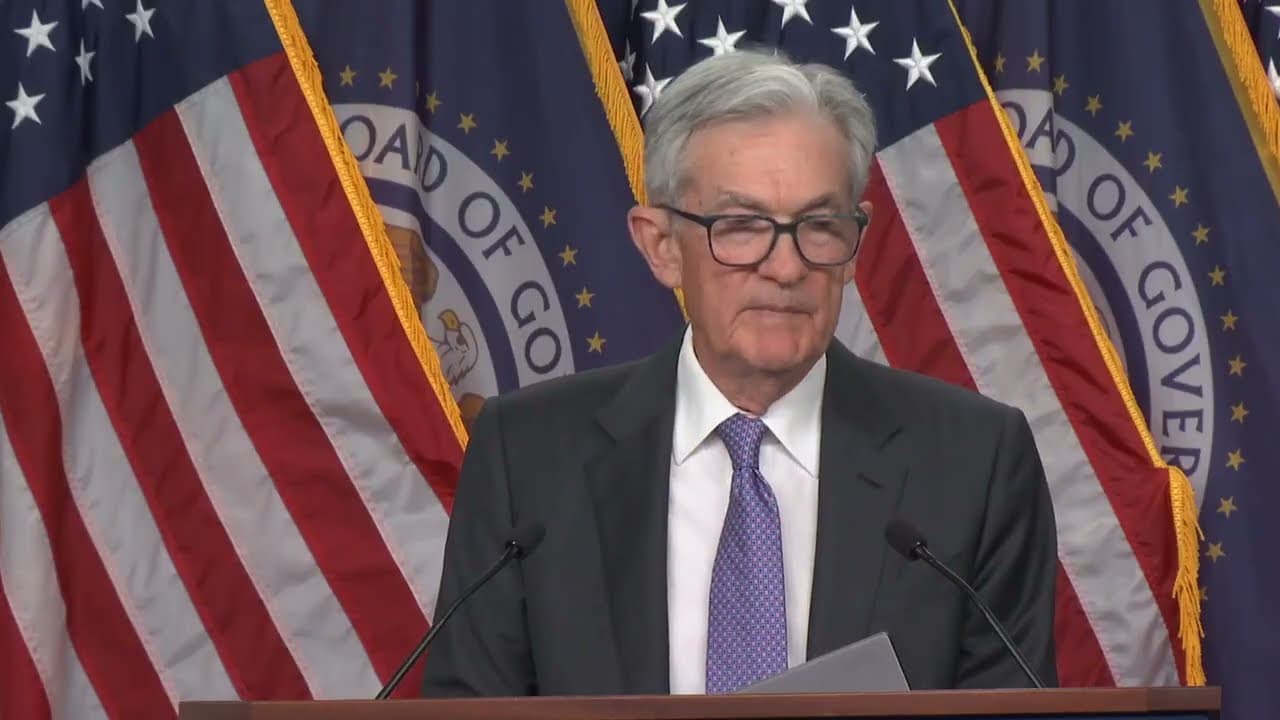
The Federal Open Market Committee decided to lower the policy interest rate by a quarter percentage point to address cooling labor markets and elevated inflation. They also initiated purchases of short-term Treasury securities to maintain ample reserves. The Fed aims to balance employment and inflation risks, ensuring stable economic growth while managing inflation expectations.
Transcript
Good afternoon. My colleagues and I remain squarely focused on achieving our dual mandate goals of maximum employment and stable prices for the benefit of the American people. Although important federal government data for the past couple of months have yet to be released, available public and private sector data suggests that the outlook for emplo... Read More
Key Insights
- The Federal Open Market Committee lowered the policy interest rate by 0.25% to address economic conditions.
- Labor markets are gradually cooling, with both layoffs and hiring remaining low.
- Inflation remains elevated, with total PCE prices rising 2.8% over the past year.
- The Fed initiated purchases of short-term Treasury securities to maintain reserve levels.
- Economic activity is expanding moderately, with solid consumer spending and business investment.
- The housing sector remains weak, partly due to a temporary federal government shutdown.
- The Fed's dual mandate focuses on maximum employment and stable prices.
- Inflation risks are tilted to the upside, while employment risks are to the downside.
Install to Summarize YouTube Videos and Get Transcripts
Explore YouTube Video Summarizer or Get YouTube Transcript Extractor
Questions & Answers
Q: How does the Fed's rate cut affect inflation and employment?
The Fed's rate cut aims to balance the risks between inflation and employment. By lowering the policy interest rate, the Fed seeks to support economic growth and stabilize the labor market, which is showing signs of cooling. At the same time, the Fed aims to manage inflation expectations and guide inflation back towards its 2% long-term goal. The rate cut is part of a broader strategy to ensure stable prices while promoting maximum employment.
Q: Why did the Fed decide to purchase short-term Treasury securities?
The Fed decided to purchase short-term Treasury securities to maintain an ample supply of reserves. This action supports the effective control of the policy rate and ensures that the federal funds rate remains within its target range. As the economy grows, the demand for the Fed's liabilities, including currency and reserves, increases. The purchases are intended to alleviate expected near-term pressures in money markets and are separate from the stance of monetary policy.
Q: What is the current outlook for economic growth according to the Fed?
The Fed's summary of economic projections indicates that real GDP is expected to rise by 1.7% this year and 2.3% next year, which is stronger than projected in September. Consumer spending remains solid, and business fixed investment continues to expand. However, the housing sector remains weak, and the temporary federal government shutdown has impacted economic activity in the current quarter. Overall, the Fed anticipates moderate economic growth with a focus on stabilizing the labor market and managing inflation.
Q: What are the main risks to employment and inflation identified by the Fed?
The Fed identifies that near-term risks to inflation are tilted to the upside, primarily due to goods inflation driven by tariffs. Meanwhile, risks to employment are to the downside, as the labor market shows signs of cooling with rising unemployment and declining job gains. The Fed aims to navigate these tensions by taking a balanced approach in its monetary policy decisions, promoting both stable prices and maximum employment.
Q: How does the Fed view the impact of tariffs on inflation?
The Fed views the impact of tariffs on inflation as a relatively short-lived, one-time shift in the price level. Goods inflation has picked up due to tariffs, contributing to the current inflation overshoot. The Fed's obligation is to ensure that this one-time increase does not become an ongoing inflation problem. As the effects of tariffs pass through, the Fed expects inflation to resume its downward trend towards the 2% goal.
Q: What factors are driving the Fed's optimistic growth outlook for next year?
The Fed's optimistic growth outlook for next year is driven by several factors, including resilient consumer spending, continued business investment, and supportive fiscal policy. Additionally, spending on AI and related technologies is expected to boost business investment. The Fed anticipates that these factors will contribute to a pickup in growth from the current relatively low level, despite ongoing challenges in the housing sector.
Q: How does the Fed's policy stance address the current economic conditions?
The Fed's policy stance reflects its dual mandate of promoting maximum employment and stable prices. By lowering the policy rate and purchasing Treasury securities, the Fed aims to stabilize the labor market while allowing inflation to trend downward. The Fed's stance is guided by incoming data, the evolving economic outlook, and the balance of risks. The Fed remains flexible and will make decisions on a meeting-by-meeting basis to address changing economic conditions.
Q: What are the implications of the Fed's decision for future monetary policy adjustments?
The Fed's decision to lower the policy rate and initiate Treasury purchases positions it to assess the extent and timing of future policy adjustments based on incoming data and evolving economic conditions. The Fed remains committed to its dual mandate and will carefully evaluate the balance of risks to employment and inflation. The adjustments since September have brought the policy stance within a range of plausible estimates of neutral, allowing the Fed to wait and see how the economy evolves before making further changes.
Summary & Key Takeaways
-
The Federal Open Market Committee decided to lower the policy interest rate by a quarter percentage point to address cooling labor markets and elevated inflation. They also initiated purchases of short-term Treasury securities to maintain ample reserves. The Fed aims to balance employment and inflation risks, ensuring stable economic growth while managing inflation expectations.
-
The labor market shows signs of softening, with gradual cooling observed and unemployment edging up. Despite a temporary federal government shutdown affecting economic activity, consumer spending remains solid. Inflation is still above the Fed's long-term goal, driven by goods inflation due to tariffs, while services disinflation continues.
-
The Fed's decision reflects its dual mandate of promoting maximum employment and stable prices. By lowering the policy rate and purchasing Treasury securities, the Fed seeks to stabilize the labor market while allowing inflation to trend downward. Future policy adjustments will depend on incoming data and evolving economic conditions.
Read in Other Languages (beta)
Share This Summary 📚
Summarize YouTube Videos and Get Video Transcripts with 1-Click
Try YouTube Summary with ChatGPT & Claude or YouTube Transcript Generator
Explore More Summaries from Federal Reserve 📚


Summarize YouTube Videos and Get Video Transcripts with 1-Click
Try YouTube Summary with ChatGPT & Claude or YouTube Transcript Generator