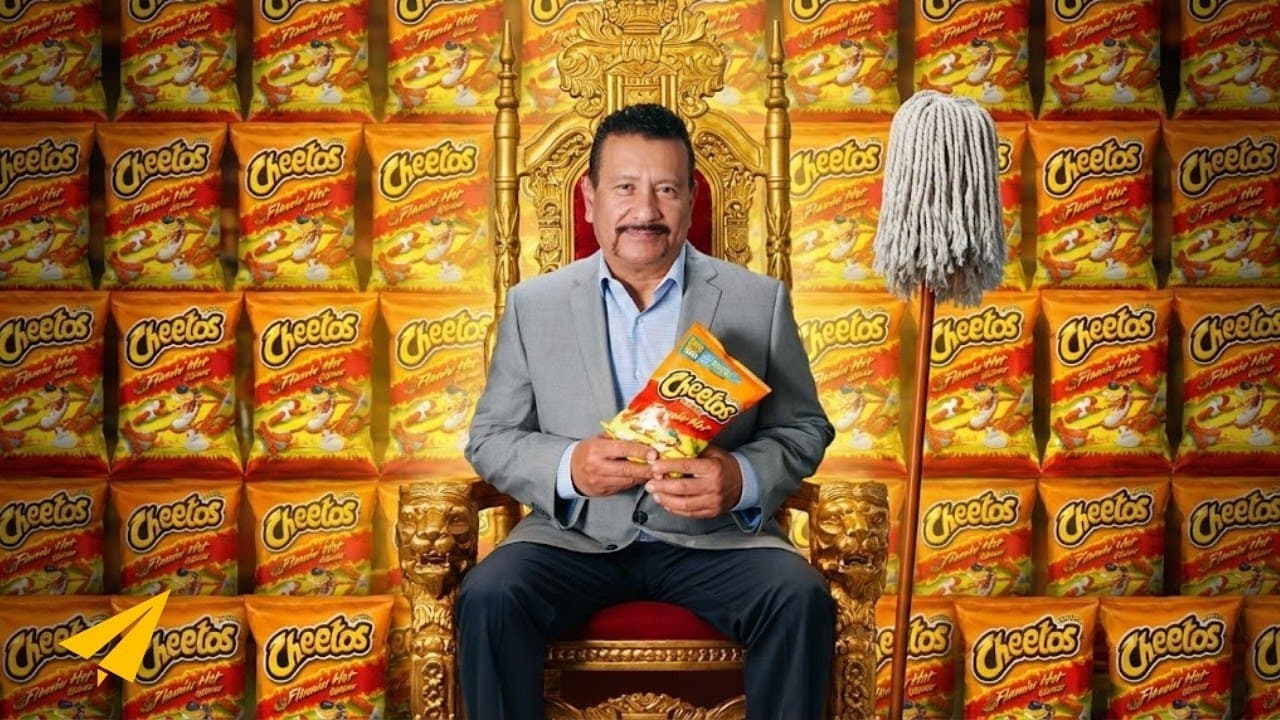
Did Richard Montanez Invent Flamin' Hot Cheetos?
TL;DR
Richard Montanez turned cultural insight, preparation, and the courage to contact Frito-Lay's CEO into a remarkable marketing career, although his claim to creating Flamin' Hot Cheetos remains disputed. His lasting contribution was recognizing an underserved Latino audience, advancing multicultural marketing, and demonstrating how employees can create opportunities by thinking beyond their assigned roles.
Transcript
Richard Montanz was a janitor at Fredo Lelay. Now he's the man who created Flaming Hot Cheetos, a snack that changed the world. Want to know how he went from sweeping floors to building a billion-dollar brand? Richard Montanz worked long hours as a janitor cleaning floors at Fredo, feeling invisible and stuck. But one night, he swept the factory fl... Read More
Key Insights
- Cultural experience can reveal unmet demand because Montanez noticed that Frito-Lay's products did not reflect the bold, spicy flavors enjoyed by his Mexican-American family and community. That observation led him to imagine snacks inspired by elote and designed for an underserved Latino audience.
- An owner's mindset means seeking ways to create value beyond a formal job description. After CEO Roger Enrico encouraged employees to act like owners, Montanez began examining product gaps and customer needs even though Frito-Lay had employed him to clean floors and bathrooms.
- Preparation can compensate for limited credentials when it is practical and focused. Montanez studied supermarket products, consulted a library book about marketing, developed a mock package, refined seasoning with his family, and practiced his presentation before approaching corporate executives.
- Initiative creates access to opportunities that formal status may not provide. Montanez contacted the CEO's office directly, identified himself as a janitor, and requested an opportunity to present a product idea instead of waiting for management to solicit his opinion.
- Inclusive marketing can support commercial growth by serving customers overlooked by existing products and messaging. The spicy snack concept addressed Latino tastes, while its reported success beyond Latino consumers suggested that culturally specific insights could also attract a broader market.
- The origin of Flamin' Hot Cheetos is disputed because a 2021 investigation found records indicating that a separate team in Plano, Texas, developed a similar concept around 1989. Frito-Lay could not directly connect Montanez's kitchen experiments to the released product.
- Innovation in a large company is usually collaborative because product managers, food scientists, marketers, executives, and local employees can contribute at different stages. PepsiCo credited the successful Flamin' Hot launch to multiple people while still recognizing Montanez's initiative and participation.
- Montanez's documented influence extended beyond the disputed invention claim through product development, multicultural sales, Hispanic marketing, scholarships, internships, mentoring, and charitable work. His career illustrates how cultural knowledge and employee advocacy can shape both business strategy and community investment.
Install to Summarize YouTube Videos and Get Transcripts
Explore YouTube Video Summarizer or Get YouTube Transcript Extractor
Questions & Answers
Q: How did Richard Montanez move from janitor to executive?
Richard Montanez joined Frito-Lay as a janitor in 1976 and treated the position with pride while looking for ways to add value beyond his assigned duties. After hearing CEO Roger Enrico encourage employees to act like owners, he identified an underserved Latino market, developed and pitched product ideas, and later received responsibilities in product development, marketing, and multicultural sales.
Q: Did Richard Montanez invent Flamin' Hot Cheetos?
The transcript presents Montanez's account but also explains that sole credit remains disputed. A 2021 Los Angeles Times investigation reported that internal records pointed to a separate Frito-Lay team in Plano, Texas, led by product manager Lynn Greenfield. Frito-Lay could not directly connect Montanez's kitchen product to the official release, while PepsiCo still recognized his initiative, contributions, and role among many participants.
Q: How did Mexican culture influence Montanez's snack idea?
Montanez believed Frito-Lay lacked snacks that reflected the tastes of his Mexican-American community. He drew inspiration from elote, grilled corn prepared with ingredients such as butter, mayonnaise, lime, and chili powder. His proposed seasoning sought to combine heat, citrus, and salt, while his marketing concept addressed Latino consumers who were not visibly represented in the company's products or packaging.
Q: How did Richard Montanez prepare his product pitch?
Montanez refined a homemade seasoning with his wife and family serving as taste testers. He visited a grocery store to examine how products were packaged and marketed, noticed the absence of Spanish-language messaging, consulted a library book about marketing, and created a mock Flamin' Hot Cheetos bag. He also wore his only clean suit and practiced his presentation before meeting executives.
Q: Why did Richard Montanez call Frito-Lay's CEO?
Montanez called Roger Enrico because he believed he had identified a product and marketing opportunity that Frito-Lay was missing. Rather than waiting for permission or for someone to request his opinion, he contacted the CEO's office, introduced himself as a janitor, and asked to present his idea. The call turned his observation into an opportunity for senior leaders to evaluate it.
Q: What happened during Montanez's executive presentation?
Montanez entered a boardroom with homemade product samples and faced about a dozen executives. When one executive requested formal market research, he stretched his arms wide and described a $500 million market share that he believed the company did not serve. Although the room laughed, CEO Roger Enrico recognized potential, and the company arranged test marketing in Los Angeles, Chicago, and Houston.
Q: What business lesson comes from the Flamin' Hot controversy?
The controversy shows that innovation inside a large organization may not have a single, clearly documented creator. Separate employees and teams can recognize similar opportunities, while product managers, food scientists, marketers, and executives contribute to development and launch. The transcript therefore distinguishes disputed sole authorship from Montanez's recognized initiative, multicultural marketing work, and broader contributions to the brand.
Q: What did Richard Montanez contribute beyond Flamin' Hot Cheetos?
Montanez helped extend the Flamin' Hot line to products including Doritos, Fritos, and Funyuns, and he supported the creation of Frito-Lay's Hispanic marketing team. He also advocated for culturally inclusive campaigns, launched scholarships and internships, mentored young professionals, co-founded One Light to provide food and school supplies, and served on the Southern Christian Leadership Conference board.
Summary & Key Takeaways
-
Richard Montanez grew up in poverty, struggled with English, left school in fourth grade, and began working at Frito-Lay as a janitor in 1976. Lessons from his family taught him to approach every task with pride, while the company's invitation to act like an owner encouraged him to seek opportunities beyond cleaning floors.
-
According to Montanez's account, unseasoned Cheetos inspired him to experiment at home with chili powder and other spices associated with Mexican street corn. He studied supermarket packaging, consulted a library marketing book, created a mock product bag, and called CEO Roger Enrico before presenting samples and an argument about the underserved Latino market.
-
A 2021 Los Angeles Times investigation reported that a separate Frito-Lay team developed the Flamin' Hot concept, leaving Montanez's invention claim disputed. PepsiCo nevertheless recognized his initiative, product contributions, and participation in the launch. His later work expanded multicultural marketing, supported Latino professionals, and demonstrated the organizational value of culturally informed ideas.
Read in Other Languages (beta)
Share This Summary 📚
Summarize YouTube Videos and Get Video Transcripts with 1-Click
Try YouTube Summary with ChatGPT & Claude or YouTube Transcript Generator
Explore More Summaries from Evan Carmichael 📚



Summarize YouTube Videos and Get Video Transcripts with 1-Click
Try YouTube Summary with ChatGPT & Claude or YouTube Transcript Generator