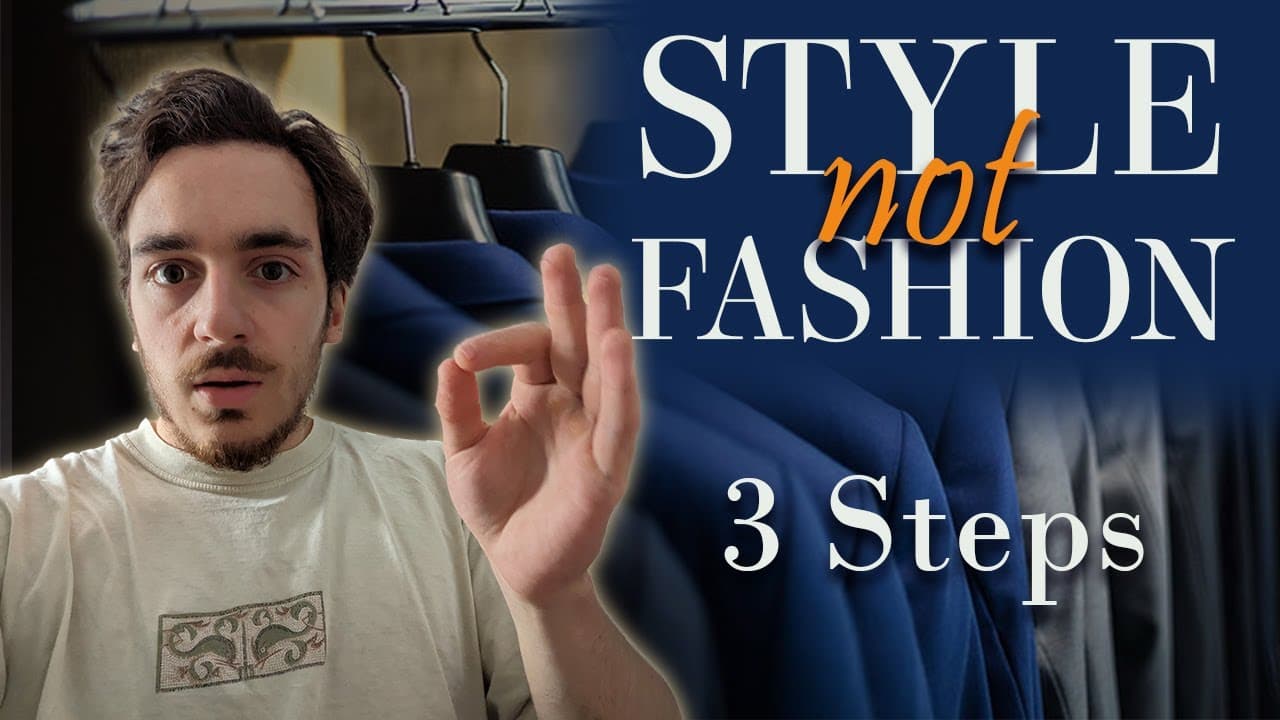
How to Build Your Individual Style (3 step guide)
TL;DR
Build your individual style in three steps: dress for your environment, work with your body, and choose clothes that reflect your personality. Consider the setting and climate, use features such as vertical lines to influence proportions, and prioritize a few comfortable, quality outfits over changing fashion trends. Read on for practical guidance on fabrics, formality, height, and wardrobe choices.
Transcript
foreign so this is a three-step sort of guide a Rough Guide that can hopefully guide you to developing your own individual sense of style and for many we don't have that and it's something we have to to actively work to build and it's challenging because at least for some for me especially it was almost paralyzing I didn't know what to buy I didn't... Read More
Key Insights
- ♻️ Developing an individual style involves considering your environment, body type, and personality.
- ♻️ Understanding your social and physical environment helps determine suitable attire and climate-appropriate fabrics.
- 💃 Dressing to enhance your body's strengths can create a more flattering appearance.
- 🌍 Personal style is a reflection of your personality and can be achieved by choosing outfits that send the desired message to the world.
- 🏛️ Assessing your current wardrobe preferences can serve as a foundation for building your individual style.
- 🛍️ Exploring thrift shops or seeking inspiration from others' outfits can help expand your clothing options.
- 🔬 Investing in a few quality outfits that make you feel comfortable and confident is essential.
Install to Summarize YouTube Videos and Get Transcripts
Explore YouTube Video Summarizer or Get YouTube Transcript Extractor
Questions & Answers
Q: How can you build your individual style in three steps?
First, consider your social and physical environment, including formality, temperature, humidity, and sun. Second, dress to emphasize your body's strengths and reduce attention on perceived drawbacks. Third, choose outfits that align with your personality and send the message you want others to receive.
Q: What is the difference between style and fashion?
Fashion consists of fluid trends that repeatedly come and go. Style focuses on timeless aspects of dressing that remain visually attractive and pleasant, so the guide recommends developing style instead of feeling obligated to follow trends.
Q: How does your environment affect your clothing choices?
Your social setting determines the appropriate formality level, what is acceptable to wear, and how far you can push the boundary. Your physical environment, including humidity, temperature, sun, and wind, determines which garments and fabrics will keep you comfortable.
Q: Which fabrics work for hot and cold climates?
In hot weather, the guide recommends breathable natural fabrics such as linen because it is light and airy. In cold or windy conditions, heavier options such as a tweed coat or wool can provide protection, while wool also regulates temperature well.
Q: Why should you be cautious about polyester and other artificial fabrics?
The guide says polyester and other artificial fabrics can retain sweat, block airflow, and be less permeable. Understanding these disadvantages, along with each fabric's benefits, helps you choose comfortable clothing for your climate.
Q: How many seasonal outfits do you need?
The guide suggests having a few outfits for each relevant weather condition, such as summer, autumn, and winter. Even a small selection can be enough when the items are chosen carefully, are good quality, and suit your environment.
Q: How can shorter people use clothing to appear taller?
Create an unbroken vertical line through patterns, colors, and fewer horizontal details so the eye moves upward rather than across the body. The guide suggests high-rise trousers and suspenders while avoiding belts, horizontal stripes, shirt pockets, and very broad hat brims.
Q: How can your wardrobe express your personality?
Clothing is a key part of how other people perceive you, so outfits and details should align with your character. Reviewing what you already like, seeking inspiration from other outfits or thrift shops, and choosing clothes that make you comfortable and confident can help shape that personal expression.
Summary & Key Takeaways
-
The first step in developing your individual style is to consider your environment, both social and physical, to determine the appropriate level of formality and suitable fabrics for your climate.
-
The second step involves dressing to emphasize your strengths and minimize any perceived weaknesses based on your body type, such as using vertical lines for shorter individuals or horizontal details for taller individuals.
-
The third step is to dress in a way that aligns with your personality and sends the desired message to the world, as our clothes are a key factor in how others perceive us.
Read in Other Languages (beta)
Share This Summary 📚
Summarize YouTube Videos and Get Video Transcripts with 1-Click
Try YouTube Summary with ChatGPT & Claude or YouTube Transcript Generator
Explore More Summaries from Odysseas 📚




Summarize YouTube Videos and Get Video Transcripts with 1-Click
Try YouTube Summary with ChatGPT & Claude or YouTube Transcript Generator