Why Can't College Grads Find Jobs in the AI Era?
TL;DR
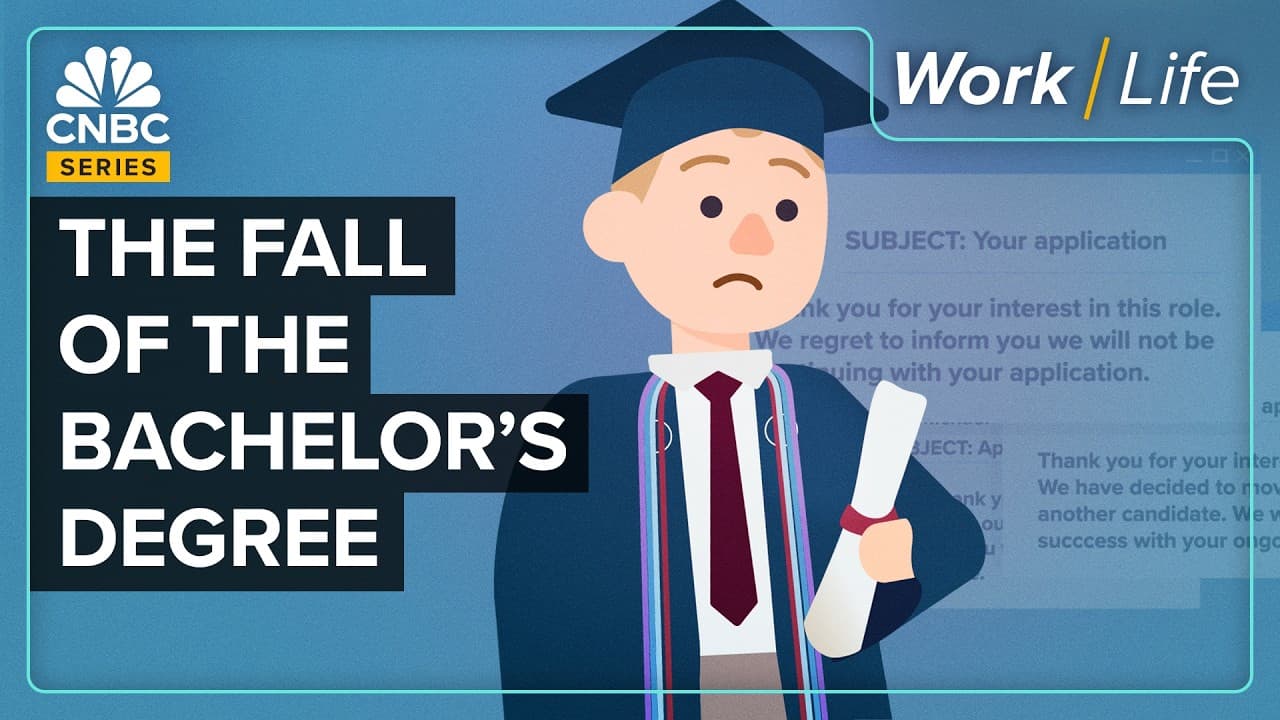
For the first time in modern history, a bachelor's degree is no longer a reliable path to professional employment. Youth unemployment for 16-to-24-year-olds hit 10.4% in September, and companies are hiring fewer entry-level workers as AI automates junior tasks. Job postings requiring AI skills have jumped 5x since 2023.
Transcript
On May 16th, 2025. I woke up and was ready to get into my graduation gown for the day of celebration of Villanova's graduation ceremony. My family and friends came from pretty much across the country to see me walk across the stage and receive my diploma. Michael. Sean. Mathias. Yeah Michael. I was really on top of the world. Super excited to ... Read More
Key Insights
- A bachelor's degree is no longer a reliable path to professional employment for the first time in modern history, as the demand for degree-holding workers stops increasing while their supply keeps rising, creating a glut of college graduates.
- Youth unemployment for U.S. workers aged 16 to 24 stood at 10.4% in September, trending upward since April 2023 when it dipped to 6.6%, the lowest point since the pandemic.
- A Stanford study found that since 2022, unemployment for 22-to-25-year-olds in highly AI-exposed jobs dropped 13%, while older workers and those in less exposed roles remained steady or growing.
- Goldman Sachs estimates AI could displace 6 to 7% of the U.S. workforce over the next decade, and Amazon announced layoffs of about 14,000 corporate employees as it restructures for the AI era.
- AI systems that write code at a junior level have gotten really good, lowering the need for junior engineers at tech companies and removing entry-level launch pads for new graduates.
- The number of young workers at large public technology companies fell by more than half between January 2023 and July 2025, according to compensation platform Pave, with private tech firms also declining.
- Rising youth unemployment can widen income inequality; an Oxfam report shows that between 1989 and 2022 the top 1% gained about 101 times more wealth than the median household, with political consequences expected.
- Handshake reports a 5x increase in job postings listing AI skills since 2023 and a 4x increase for internships, showing employers now want early talent fluent in using AI tools.
Install to Summarize YouTube Videos and Get Transcripts
Explore YouTube Video Summarizer or Get YouTube Transcript Extractor
Questions & Answers
Q: Is a college degree still worth it in the AI era?
According to the video, for the first time in modern history a bachelor's degree is no longer a reliable path to professional employment. The supply of workers with a bachelor's degree is increasing while demand is no longer rising, partly because of AI, creating a glut of college graduates. Their wage growth is slowing, and with AI automating more jobs, economists expect the trend to continue, making a degree alone less of a guarantee of a professional job.
Q: What is the current youth unemployment rate in the U.S.?
The unemployment rate among young U.S. workers aged 16 to 24 stood at 10.4% in September. It has generally been trending upward since April 2023, when it dipped to 6.6%, the lowest point since the pandemic, according to the Bureau of Labor Statistics. There has also been a particularly worrisome rise in unemployment among recent college graduates, who are usually considered some of the safest workers in the economy but whose pattern now seems to be flipping.
Q: How is AI affecting entry-level jobs for new graduates?
Artificial intelligence has allowed some corporate giants to hire fewer workers and shrink their workforces through automation. AI systems that write code, especially at junior level, have gotten really good, lowering the need for junior engineers at tech companies. A Stanford study found unemployment for 22-to-25-year-olds in highly AI-exposed jobs dropped 13% since 2022, while older and less-exposed workers stayed steady or grew, showing young workers feel AI's impact the most.
Q: How many jobs could AI displace according to Goldman Sachs?
Goldman Sachs says AI could displace 6 to 7% of the U.S. workforce over the next decade. Alongside this, some corporate giants have begun shrinking their workforces as they integrate more automation. For example, Amazon announced it would lay off about 14,000 corporate employees as it restructures for the AI era, part of a multiyear effort to streamline operations and shift resources toward its biggest bets, including generative AI.
Q: Is AI or pandemic overhiring behind the recent tech layoffs?
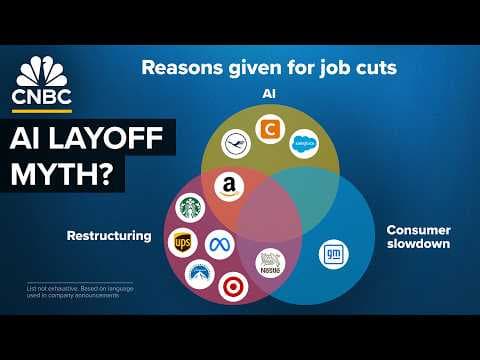
Experts are divided. Some argue the overhiring companies did during the Covid era, when they didn't actually need the workers, is now being corrected. Others counter that any overhiring was already adjusted in 2023 and 2024, so by November 2025 it is no longer a big impact. One view holds that severe labor shortages in 2021 to 2023 forced companies, even without AI, to learn how to do things with fewer people, which is now affecting labor market conditions.
Q: How much has the young workforce at tech companies shrunk?
A recent study by compensation platform Pave finds that between January 2023 and July 2025, the number of young workers at large public technology companies fell by more than half. Private technology companies also saw a decline. This means not only are young workers finding it difficult to enter the job market, but the young professional workforce that is already employed is also shrinking, removing entry-level positions that traditionally served as launch pads for new graduates.
Q: What are the economic consequences of rising youth unemployment?
If young workers have a hard time getting jobs now, it reduces their spending on goods, lowers their earning capabilities, cuts money going into taxes, and ultimately impacts government spending. Added together, this can widen income inequality. An Oxfam report shows that between 1989 and 2022 the top 1% gained about 101 times more wealth than the median household. Experts warn this could grow demand for income redistribution and carry political consequences down the road.
Q: What skills should new graduates learn to stand out in the AI job market?
Employers increasingly want early talent fluent in AI. Handshake reports a 5x increase in job postings listing AI skills since 2023 and a 4x increase for internships. Graduates should learn to prompt better and use multiple gen AI systems suited to different tasks, building AI literacy to work more efficiently. Experts also stress networking: doing internships and building relationships with professionals is the number one way to separate yourself, since someone who remembers a good experience with you helps you succeed.
Summary & Key Takeaways
-
A Villanova graduate who walked the stage in May 2025 describes a demoralizing job search running since November 2024, struggling to even reach initial interviews. Economists say the overall labor market looks strong with low unemployment, but young workers aged 16 to 24 are struggling, with their unemployment rate reaching 10.4% in September.
-
Two forces drive the trend: the supply of bachelor's-degree workers is rising while demand is flat, partly because AI automates more jobs. AI now writes junior-level code well, cutting the need for junior engineers. Goldman Sachs says AI could displace 6 to 7% of the workforce over the next decade, and Amazon is cutting 14,000 corporate jobs.
-
Experts debate whether pandemic-era overhiring or AI drives layoffs, with some arguing severe labor shortages forced firms to do more with fewer people. Rising youth unemployment threatens spending, taxes, and inequality. Employers increasingly want AI-fluent early talent, so graduates are urged to learn AI tools, network, and build professional relationships.
Read in Other Languages (beta)
Share This Summary 📚
Summarize YouTube Videos and Get Video Transcripts with 1-Click
Try YouTube Summary with ChatGPT & Claude or YouTube Transcript Generator
Explore More Summaries from CNBC 📚



Summarize YouTube Videos and Get Video Transcripts with 1-Click
Try YouTube Summary with ChatGPT & Claude or YouTube Transcript Generator