Infinity: The Science of Endless
TL;DR
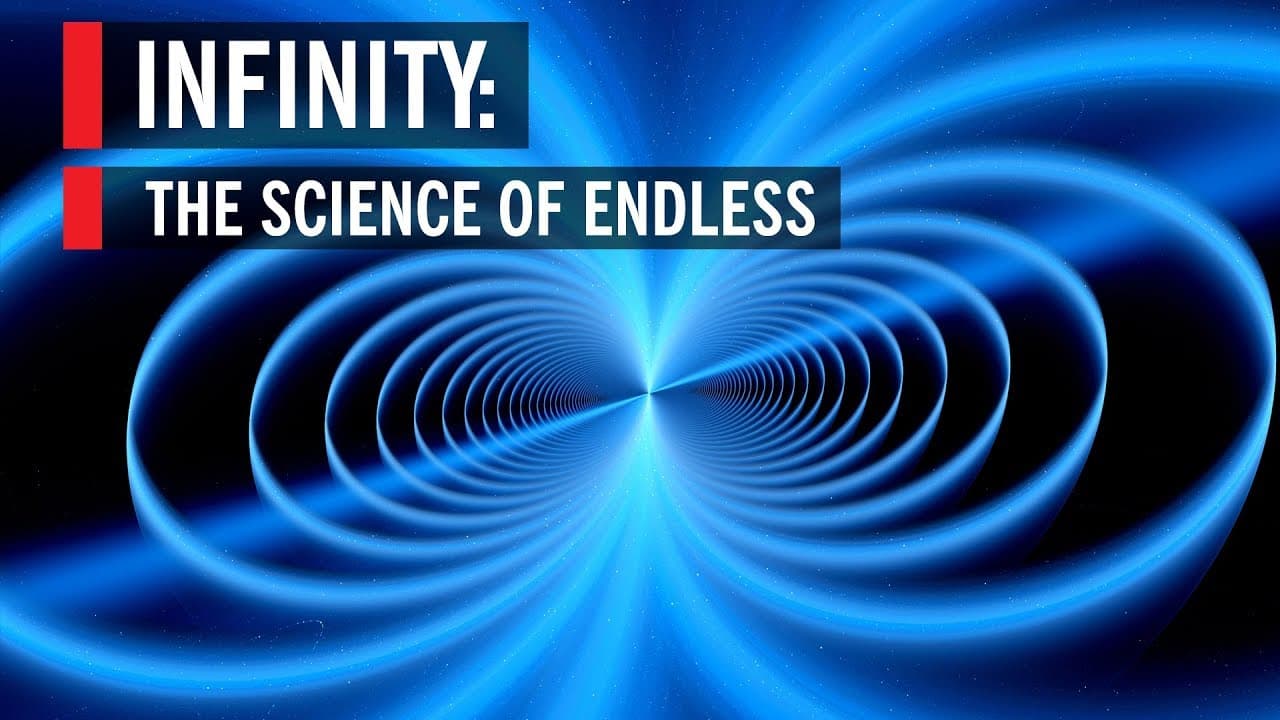
Infinity is a concept that has intrigued philosophers, theologians, mathematicians, and physicists throughout history, with varying perspectives on its nature and implications.
Transcript
Infinity Infinity What is Infinity Infinity is really cool It is about as big as it gets U cant really put a name to it because that limits it Infinity as I see it refers more to the true nature of reality. No one & no thing has any kind of separate inherent or intrinsic nature. ... Read More
Key Insights
- 🏑 Infinity has been a subject of intrigue across various fields, including philosophy, theology, mathematics, and physics.
- ♾️ The concept of infinity raises paradoxes and challenges when dealing with actual infinities, as shown by Zeno's paradoxes.
- 🌍 Different philosophical and theological perspectives provide diverse interpretations of infinity's nature and its relation to the finite world and the existence of God.
Install to Summarize YouTube Videos and Get Transcripts
Explore YouTube Video Summarizer or Get YouTube Transcript Extractor
Questions & Answers
Q: What is the significance of Zeno's paradoxes in understanding infinity?
Zeno's paradoxes, such as the famous Achilles and the Tortoise paradox, demonstrated the challenges and paradoxes encountered when dealing with the concept of actual infinity. They highlighted the idea that infinite divisions and distances can result in seemingly contradictory outcomes.
Q: How did Pythagoras contribute to the understanding of infinity?
Pythagoras introduced the notion of mathematics and the relationships between integers. He saw numbers as having spiritual and philosophical meanings, leading to the development of concepts like the Pythagorean theorem. However, the discovery of irrational numbers challenged the idea of a perfectly ordered mathematical universe.
Q: How did theologians like Aquinas and Spinoza approach the concept of infinity?
Aquinas emphasized that infinity was a qualitative aspect of the existence of God rather than purely quantitative. He believed in a perfect and infinite God that could not create infinite objects within a finite world. Spinoza saw God as a substance that encompassed everything, including the finite world, viewing the infinite as a union of God and nature.
Q: What did Cantor contribute to the understanding of infinity?
Cantor's contributions revolutionized the mathematical understanding of infinity. He discovered different sizes of infinity, created the concept of a countable infinity, and showed that real numbers are uncountable, leading to the Continuum Hypothesis. His diagonal proof demonstrated that the real numbers cannot be listed or put into a one-to-one correspondence with the natural numbers.
Summary & Key Takeaways
-
Infinity has been a topic of fascination for humans throughout history, with early civilizations questioning the concept in relation to the vastness of the universe and the limitations of human existence.
-
Philosophers like Zeno of Elea and Pythagoras explored paradoxes and mathematical insights related to infinity, leading to debates about the nature and limits of the concept.
-
Theological perspectives on infinity, as seen in the work of Aquinas and Spinoza, introduced ideas about the infinite nature of God and its relation to the finite world.
-
Mathematicians, starting with Cantor, delved into the precise mathematical understanding of infinity, discovering different types of infinities and raising questions about the uncountability of real numbers.
Read in Other Languages (beta)
Share This Summary 📚
Summarize YouTube Videos and Get Video Transcripts with 1-Click
Try YouTube Summary with ChatGPT & Claude or YouTube Transcript Generator
Explore More Summaries from World Science Festival 📚

Summarize YouTube Videos and Get Video Transcripts with 1-Click
Try YouTube Summary with ChatGPT & Claude or YouTube Transcript Generator