How Does Déjà Vu Create a Sense of Familiarity?
TL;DR
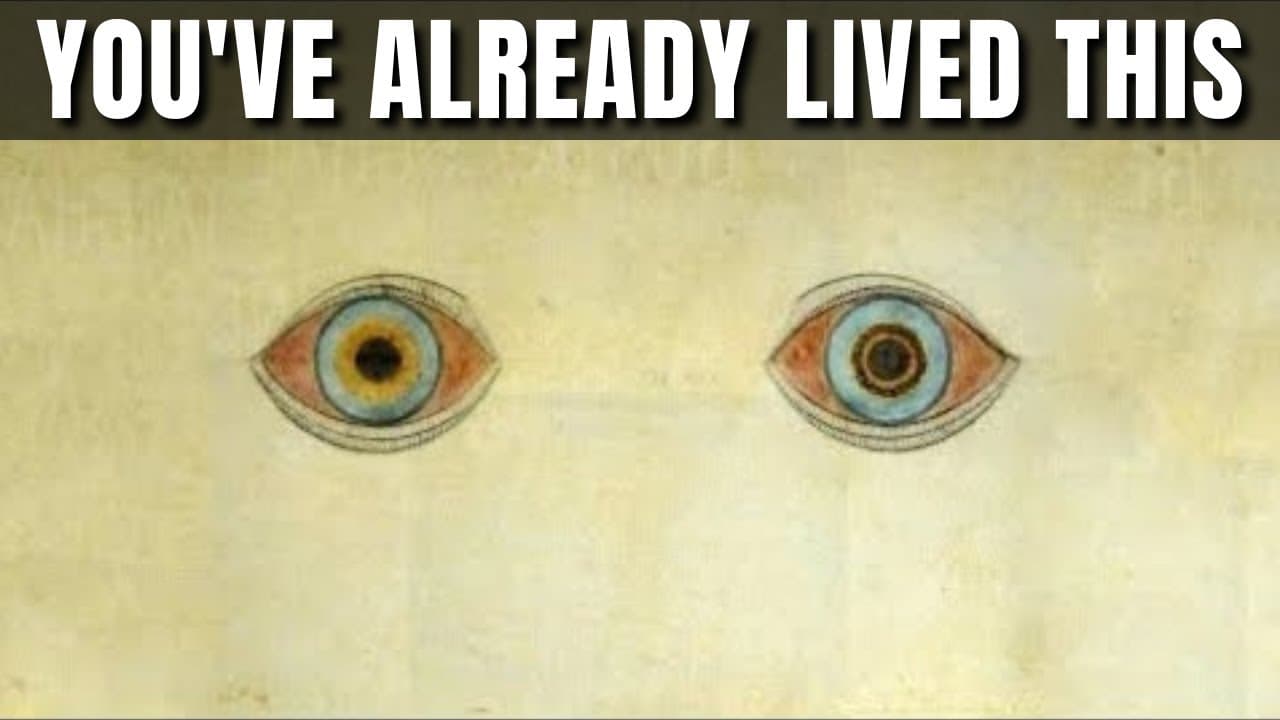
Déjà vu may create familiarity when a present experience is processed or stored as memory too early, making a new moment feel remembered. The French phrase means “already seen,” and the sensation often arises during ordinary conversations, street scenes, or gestures. Although the narrative also considers forgotten dreams, future echoes, and repeating timelines, these possibilities remain unresolved. Read on to distinguish its memory-based explanation from its more speculative theories.
Transcript
Your mind has deceived you time and time again. You're not aware of it, but it has happened. And the worst part is that it will happen again. That strange feeling, that fleeting certainty that you've lived this moment before, that you've said these exact words, that you've been in this place with the same light, the same air, the same everything. I... Read More
Key Insights
- Déjà vu is a fleeting certainty that a present place, conversation, atmosphere, or action has been experienced before. The sensation can feel completely real even when the person cannot identify a genuine earlier event that would explain the familiarity.
- The term déjà vu is described as a French expression meaning “already seen.” The narrative credits French philosopher and psychologist Emil Barak with first naming the phenomenon, while emphasizing that neither he nor later researchers fully established its true nature.
- Déjà vu often appears during ordinary and seemingly insignificant experiences rather than achievements, failures, or other defining moments. The narrative treats this preference for mundane situations as an unresolved question and wonders whether those moments carry importance that people normally overlook.
- A psychological memory theory proposes that a current event may be stored or processed as a memory too early. This timing error could make something happening now feel like a recollection, even though the person has never previously lived through that exact event.
- Laboratory experiments are said to have induced déjà vu by manipulating people’s perceptions of memory and time. According to the narrative, this result shows that a convincing sense of prior experience can be created even when no matching past experience actually occurred.
- Precognitive dreams are presented as a possible source of familiarity when a forgotten dream resembles a later event. The narrative asks whether déjà vu might sometimes be the blurred recollection of such a dream, but it does not establish that explanation as fact.
- Claims of predicting the next words or events during déjà vu are presented as reports from some individuals. The narrative describes these predictions as brief and precise, then considers coincidence, intuition, predetermined events, and future awareness without resolving which interpretation is correct.
- Changing behavior during déjà vu is proposed as a way to test or disrupt the expected sequence. Some people reportedly describe an unusual feeling after acting differently, but the narrative provides no demonstrated conclusion that such choices break cycles, alter timelines, or reveal hidden realities.
Install to Summarize YouTube Videos and Get Transcripts
Explore YouTube Video Summarizer or Get YouTube Transcript Extractor
Questions & Answers
Q: What is déjà vu, and why does a present moment feel familiar?
Déjà vu is the fleeting certainty that the current words, place, light, air, or action have been experienced before. One theory in the transcript says the present event may be processed or stored as memory too early, making something new feel remembered.
Q: What does the phrase “déjà vu” mean?
The transcript describes déjà vu as a French expression meaning “already seen.” It says French philosopher and psychologist Emil Barak was the first to name the phenomenon, though its true nature has not been fully explained.
Q: Why does déjà vu feel like a real memory?
The sensation is described as a visceral certainty rather than a weak suspicion. The transcript suggests that an error in when the present is stored or processed as memory could produce this convincing impression without a corresponding earlier event.
Q: Why does déjà vu often occur during ordinary moments?
The narrative says déjà vu appears in casual conversations, street corners, and everyday gestures rather than achievements, falls, or other defining events. It offers no confirmed explanation, instead asking whether the mind focuses on irrelevant details or whether such moments matter more than they seem.
Q: Can déjà vu be induced in a laboratory?
The transcript says experiments have triggered déjà vu by manipulating people’s perception of memory and time. It presents this as evidence that someone can feel they lived through an event before even when they did not, but it gives no procedures or experimental results.
Q: Could déjà vu come from a forgotten dream?
The narrative proposes that déjà vu might be the blurred memory of a forgotten dream resembling a later event. It connects this possibility with reports of precognitive dreams but does not establish that dreams cause déjà vu.
Q: Does déjà vu prove that time is not linear?
No proof is established in the transcript. Parallel universes, repeated lives, future echoes, simulations, and non-linear time are raised as possibilities, while a memory-processing error is presented as another explanation.
Q: What should you do when you experience déjà vu?
The narrative suggests stopping, observing, and listening when the sensation occurs. It frames this as a way to notice the experience and consider its possible meaning, not as a proven method for detecting future events or escaping a repeating timeline.
Summary & Key Takeaways
-
Déjà vu is presented as a sudden certainty that a current conversation, place, or gesture has happened before. It commonly appears during mundane situations rather than major life events. The narrative contrasts psychological memory theories with the subjective intensity that makes the experience feel more meaningful than an ordinary processing mistake.
-
The psychological account suggests that a present event may accidentally be stored or processed as a memory too early, producing false familiarity. The narrative also states that experiments have induced déjà vu by manipulating participants’ perception of memory and time, demonstrating that an apparently authentic recollection can arise without a corresponding past event.
-
The narrative explores unproven possibilities involving forgotten dreams, future glimpses, parallel timelines, repeating lives, and predetermined events. It asks whether changing one’s behavior during déjà vu could interrupt an expected pattern. These ideas are framed as questions and personal claims, while the phenomenon’s true meaning remains unresolved within the source.
Read in Other Languages (beta)
Share This Summary 📚
Summarize YouTube Videos and Get Video Transcripts with 1-Click
Try YouTube Summary with ChatGPT & Claude or YouTube Transcript Generator
Explore More Summaries from Psychotic 📚




Summarize YouTube Videos and Get Video Transcripts with 1-Click
Try YouTube Summary with ChatGPT & Claude or YouTube Transcript Generator