Lawrence Wong on the Post-American Multipolar World Order
TL;DR
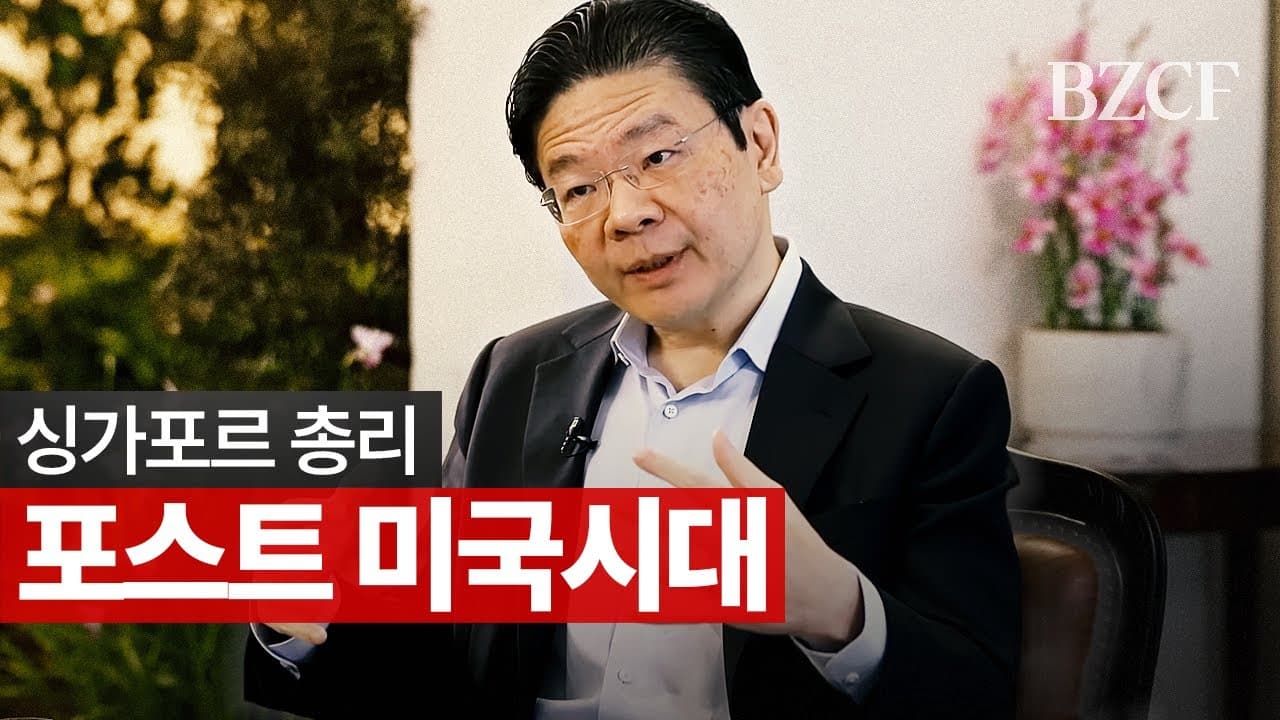
Singapore's Prime Minister Lawrence Wong says the world is transitioning to a post-American, multipolar order that will be messy and unpredictable, because America is stepping back as global insurer and no other country can or will fill the vacuum. He argues the old rules no longer apply and new ones are unwritten, so countries must act now to build trade connections and a new multilateral architecture rather than wait.
Transcript
Well, Prime Minister, Singapore is perhaps the most globalized country in the world. And you like rules, you like precision, you like mathematics, we like stability, you like predictability, of course, you like stability. You must be having to adapt to to a new world order. Tell me a little bit whether this requires fundamental change in the way th... Read More
Key Insights
- The world is in a great transition to a multipolar, post-American order, according to Wong. The transition will be messy and unpredictable because America is stepping back from its role as global insurer, and no other country is able or willing to fill the vacuum it leaves.
- The core danger of the moment is that the old rules do not apply anymore while the new ones have not been written. Wong says this in-between state means countries must brace themselves for more turbulence ahead rather than assume a stable framework still governs behavior.
- Waiting for events to resolve themselves is not a viable strategy, in Wong's view. Countries have to plan and act now: investing together in the global commons, building new trade connections, and keeping up the momentum of trade liberalization with like-minded partners.
- The change in America is structural, not temporary. Wong argues it reflects a broader shift in American political culture and society, a feeling that the country has not benefited from the global order it put in place and is not prepared to do as much of the heavy lifting, and that this goes beyond one administration.
- Some of the free-rider criticism is justified, Wong concedes. Countries do need to invest more in their own economic security and stability, and the Trump administration has catalyzed self-reflection, with more countries now taking responsibility and spending more on their own security.
- Multipolarity by itself does not provide a stable framework for cooperation, shared prosperity, or security. Wong warns that if the world ends up in exclusionary blocks and spheres of influence, it will be more dangerous and unstable, so multipolarity must still allow global connections.
- ASEAN is described by Wong as not perfect but indispensable. Southeast Asia, once called the Balkans of Asia for its fragmentation and instability, has maintained relative peace and avoided major conflicts since the end of the Vietnam War, largely to ASEAN's credit.
- America remains the largest investor in Southeast Asia while China is the largest trading partner. Wong notes tariffs damaged America's standing in the region, yet Southeast Asian countries still want good links with the US and negotiated tariffs down to around 19%.
Install to Summarize YouTube Videos and Get Transcripts
Explore YouTube Video Summarizer or Get YouTube Transcript Extractor
Questions & Answers
Q: What does Lawrence Wong mean by a post-American world order?
Wong describes a great transition to a multipolar, post-American order in which America steps back from its role as global insurer. The defining problem is that no other country is able or willing to fill the resulting vacuum. That leaves an uncomfortable position where the old rules no longer apply but the new ones have not been written yet. He says no one can tell how the transition will unfold, but there is no doubt it will be messy and unpredictable, and countries must brace themselves for more turbulence ahead.
Q: Why does Singapore believe the change in America is structural rather than temporary?
Wong places Singapore in the camp that sees deep structural change. He says what has happened in America is not just a temporary phenomenon but reflects a broader change in political culture and in American society itself: a feeling that America has not benefited from the current global order it had put in place, and that it is not prepared to do as much of the heavy lifting to keep the order going. Crucially, he argues this sentiment goes beyond the current administration, meaning it will outlast any single presidency.
Q: What should countries do now that the old global order is weakening?
Wong argues countries cannot afford to just wait for things to happen or hope that things magically fall into place. They have to take actions now and plan now: investing together in tackling the problems of the global commons, building new trade connections, and keeping up the momentum of trade liberalization. Singapore cannot do this alone but will do it with other like-minded countries. Even if the US may not be able or willing to join these plans now, he says others must press ahead to lay the foundations of a new multilateral architecture, hoping America comes along in time.
Q: Does Donald Trump have a point that the US has been taken advantage of?
Wong says some of it may well be justified, in the sense that there may well have been free riders, and that countries do need to do more to invest in their own economic security and stability. He notes Singapore has never taken it for granted, consistently investing year by year in its own security and defense while facilitating America's presence in the region. He credits the Trump administration with motivating and catalyzing many countries to do this self-reflection, with more countries now taking responsibility and spending more on their own security.
Q: Why is a multipolar world not automatically stable?
Wong is explicit that multipolarity itself does not provide a stable framework for countries to work together, cooperate, and ensure shared prosperity and security. It is a description of power distribution, not a system of rules. That is why he says countries have to think about what they can do together to engender such a framework. He specifically hopes the world does not end up in exclusionary blocks and spheres of influence, because that outcome would be more dangerous and unstable, and prefers a multipolarity that still allows global connections.
Q: How does ASEAN fit into Singapore's strategy for a multipolar world?
Wong wants ASEAN and Southeast Asia to be a platform that allows open and inclusive engagement with all the major powers, rather than a region locked into any one sphere of influence. He cautions against belittling ASEAN's achievements: Southeast Asia is highly complex, with many ethnicities, languages, and religions, and was once called the Balkans of Asia because of geographical fragmentation and potential instability. Yet since the end of the Vietnam War it has maintained relative peace and avoided major conflicts. He calls ASEAN not perfect but indispensable, with plans to accelerate integration into a more competitive single market.
Q: What tariff rates did Singapore and its neighbors face from the US?
Singapore received a 10% tariff, which Wong attributes partly to the fact that the US does not have a trade deficit in goods or services with Singapore. Its neighbors faced some of the highest tariffs initially, and after extensive negotiations with the US many landed on slightly lower rates of around 19%. Wong notes the irony that 10 or 20% now feels like relief, and says that from Singapore's point of view the correct figure is 0%, but 10% has become the new normal. Semiconductor and pharmaceutical tariffs remain an open risk under discussion.
Q: How is Singapore handling pressure over advanced chip exports to China?
Wong says Singapore's position is clear: the business hub was built on a reputation for rule of law and trust, so it is fully committed to maintaining the integrity of its business environment and will not tolerate businesses violating its laws. On export controls specifically, it will not condone businesses or individuals taking advantage of their association with Singapore to circumvent other countries' export controls. Singapore has put in place robust arrangements so the US government can investigate companies of interest there, and will extend similar arrangements to other countries, since export controls are no longer limited to America.
Q: Why has economic growth not suffered from tariffs yet?
Wong gives three reasons. First, the actual rollout of tariffs has not been as high as what was initially indicated. Second, there has been a lot of frontloading of activities, which dampened the impact. Third, because of AI and new technologies, the rest of the economy has been quite resilient so far. He insists the forecasts were not wrong, only delayed. Singapore calls itself the canary in the coal mine because it is so open and exposed, and while it felt nothing in the first half of the year, it is now seeing businesses hold back on new investments and hiring.
Summary & Key Takeaways
-
Wong describes a great transition to a multipolar, post-American order that no one can predict, but that will certainly be messy. America is stepping back from its role as global insurer, and no other country is able or willing to fill the vacuum. The old rules no longer apply and the new ones have not been written, so more turbulence lies ahead.
-
Rather than waiting or hoping things fall into place, Wong argues countries must plan and act now: investing together in the global commons, building new trade connections, and keeping the momentum of trade liberalization. Singapore cannot do this alone and will work with like-minded countries, pressing ahead even if the US will not join now, hoping it joins in time.
-
Wong places himself in the camp that sees deep structural change rather than a passing phenomenon, because what has happened in America reflects a broader change in political culture and society: a feeling that America has not benefited from the order it built and is unwilling to do as much heavy lifting. He says this goes beyond the current administration.
-
On tariffs, Singapore received 10% while neighbors negotiated down to around 19%. Wong says the correct figure is 0%, but 10% has become the new normal. Tariff actions have hurt America's standing in Southeast Asia, though the US remains the region's largest investor while China is the largest trading partner.
-
On chip export controls, Singapore has put robust arrangements in place so the US government can investigate companies of interest there, and offers similar arrangements to other countries. Wong says growth has not yet suffered because tariffs rolled out lower than indicated, activity was frontloaded, and AI has kept economies resilient, but Singapore is now feeling a slowdown.
-
(Content reviewed on 2026-08-27.)
Read in Other Languages (beta)
Share This Summary 📚
Summarize YouTube Videos and Get Video Transcripts with 1-Click
Try YouTube Summary with ChatGPT & Claude or YouTube Transcript Generator
Explore More Summaries from BZCF | 비즈까페 📚



Summarize YouTube Videos and Get Video Transcripts with 1-Click
Try YouTube Summary with ChatGPT & Claude or YouTube Transcript Generator