How to Synthesize 3-Nitrophthalic Acid for Luminol
TL;DR
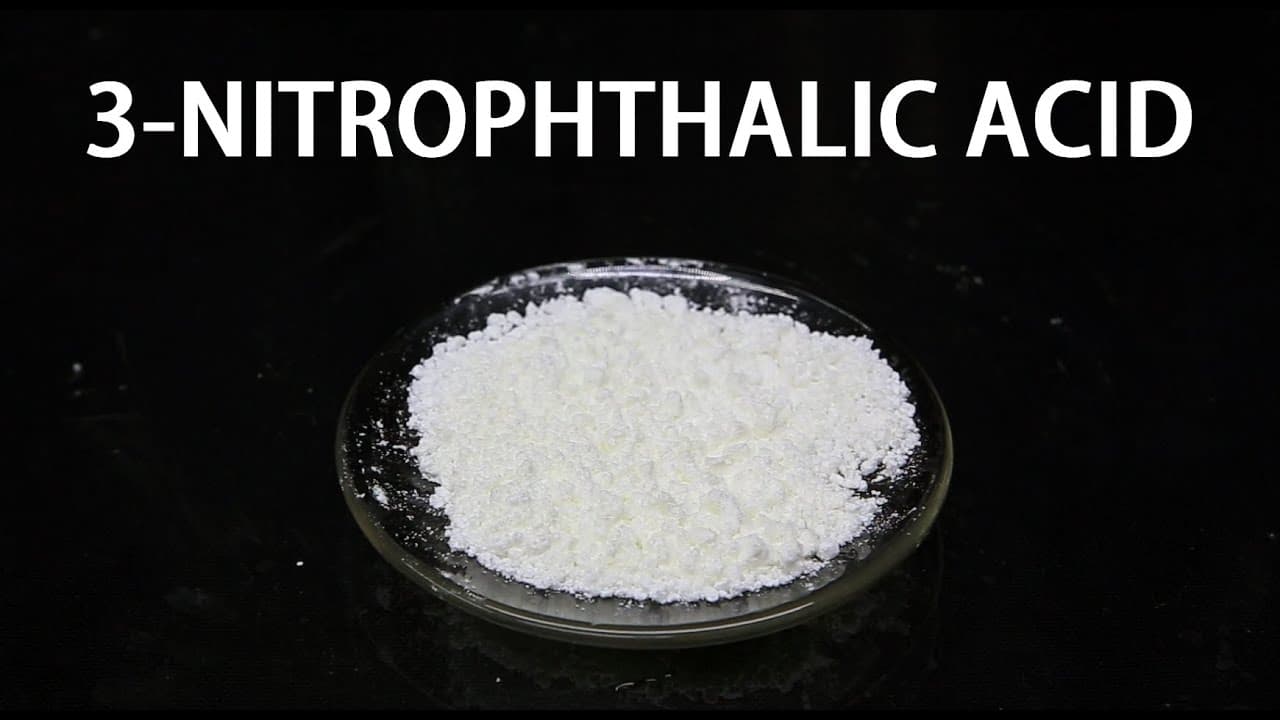
To synthesize 3-nitrophthalic acid, combine phthalic anhydride with concentrated sulfuric acid and homemade nitric acid, then heat the mixture at 100°C for two hours. Filter and recrystallize the product to achieve a pure form, though expect low yields due to non-specific nitration reactions producing unwanted byproducts like 4-nitrophthalic acid.
Transcript
the main purpose of making 3-nitrophthalic acid is for the synthesis of luminol luminol is a pretty cool molecule that exhibits chemiluminescence and I'll be making it in a future video the synthesis of 3-nitrophthalic acid does have its educational merits though because we are going to be nitrating an aromatic ring the nitration of aromatics is a ... Read More
Key Insights
- 🈸 The synthesis of 3-nitrophthalic acid is essential for the production of luminol, a chemiluminescent compound used in various applications.
- ❓ Nitration of aromatics, such as phthalic anhydride, is a crucial reaction in producing explosives.
- ℹ️ Homemade nitric acid can be prepared, providing an alternative source for the necessary reagent in the synthesis.
- 💁 The nitration reaction is not highly specific, resulting in the formation of an undesired product, 4-nitrophthalic acid.
- ❓ The reaction is carried out using a mixed acid system of concentrated sulfuric acid and nitric acid, using precautions to neutralize nitrogen dioxide fumes.
- 🥵 Heating the reaction at around 100°C for two hours promotes the formation of 3-nitrophthalic acid.
- ❓ The resulting product is filtered, washed, and recrystallized to obtain pure 3-nitrophthalic acid.
Install to Summarize YouTube Videos and Get Transcripts
Explore YouTube Video Summarizer or Get YouTube Transcript Extractor
Questions & Answers
Q: What is the significance of the synthesis of 3-nitrophthalic acid?
The synthesis of 3-nitrophthalic acid is crucial for producing luminol, which is widely used in forensic science for detecting bloodstains and other chemical reactions.
Q: Why is the nitration of aromatics important in chemistry?
The nitration of aromatics is significant in the production of explosives, with TNT and picric acid being notable examples. Understanding this reaction helps in studying the properties and reactivity of aromatic compounds.
Q: Why is it necessary to use homemade nitric acid in this synthesis?
Homemade nitric acid is used because it is not readily available commercially. By demonstrating how to synthesize it, the video provides an alternative method for obtaining the required reagents.
Q: Why did the yield of 3-nitrophthalic acid turn out to be low?
The nitration reaction is not highly specific, resulting in the formation of both 3-nitrophthalic acid and 4-nitrophthalic acid. This lack of specificity leads to a lower overall yield of the desired product.
Summary & Key Takeaways
-
The main purpose of making 3-nitrophthalic acid is for the synthesis of luminol, a molecule that exhibits chemiluminescence.
-
The video shows the step-by-step process of nitrating an aromatic ring using phthalic anhydride, concentrated sulfuric acid, and homemade nitric acid.
-
The yield of 3-nitrophthalic acid is relatively low due to the lack of specificity in the nitration reaction.
Read in Other Languages (beta)
Share This Summary 📚
Summarize YouTube Videos and Get Video Transcripts with 1-Click
Try YouTube Summary with ChatGPT & Claude or YouTube Transcript Generator
Explore More Summaries from NileRed 📚



Summarize YouTube Videos and Get Video Transcripts with 1-Click
Try YouTube Summary with ChatGPT & Claude or YouTube Transcript Generator