Coding in Node & Javascript using TDD | Cypress TDD | Part 4
TL;DR
This content explores using Test Driven Development (TDD) with Cypress to test UI components.
Transcript
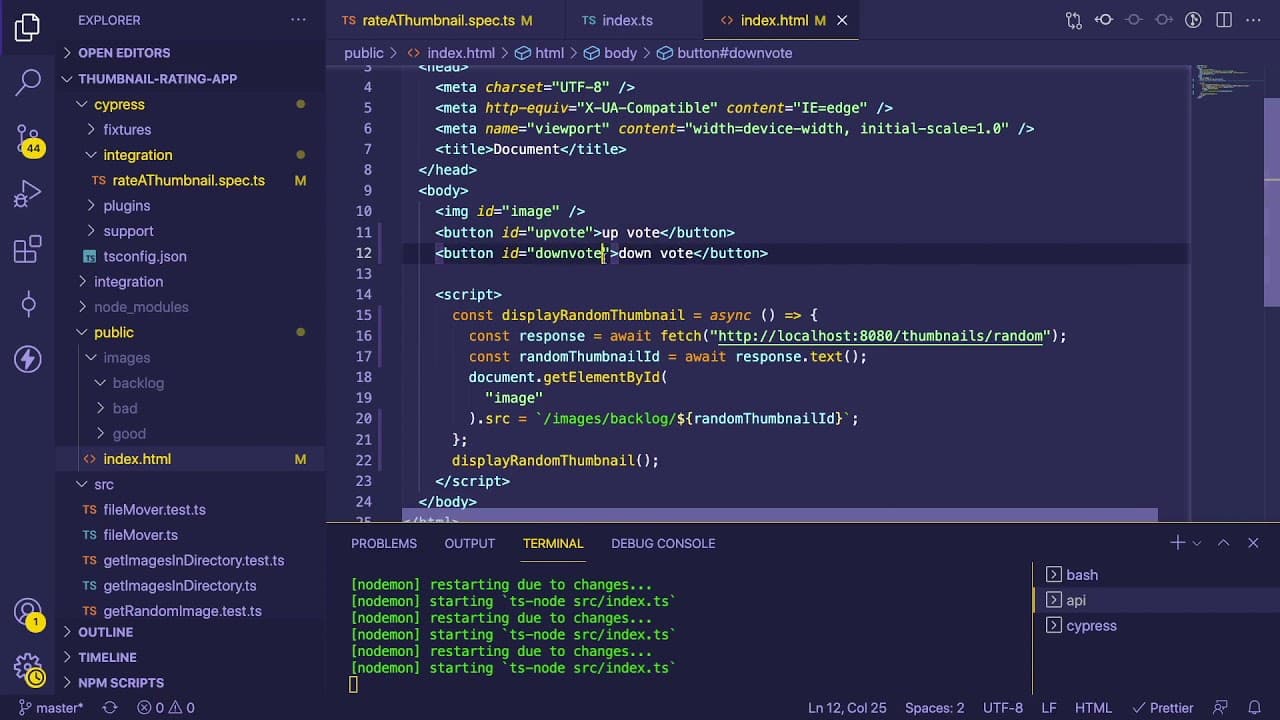
so up to this point we've learned how to use tdd to build out just unit tests to help implement some sub components and then we also moved on to using tdd to build out some integration tests to verify at a higher level or functions or endpoints do what we expect them to do now what we can do is we can use an in testing framework such as cypress to ... Read More
Key Insights
- ❤️🩹 Cypress serves as an effective testing framework for executing end-to-end tests and validating UI interactions with backend functionality.
- 👨💻 TDD involves creating tests that dictate implementation details, promoting cleaner, more maintainable code.
- 🖐️ Proper setup and management of fixtures in Cypress play a critical role in ensuring tests run smoothly and accurately reflect their intended functionality.
- 👤 The process of upvoting and downvoting thumbnails illustrates the integration of user actions with backend processing, highlighting real-time application behavior.
- 🍵 The speaker emphasizes using async functions to handle asynchronous operations effectively, ensuring tests handle data fetching and updates correctly.
- 🏆 The importance of cleanup after tests ensures that leftover files do not interfere with subsequent test runs, promoting a stable testing environment.
- 👻 Running tests in parallel with development allows for the early detection of errors, which can be fixed before they propagate into larger issues.
Install to Summarize YouTube Videos and Get Transcripts
Explore YouTube Video Summarizer or Get YouTube Transcript Extractor
Questions & Answers
Q: What is the primary purpose of using Cypress in this tutorial?
Cypress is used in this tutorial to execute end-to-end and integration tests for a web application. The purpose is to ensure that various components of the UI function correctly based on the specifications laid out in the tests. By regularly running these tests with TDD practices, developers can catch errors early and maintain a higher quality of code.
Q: What challenges did the speaker face while writing Cypress tests?
The speaker faced several challenges while writing Cypress tests, primarily due to their unfamiliarity with the framework. They found Cypress to have different conventions compared to other testing frameworks, leading to difficulties in understanding asynchronous behavior and the necessity of promise chaining. This resulted in considerable time spent reading documentation and attempting to frame effective tests to ensure proper functionality.
Q: Why is managing fixture files important in the context of Cypress tests?
Managing fixture files is crucial in Cypress tests as they provide the necessary data and assets (like images) that the tests require to execute accurately. The speaker emphasized copying these files into the appropriate directories at the start of each test run to prevent residue from previous tests that could affect the accuracy of current test outcomes. This practice helps maintain a clean test environment and ensures reliability in test results.
Q: How does the speaker implement handling for the upvote and downvote functions in their application?
The speaker implements the handling for upvote and downvote functions by adding event listeners to corresponding buttons in the UI. When clicked, these buttons trigger a request to the backend, indicating whether a thumbnail is voted as good or bad. The application then processes this information, moving the related files in the backend to their designated directories and ensuring the UI reflects these changes.
Q: What is a significant benefit of utilizing TDD in the development process?
A significant benefit of utilizing TDD is that it fosters a well-structured development workflow, where tests are written before the actual implementation of functionality. This leads to more reliable and maintainable code since developers continuously run tests throughout the development process to validate that new code doesn't break existing functionality. Consequently, it enables developers to iteratively improve their codebase with confidence.
Q: What final recap does the speaker provide regarding the testing process?
The speaker recaps the entire testing process by highlighting how they employed TDD principles across different testing levels, from unit to integration tests using Cypress. They showcase successful test execution as proof of functionality, while also addressing the importance of continuous testing during development to ensure the application works as intended. The speaker stresses that all tests passed successfully, reinforcing the effectiveness of their testing strategy.
Summary & Key Takeaways
-
The content discusses the implementation of Test Driven Development (TDD) using Cypress, focusing on writing integration and UI tests for web applications.
-
It highlights the process of setting up test files in Cypress, the challenges faced in writing effective tests, and the implementation of functionality based on those tests.
-
The tutorial concludes with an explanation of how TDD can be utilized to ensure the robustness of the application and is reinforced by practical examples and code snippets.
Read in Other Languages (beta)
Share This Summary 📚
Summarize YouTube Videos and Get Video Transcripts with 1-Click
Try YouTube Summary with ChatGPT & Claude or YouTube Transcript Generator
Explore More Summaries from Web Dev Cody 📚

Summarize YouTube Videos and Get Video Transcripts with 1-Click
Try YouTube Summary with ChatGPT & Claude or YouTube Transcript Generator