How to Build an Automated Coil Winder
TL;DR
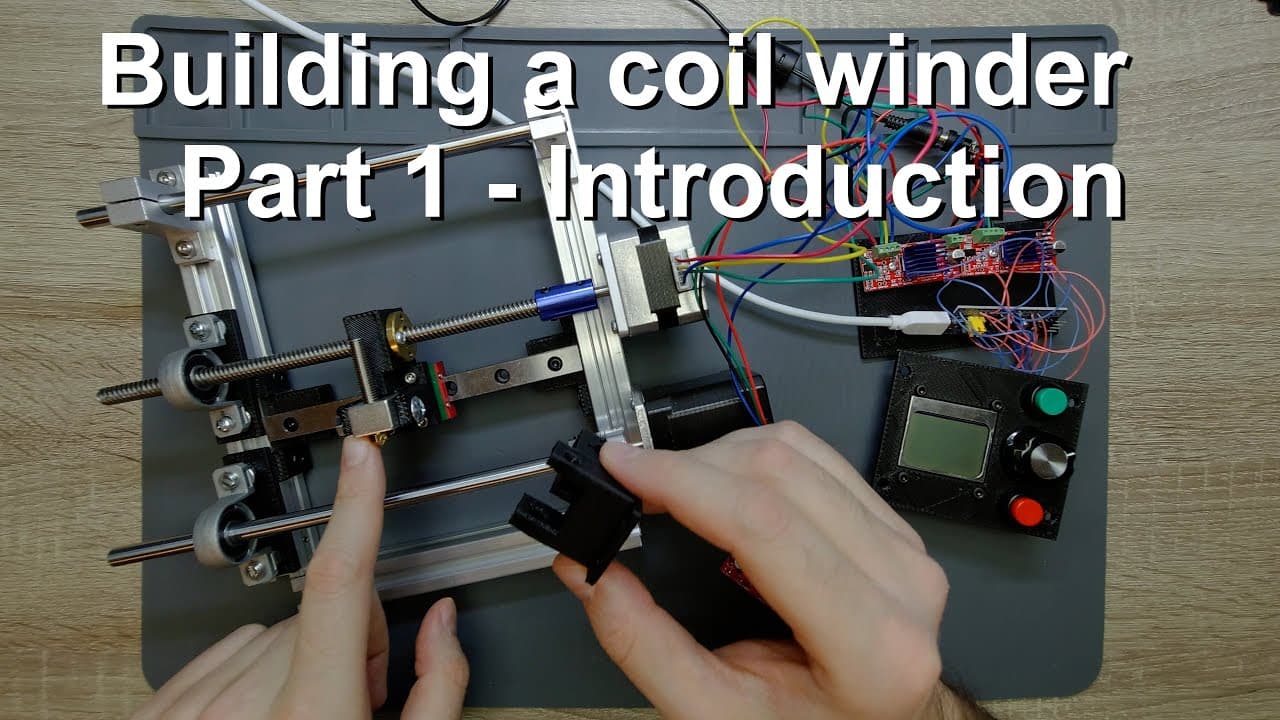
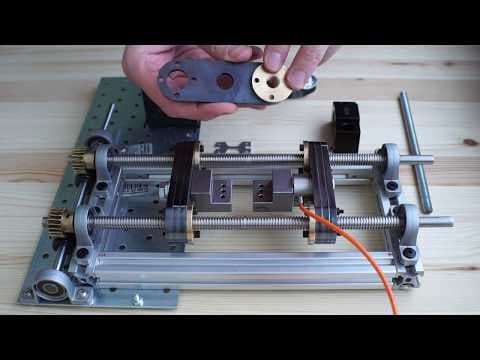
To build an automated coil winder, design a mechanism that combines circular and linear motions using stepper motors to achieve tight coil packing. The project aims to improve winding efficiency and quality by providing a proof-of-concept prototype, with upcoming videos detailing electronics, software, and assembly, while inviting viewer engagement for suggestions.
Transcript
welcome everyone in this video i'm going to talk about my new project so i've been working on this thing for several days now and now it's in a form which can be presented to a certain extent but i have to tell you right now that this is not the final project so this is sort of an introductory video for a series of videos where i'm going to present... Read More
Key Insights
- 🧑🦽 Automation in coil winding can significantly reduce time and enhance quality compared to manual processes.
- 🧑🦼 The combination of circular and linear motions is essential for effective coil packing, which the project successfully achieves with stepper motors.
- 👻 There is potential for community engagement, allowing viewers to contribute ideas and improvements to the project through comments.
- 🦾 The creator emphasizes the importance of testing and refining the mechanical components to achieve reliability and precision in the finished product.
- 🧑🦼 The electronics setup is modular and can adapt to various motor types with compatible driver circuits, enhancing versatility.
- 🤝 Proper calibration of speeds and accelerations is vital, especially when dealing with delicate wires to prevent breakage during winding.
- 🫵 Future videos will provide comprehensive details on the entire project, including electronic setups and improvements based on viewer feedback.
Install to Summarize YouTube Videos and Get Transcripts
Explore YouTube Video Summarizer or Get YouTube Transcript Extractor
Questions & Answers
Q: What inspired the creation of the coil winder project?
The creator was motivated by the time-consuming nature of winding coils manually, which often led to unsatisfactory quality. By automating this process, the goal is to enhance the quality, efficiency, and consistency of the coils produced for various projects.
Q: How does the coil winding mechanism function?
The mechanism integrates both circular and linear motions. A stepper motor rotates the spool to wind the wire, while a linear carriage moves back and forth, layering the wire tightly around the coil. This coordinated motion ensures precise packing of the coils.
Q: What challenges have been encountered during the project development?
Several challenges include mechanical issues with the rotary encoder affecting menu navigation, the need for a tensioning mechanism for wire stability, and debugging the software to ensure accurate step coordination. These aspects are crucial for the project’s precise functionality.
Q: What electronics are used in the coil winder?
The project utilizes an STM32 microcontroller compatible with Arduino, easy driver circuits for motor control, an LCD for user interaction, and a rotary encoder for adjusting settings. These components together allow for customizable coil winding based on specific input parameters.
Summary & Key Takeaways
-
The creator discusses the development of a coil binder project designed to automate the process of winding coils, aiming for improved quality and efficiency.
-
A proof-of-concept prototype is demonstrated, showcasing the mechanics of circular and linear motion necessary for tight coil packing using stepper motors.
-
Upcoming videos will delve into electronic components, software improvements, and final assembly details, inviting viewers to engage and provide feedback on the project.
Read in Other Languages (beta)
Share This Summary 📚
Summarize YouTube Videos and Get Video Transcripts with 1-Click
Try YouTube Summary with ChatGPT & Claude or YouTube Transcript Generator
Explore More Summaries from Curious Scientist 📚
![Building a coil winder [Part 6] - A few improvements thumbnail](/_next/image?url=https%3A%2F%2Fi.ytimg.com%2Fvi%2F3eyxG_g2iUA%2Fhqdefault.jpg&w=750&q=75)
![Building a Peltier cooler-based cooling box - First iteration, improvements [Part 2/6] thumbnail](/_next/image?url=https%3A%2F%2Fi.ytimg.com%2Fvi%2F0YlNw0EGnzI%2Fhqdefault.jpg&w=750&q=75)
Summarize YouTube Videos and Get Video Transcripts with 1-Click
Try YouTube Summary with ChatGPT & Claude or YouTube Transcript Generator