Is Gobekli Tepe Evidence That Civilization Is Older Than We Thought?
TL;DR
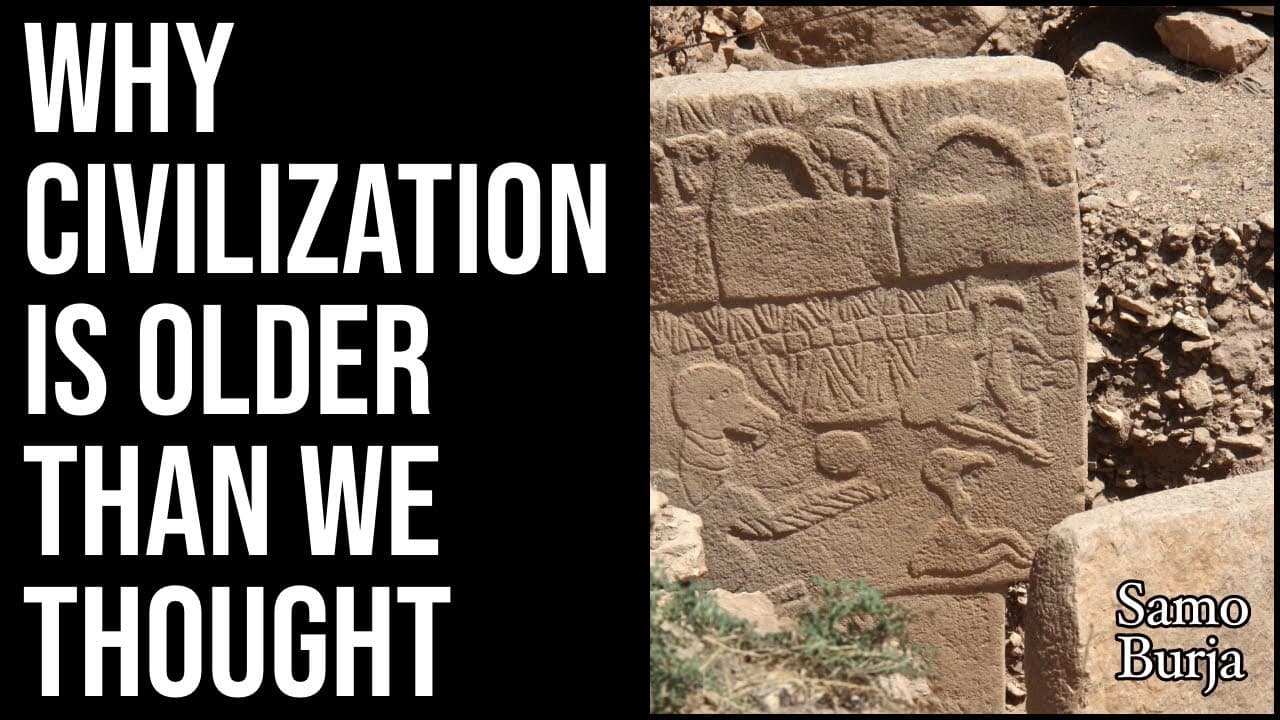
Gobekli Tepe suggests that civilization may be significantly older than previously believed, as it predates the origin of agriculture. The site's complexity indicates that advanced social structures and monumental architecture developed without agriculture, redefining our understanding of early human societies and their capabilities.
Transcript
why civilization is older than we thought by Sam alburya originally published in Palladium magazine on the 17th of May 2021 the dry Hills brilliant sea and neat rows of gated Suburban communities made me wonder whether I had left San Francisco at all looking down on the suburbs of Istanbul that hugged the boss Forest during my flight's approach was... Read More
Key Insights
- 🥶 Gobekli Tepe forces us to rethink the timeline of civilization's origins, suggesting that it may be much older than previously believed.
- ❓ The site challenges the traditional narrative that agriculture was the catalyst for the development of complex societies.
- ❓ Gobekli Tepe highlights the importance of social and material technologies in ancient civilizations.
- ℹ️ The discovery raises questions about the reliability of ancient myths and oral histories as a source of historical information.
- 🧑🏭 Archaeological discoveries are influenced by political, economic, and cultural factors, shaping our understanding of the past.
- ❓ The preservation and study of ancient sites, like Gobekli Tepe, provide valuable insights into human history and have implications for modern society.
- 🌍 International collaboration and funding are essential for the continued exploration and understanding of ancient civilizations.
Install to Summarize YouTube Videos and Get Transcripts
Explore YouTube Video Summarizer or Get YouTube Transcript Extractor
Questions & Answers
Q: What is Gobekli Tepe, and why is it significant?
Gobekli Tepe is an ancient archaeological site in Turkey, featuring monumental stone pillars and carvings. Its significance lies in its age, pre-dating the emergence of human agriculture, which challenges traditional ideas about the origins of civilization.
Q: How does Gobekli Tepe challenge current theories about civilization?
Gobekli Tepe's existence before the development of agriculture suggests that complex societies and monumental architecture may have emerged earlier than previously thought. This challenges the notion that agriculture was necessary for the rise of civilization.
Q: How does Gobekli Tepe impact our understanding of human nature?
Gobekli Tepe highlights the need to reconsider our theories of human nature, as our assumptions are often based on Western political thought rather than ecological realities. Understanding ancient civilizations requires a deeper understanding of the social and material technologies of the time.
Q: What is the significance of Gobekli Tepe for modern society?
Gobekli Tepe reminds us of the importance of preserving and studying ancient sites, as they provide valuable insights into our shared human history. It also challenges our assumptions about progress and opens up new possibilities for our future.
Summary & Key Takeaways
-
Gobekli Tepe, an ancient site in Turkey, is reshaping our understanding of civilization's origins.
-
The site, with its extensive stone pillars and carvings, predates the consensus origin of human agriculture.
-
The discovery raises questions about the necessity of agriculture for complex societies and offers insight into the development of social technologies.
Read in Other Languages (beta)
Share This Summary 📚
Summarize YouTube Videos and Get Video Transcripts with 1-Click
Try YouTube Summary with ChatGPT & Claude or YouTube Transcript Generator
Explore More Summaries from Samo Burja 📚






Summarize YouTube Videos and Get Video Transcripts with 1-Click
Try YouTube Summary with ChatGPT & Claude or YouTube Transcript Generator