Identify chemicals with radio frequencies - Nuclear Quadrupole Resonance (MRI without magnets)
TL;DR
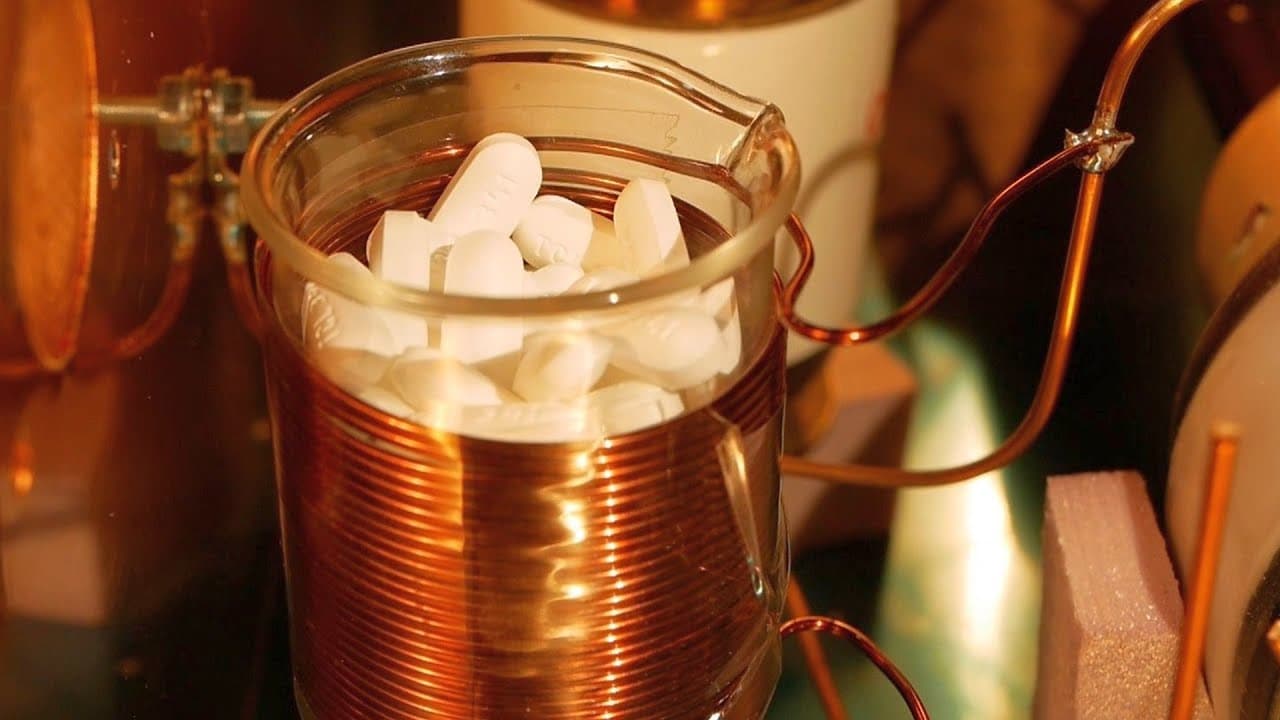
Learn about a technique for chemical identification through a sealed container using nuclear physics and a spectrometer.
Transcript
today on applied science we're going to be doing some Nuclear Physics I want to show you this little known technique of doing chemical identification that works even through a sealed container so we're going to put the sample in a coil of wire and transmit and receive and determine what chemical is in the coil a pretty cool technique and in this vi... Read More
Key Insights
- 🪪 Chemical identification through a sealed container is possible using nuclear physics and a spectrometer.
- 🤢 RF tuning and isolation techniques are crucial to ensure accurate and reliable results.
- 🛟 Sodium nitrite serves as a practical example for testing the functionality of the spectrometer.
- 💗 The multiple pulse technique in NQR helps to improve signal detection and analysis.
- 🪪 The process of chemical identification relies on the unique resonant frequencies of different compounds.
- 📶 The strength of the received signal can be improved through signal averaging and signal processing techniques.
- ❓ NQR is particularly effective for compounds containing nitrogen or chlorine.
Install to Summarize YouTube Videos and Get Transcripts
Explore YouTube Video Summarizer or Get YouTube Transcript Extractor
Questions & Answers
Q: How does the technique of chemical identification through a sealed container work?
The technique involves transmitting a pulse through a coil of wire and analyzing the received signal to determine the chemical composition inside the container. This is possible because each chemical has a characteristic resonant frequency that can be detected and identified.
Q: Why is sodium nitrite used as the sample in the demonstration?
Sodium nitrite is used because it has a strong and easily detectable resonant frequency at 3.6 megahertz. It serves as a practical example to test the functionality of the system, but other compounds can also be tested using this technique.
Q: Why is RF tuning and isolation important in building the spectrometer?
RF tuning and isolation techniques are crucial to ensure that the transmit and receive channels do not interfere with each other and that the received signal is not overwhelmed by noise. This is especially important because the signal being received is very weak compared to the transmitted signal.
Q: How does the multiple pulse technique improve signal detection in nuclear quadrupole resonance (NQR)?
The multiple pulse technique, involving a 90-degree pulse followed by a 180-degree pulse, helps to re-phase the nuclei in the sample, allowing for a stronger and more easily detectable signal. By repeating this process, multiple signals can be obtained and analyzed.
Summary & Key Takeaways
-
The content discusses the practical side of building a spectrometer for chemical identification using nuclear physics.
-
The process involves transmitting a pulse through a coil of wire to determine the chemical composition inside a sealed container.
-
The video demonstrates the technique with a sample of sodium nitrite and explains the importance of tuning and isolation techniques.
Read in Other Languages (beta)
Share This Summary 📚
Summarize YouTube Videos and Get Video Transcripts with 1-Click
Try YouTube Summary with ChatGPT & Claude or YouTube Transcript Generator
Explore More Summaries from Applied Science 📚




Summarize YouTube Videos and Get Video Transcripts with 1-Click
Try YouTube Summary with ChatGPT & Claude or YouTube Transcript Generator