How to Refactor a React Application for Better Performance
TL;DR
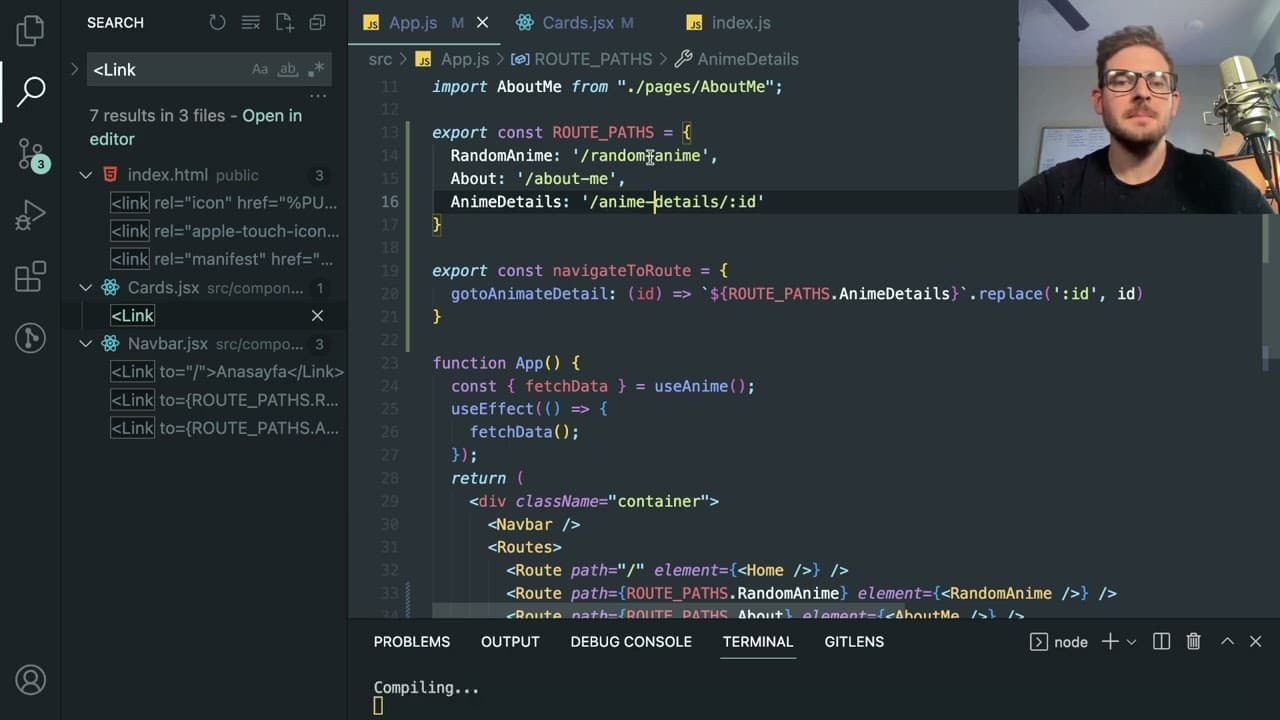
To refactor a React application for improved performance, focus on optimizing data fetching strategies by only loading necessary data on specific pages. Use centralized routing definitions for better organization, implement meaningful naming conventions, and leverage data management tools like React Query to enhance caching and overall efficiency.
Transcript
um all right so i'm gonna do another little refactoring video i don't really know how much i'll be able to do in this video because this project's pretty small but a subscriber sent me a link and said hey can i kind of get feedback on this project i think he's using create react app i went ahead and i cloned that repo over and i'm gonna go ahead an... Read More
Key Insights
- ❓ Refactoring can enhance performance by optimizing data fetching strategies, like loading data only when necessary.
- 🈸 Proper naming conventions and organized routing can simplify application structure and improve developer experience.
- 🏛️ Using state management tools like React Query can streamline data handling and improve performance through built-in caching mechanisms.
- ❓ Avoiding overcomplicated solutions, such as unnecessary context, can maintain the simplicity and readability of a codebase.
- 🔂 Component abstraction should be meaningful; components that are only utilized in a single context may be better kept integrated.
- 🤙 Consistency in fetch calls and managing dependencies correctly can prevent performance issues, like excessive API calls.
- ❓ Emphasizing TypeScript usage can provide clarity and error prevention during development.
Install to Summarize YouTube Videos and Get Transcripts
Explore YouTube Video Summarizer or Get YouTube Transcript Extractor
Questions & Answers
Q: Why does the speaker believe the initial URL structure is confusing?
The speaker points out that using hyphens in the URL structure improves readability and clarity. For example, instead of concatenating terms like "randomanime," using "random-anime" would clearly indicate separate components of the path, enhancing user understanding and SEO-friendliness.
Q: What is the main issue with the data fetching strategy initially used in the project?
The initial strategy involves fetching all anime data on the app's first load, which is inefficient. The speaker suggests fetching anime details only when navigating to specific pages, thereby improving performance and reducing unnecessary API requests, particularly for pages that won't display anime data initially.
Q: How does React Query improve data handling compared to the initial approach?
React Query simplifies data fetching by managing the cache automatically, making it easier to retrieve previously loaded data without unnecessary re-fetching. It provides built-in mechanisms for loading states and avoids multiple requests when navigating back to cached data, enhancing user experience and app performance.
Q: What alternative is proposed instead of using context for state management?
The speaker proposes directly managing state using component local state, which is simpler and more efficient in cases where shared state management through context is not necessary. This approach reduces complexity and improves code clarity, especially for smaller applications.
Q: What does the speaker suggest regarding component abstraction, specifically for the hero component?
The speaker argues against over-abstracting components that are only used in a single context, such as the hero component on the homepage. They suggest that it may be unnecessary to create a separate file for such components, advocating for simple and clear code instead of forcing components to fit a shared structure.
Q: How does the speaker plan to address the issue of infinite requests when fetching anime data?
To rectify the infinite request issue, the speaker emphasizes the importance of ensuring that the fetch function runs only under specific conditions, such as when a component mounts or when the ID changes. They also clarify using hooks appropriately—like useCallback—to prevent recreating functions unnecessarily, which can lead to multiple requests.
Q: What are the proposed naming conventions for routes in the refactoring process?
The speaker recommends adopting more descriptive, hyphenated naming conventions for routes, such as changing “randomanime” to “random-anime.” This convention enhances readability and understandability, making it easier for developers and users to grasp the structure of the application.
Summary & Key Takeaways
-
The video focuses on refactoring a small React project, emphasizing code organization and improving fetching strategies for anime data, aiming to enhance performance.
-
Key enhancements involve changing route naming conventions for clarity, utilizing a centralized routing definition, and addressing data fetching on specific pages rather than on initial load.
-
The importance of using React Query for data caching and management is highlighted, alongside suggestions for simplifying state management by avoiding unnecessary context usage.
Read in Other Languages (beta)
Share This Summary 📚
Summarize YouTube Videos and Get Video Transcripts with 1-Click
Try YouTube Summary with ChatGPT & Claude or YouTube Transcript Generator
Explore More Summaries from Web Dev Cody 📚




Summarize YouTube Videos and Get Video Transcripts with 1-Click
Try YouTube Summary with ChatGPT & Claude or YouTube Transcript Generator