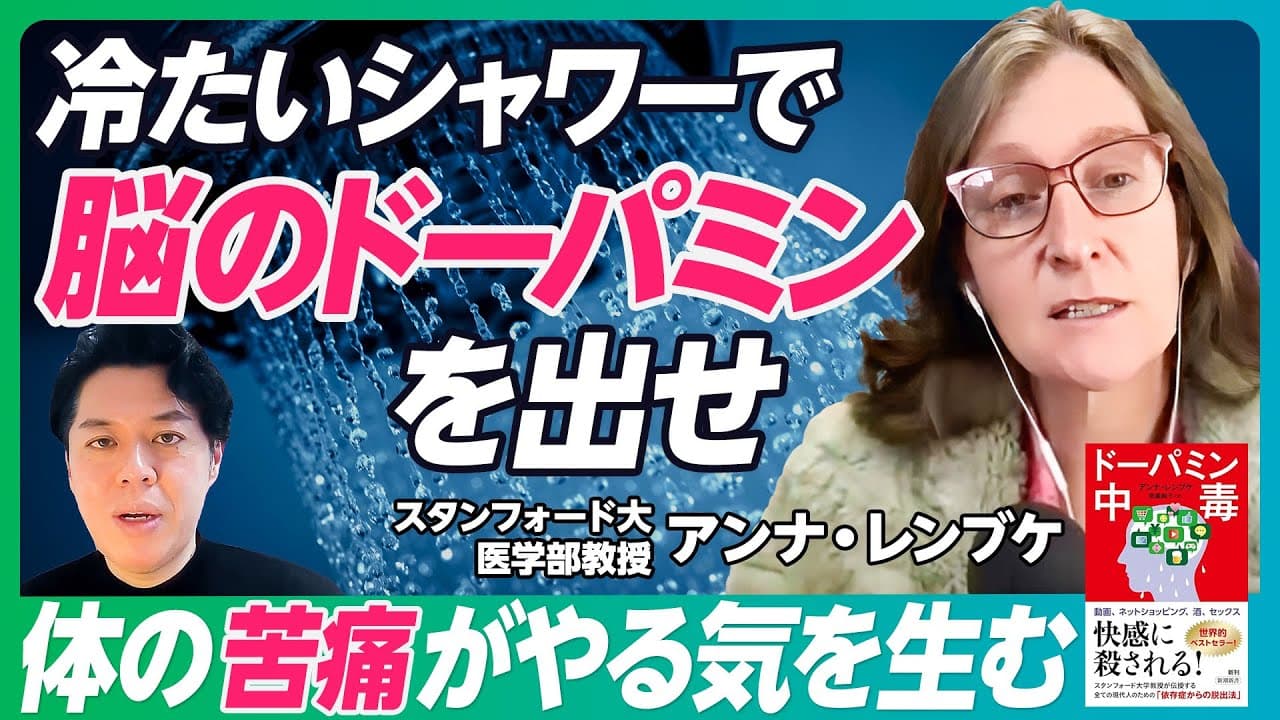
【ドーパミン中毒】スタンフォード大学医学部「冷たいシャワーの効果とは」/朝一番のエクササイズが効果的な理由/苦痛と快楽の感情はシーソーのように行き来する【PIVOT GLOBAL】
TL;DR
ドーパミン中毒は、デジタルメディアなどによる急激な快楽の後に脳がドーパミン伝達を基準値以下へ調整し、渇望と反復行動を生むことで進みます。対策として、快楽をもたらす活動を控えめにし、朝一番の運動や24時間のデジタル断食を取り入れる方法が紹介されています。苦痛と快楽のシーソーを整える具体策を知るために、続きを読んでください。
Transcript
made more Bountiful and abundant Tik Tock literally is infinite it never runs out made more novel dopamine is very sensitive to novelty and not not only are these drugs everywhere they also chase us down like they'll show up in our inbox or they'll show up on our news feed right it's very hard to avoid them the problem is uh that if we have a huge ... Read More
Key Insights
- Dopamine is a neurotransmitter crucial for pleasure, reward, and motivation, acting as a survival mechanism by encouraging behaviors that ensure survival.
- Sudden spikes in dopamine, often from digital media, can lead to a dopamine deficit state, causing cravings and addiction-like behaviors.
- In today's world, digital devices have made dopamine-releasing activities more accessible, leading to increased risk of addiction.
- The balance of pleasure and pain in the brain operates like a seesaw, with compensatory mechanisms to maintain homeostasis, potentially leading to addiction.
- Strategies to manage dopamine levels include moderation in using pleasure-inducing activities and introducing controlled pain, like exercise, to stimulate dopamine indirectly.
- The modern environment constantly bombards individuals with dopamine-releasing stimuli, making it challenging to maintain a healthy balance.
- Intentional breaks from digital media, such as a 24-hour digital fast, can help reset dopamine pathways and improve mental clarity.
- Personal strategies to manage dopamine include starting the day with exercise, avoiding sugar and caffeine, and minimizing digital device usage.
Install to Summarize YouTube Videos and Get Transcripts
Explore YouTube Video Summarizer or Get YouTube Transcript Extractor
Questions & Answers
Q: ドーパミン中毒はどのように起こるのですか?
ドーパミンが急激に増えると、脳はドーパミン伝達を基準値より下まで抑えて補正します。その不快な欠乏状態が渇望を生み、同じ物質や行動を繰り返す「摂取、離脱、渇望、探索」の循環につながります。
Q: ドーパミンとは何ですか?
ドーパミンは、ニューロン間の隙間であるシナプスを橋渡しし、電気回路を細かく調節する神経伝達物質です。快楽、報酬、意欲に関わり、生存に必要な食料や住居、配偶者などを求める行動を促します。
Q: ドーパミンが急上昇した後、脳では何が起こりますか?
脳は大きく急な上昇を処理するため、ドーパミン伝達を基準値だけでなく、それ以下まで下げます。これが二日酔いや落ち込みに似たドーパミン欠乏状態で、もう一度TikTokを見たいといった渇望を引き起こします。
Q: なぜTikTokなどのデジタルメディアはやめにくいのですか?
デジタルメディアは視覚野へ直接届き、報酬回路でドーパミンを放出させる強力な刺激です。TikTokは無限に続き、新奇性が高いうえ、ニュースフィードや受信箱にも現れるため避けにくく、渇望と反復の循環を作りやすくなります。
Q: 快楽と苦痛のバランスはどのように働きますか?
快楽と苦痛はシーソーのように働き、快楽側へ傾くと脳は恒常性を保つため苦痛側へ補正します。手軽で急激な快楽を繰り返すと基準値以下の状態が生じ、渇望や強迫的な行動につながります。
Q: ドーパミンを健全に管理するにはどうすればよいですか?
快楽を生む活動を適度に制限し、運動のようなコントロールされた苦痛を取り入れる方法が示されています。デジタル機器から意図的に離れることも、ドーパミン経路をリセットし、頭の明晰さを取り戻す助けになります。
Q: 24時間のデジタル断食にはどのような目的がありますか?
24時間デジタルメディアを断つ目的は、絶え間ない刺激から距離を置き、ドーパミン経路をリセットすることです。注意の向け方や感覚体験を変え、反射的な行動を減らして精神的な明晰さを高める方法として紹介されています。
Q: 話者は日常的にどんなドーパミン対策をしていますか?
話者は朝一番に運動し、砂糖とカフェインを避け、デジタル機器の使用を最小限にしています。機器の電源を切って物理的に距離を置くことで、精神的なノイズを減らし、ドーパミン経路を休ませています。
Summary & Key Takeaways
-
The discussion centers on dopamine, a neurotransmitter associated with pleasure and motivation, and its role in addiction, especially in the context of modern digital stimuli.
-
Dopamine spikes from digital media can lead to a deficit state, causing cravings and addiction-like behaviors, prompting the need for strategies to maintain balance.
-
Practical tips include moderating pleasure-inducing activities, introducing controlled pain like exercise, and taking breaks from digital media to reset dopamine pathways.
Read in Other Languages (beta)
Share This Summary 📚
Summarize YouTube Videos and Get Video Transcripts with 1-Click
Try YouTube Summary with ChatGPT & Claude or YouTube Transcript Generator
Explore More Summaries from PIVOT 公式チャンネル 📚






Summarize YouTube Videos and Get Video Transcripts with 1-Click
Try YouTube Summary with ChatGPT & Claude or YouTube Transcript Generator