How Does Elon Musk’s Neuralink Read, Decode, and Predict Brain Signals?
TL;DR
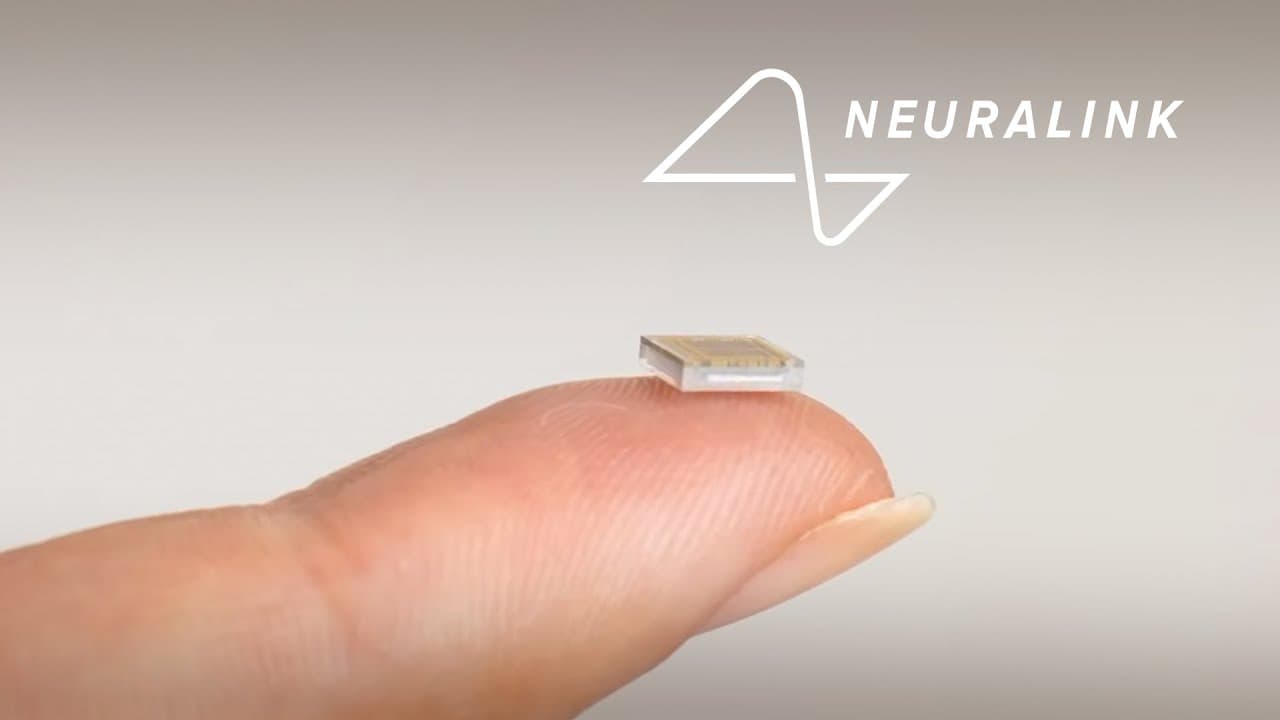
Elon Musk’s Neuralink reads brain activity by using implanted electrodes to capture analog neural signals, digitizing them, and analyzing action-potential “spikes” in real time. Its 2019 system reconstructed intended cursor movements, while a 2020 demonstration showed closely matching predictions of a pig’s limb and joint movements. Read on to understand the implant, its experiments, and its potential use for people with disabilities.
Transcript
Dear Fellow Scholars, this is Two Minute Papers with Dr. Károly Zsolnai-Fehér. Due to popular request, today we will talk about Neuralink, Elon Musk’s neural engineering company that he created to develop brain-machine interfaces. And your first question likely is, why talk about Neuralink now? There was a recent event, and another one last year as... Read More
Key Insights
- 👻 Neuralink has developed a robot that can insert tiny electrodes into brain tissue, allowing for the reading and digitization of neural signals.
- 💭 By analyzing these neural signals, Neuralink can detect patterns related to specific types of motion, enabling the decoding of a person's thoughts.
- 👻 The technology has shown great potential in assisting people with disabilities, allowing them to control devices through their thoughts.
Install to Summarize YouTube Videos and Get Transcripts
Explore YouTube Video Summarizer or Get YouTube Transcript Extractor
Questions & Answers
Q: How does Elon Musk’s Neuralink technology work?
A robot inserts extremely tiny electrodes into brain tissue, where they capture analog neural signals. Neuralink’s implant digitizes those signals, and its chip analyzes them for action potentials called “spikes.”
Q: What are action potentials or “spikes” in Neuralink’s brain data?
Action potentials are patterns in digitized neural signals that are also called spikes because of their shape. By monitoring when different neurons spike, the system can identify neural activity associated with particular motions.
Q: How can Neuralink determine what movement a person is thinking about?
Different neurons can show increased activity for different movements, such as reaching outward or returning a hand. By reading more neurons and organizing them according to the motions that excite them, Neuralink can detect and reconstruct intended movement in real time.
Q: Can Neuralink control a cursor using thought alone?
The transcript describes reconstructing the movement a person wishes to perform from neural spiking activity. A Neuralink device could then perform the corresponding cursor movement when the person thinks about moving.
Q: How could Neuralink help people with disabilities?
Brain-machine interfaces could assist people whose brains can still form movement intentions but whose connection to the rest of the body is severed. The device could read the intended movement and translate it into cursor control, potentially helping paralyzed people live longer and more meaningful lives.
Q: What did Neuralink demonstrate with Gertrude the pig in 2020?
Neuralink placed its device in Gertrude’s brain and displayed which neurons were spiking and when. As her snout was stimulated, the demonstration let viewers both see and hear the increased neural activity in real time.
Q: Could Neuralink predict a pig’s movements from its brain signals?
During a treadmill demonstration, Neuralink compared actual limb and joint movements with predictions produced from the pig’s brain signals. The actual and predicted signals were described as almost identical, including predictions of higher-frequency movements such as sharp turns.
Q: What is Neuralink trying to achieve within the next decade?
Many brain-machine-interface capabilities already existed in laboratory conditions, and Neuralink’s stated quest was to make them accessible to a wider audience within the next decade. The transcript says further progress could benefit paralyzed people, while neural enhancement also remained a possibility.
Summary & Key Takeaways
-
Neuralink developed a robot that can insert tiny electrodes into brain tissue, allowing for the reading and digitization of neural signals.
-
The Neuralink chip can analyze these signals and detect specific patterns related to different types of motion.
-
By using brain-machine interfaces, Neuralink can decode these signals and perform movements based solely on a person's thoughts.
Read in Other Languages (beta)
Share This Summary 📚
Summarize YouTube Videos and Get Video Transcripts with 1-Click
Try YouTube Summary with ChatGPT & Claude or YouTube Transcript Generator
Explore More Summaries from Two Minute Papers 📚






Summarize YouTube Videos and Get Video Transcripts with 1-Click
Try YouTube Summary with ChatGPT & Claude or YouTube Transcript Generator