What Does Scott Galloway Say About the Future of 401(k)s and Retirement Savings? | Office Hours
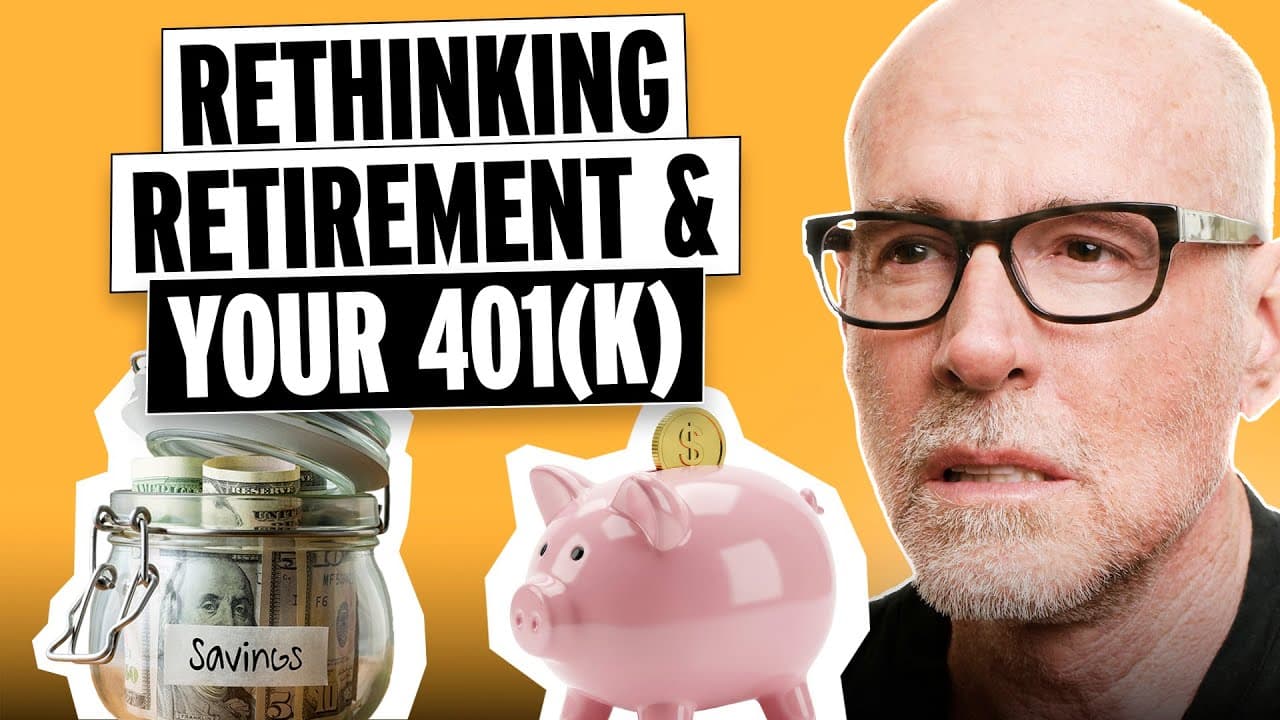
TL;DR
Scott Galloway recommends maximizing every available tax-advantaged account and employer match, then using automatic, forced-saving systems to build retirement wealth beyond a 401(k). Although 70% of private-sector workers have access to a 401(k)-style plan, between 30 million and 60 million workers still lack employer retirement plans. Read on for the benefits, access gaps, portfolio risks, and alternatives discussed in Office Hours.
Transcript
The smartest people on the planet aren't trying to put a person on Mars or solve world hunger. They're trying to figure out a way to use technology to hit you on a screen at the exact right moment when you're in the exact right move so they can sell you a pair of Bomba socks with your on running shoe, get you to upgrade from economy to economy comf... Read More
Key Insights
- Access has expanded materially: The share of private-sector workers with access to a 401(k)-style plan increased from 60% to 70% over a decade. That growth indicates broader adoption, but it still leaves a substantial group outside employer-based retirement saving and prevents access alone from serving as a complete measure of success.
- Balances show long-term potential: As of early 2025, the average 401(k) balance was $127,000, and roughly 600,000 participants had reached millionaire status. Galloway connects these outcomes to three reinforcing forces: stock market gains, compounding, and consistent long-term saving habits rather than a single exceptional financial event.
- Average rates hide shortfalls: The average retirement savings rate is about 14% of income, which sits near the recommended range of 12% to 15%. Yet about 40% of the working population is still not saving enough to preserve its lifestyle throughout retirement, showing why an overall average can obscure inadequate preparation.
- Employment type shapes opportunity: Low-wage, part-time, and gig workers are especially likely to lack employer-sponsored retirement plans. The estimated number without access ranges from 30 million to 60 million. Gig workers are disproportionately undersaved, with roughly 30% holding no retirement savings at all, making employment structure a major source of unequal outcomes.
- Equity exposure keeps increasing: Workers in their late 30s now hold about nine-tenths of their 401(k) assets in equities, up from 82% a decade earlier. Strong past returns may encourage the belief that stocks cannot decline for more than one year, but Galloway warns that markets can remain flat for a decade or fall.
- Older savers remain stock-heavy: Even people in their early 60s hold approximately 60% of their 401(k) assets in stocks. That matters because retirement portfolios are not isolated from market declines. The episode presents this exposure as part of a wider pattern in which 401(k) accounts have become more stock-heavy than ever.
- Concentration compounds market risk: Total equity exposure within 401(k)s reached $9 trillion in 2024, driven by strong demand and a belief that there is no alternative. The exposure is also concentrated among a few mega stocks. Nvidia alone is described as 8% of the S&P, creating dependence on a narrow group of companies.
- Employer matching comes first: When taking a job, Galloway's first recommended financial task is identifying all tax-deferred or tax-advantaged investments and matching programs. He advises maximizing them immediately. Matching adds employer-funded value to the worker's own contribution, while automatic payroll deductions keep that money from entering the pool available for routine spending.
- Spending pressure is engineered: Galloway argues that highly capable companies use technology to reach consumers on screens at precisely the right moment and mood. Offers such as socks, running shoes, or an upgrade from economy to economy comfort make spending difficult to resist. Saving systems must therefore counter continuous, personalized pressure to consume.
- Forced saving reduces temptation: The behavioral case for automation rests on the claim that 90% of people spend everything that comes into their hands. A successful mechanism moves money before it can be used elsewhere. This makes retirement preparation less dependent on repeated acts of willpower and gives invested funds time to accumulate.
- Housing creates saving discipline: Homeownership can build wealth even though housing, after maintenance and taxes, has probably underperformed the stock market. Its advantage is the mortgage's forced-saving structure. People generally make payments because they do not want foreclosure, gradually building home equity while the home's value may grow on a tax-deferred basis.
- Small contributions gain significance: Galloway uses $100 per month beginning at age 22 as an example of how modest, sustained saving can lead to millionaire status by age 65. His friend Lee began with $2,000 annually and later became a multimillionaire without selling a huge business. The lesson is to start rather than delay.
Install to Summarize YouTube Videos and Get Transcripts
Explore YouTube Video Summarizer or Get YouTube Transcript Extractor
Questions & Answers
Q: How can I build retirement savings beyond a 401(k)?
Use forced-saving mechanisms that move money into assets before it can be spent. Galloway specifically mentions the Acorns app, which rounds purchases to the nearest dollar and automatically invests the difference. He also presents homeownership as a forced-saving system because regular mortgage payments gradually build equity. These approaches matter for workers who lack a 401(k) and for anyone who needs automation to counter spending pressure.
Q: What does Scott Galloway recommend doing with a 401(k)?
First, identify every tax-deferred or tax-advantaged investment and employer matching program available through your job. Then maximize those benefits immediately when possible. Automatic payroll contributions keep the money from becoming available for everyday purchases. The approach works because it combines tax advantages, employer contributions, disciplined saving, and time for compounding.
Q: Have 401(k)s successfully built retirement wealth?
They have produced substantial wealth for many consistent savers. As of early 2025, the average balance was $127,000, and the number of 401(k) millionaires was near 600,000. Galloway credits stock market gains, compounding, and long-term saving habits. However, unequal access and insufficient saving mean those successes do not represent every worker.
Q: Who lacks access to employer retirement plans?
Between 30 million and 60 million workers lack access to employer retirement plans. Low-wage, part-time, and gig workers are particularly likely to be excluded. Roughly 30% of gig workers have no retirement savings at all. This matters because workers without payroll plans and employer matching must create their own automatic saving structures.
Q: How much income should go toward retirement savings?
The recommended range cited in the episode is 12% to 15% of income. The average savings rate is about 14%, which falls within that range. Still, about 40% of workers are not saving enough to maintain their lifestyle throughout retirement. The comparison shows that a healthy average rate does not mean every household is adequately prepared.
Q: Why are stock-heavy 401(k)s considered risky?
Workers in their late 30s hold about nine-tenths of their 401(k) assets in equities, while early-60s savers hold approximately 60%. Stocks can decline or remain flat for a decade, despite strong recent returns. Total 401(k) equity exposure reached $9 trillion in 2024. Reliance on a few mega stocks, including Nvidia at 8% of the S&P, further increases concentration risk.
Q: Why does automation improve retirement saving?
Automation removes money before daily spending can absorb it. Galloway says 90% of people will spend everything that reaches their hands, especially when technology delivers precisely timed purchasing prompts. Payroll deductions and round-up investing reduce the need to make the same saving decision repeatedly. The result is a forced habit that can continue for years and support compounding.
Q: When should someone begin saving for retirement?
Galloway's direct advice is to start now. He says saving $100 per month from age 22 can lead to millionaire status by age 65. He also describes a friend who saved $2,000 annually and eventually became a multimillionaire without selling a huge business. Beginning early matters because people consistently underestimate how quickly time passes.
Summary & Key Takeaways
-
Measuring the 401(k)'s success: Scott Galloway begins by acknowledging that 401(k)s have been a tax-efficient way to build wealth. Access among private-sector workers has risen from 60% a decade ago to 70%. As of early 2025, the average balance was $127,000, while the number of 401(k) millionaires was near a record 600,000. He attributes those outcomes to stock market gains, compounding, and habits sustained over long periods.
-
Recognizing unequal retirement access: The system does not serve everyone equally. Between 30 million and 60 million workers lack access to employer retirement plans, with low-wage, part-time, and gig workers especially affected. Roughly 30% of gig workers have no retirement savings at all. Although the average savings rate is about 14% of income, close to the recommended 12% to 15%, about 40% of workers are not saving enough to maintain their lifestyle in retirement.
-
Assessing stock concentration risks: Retirement accounts have become more dependent on equities. Workers in their late 30s hold about nine-tenths of their 401(k) assets in stocks, compared with 82% a decade ago. Even savers in their early 60s hold approximately 60% in stocks. Total 401(k) equity exposure reached $9 trillion in 2024, while reliance on a few mega stocks, including Nvidia at 8% of the S&P, creates additional concentration risk.
-
Making saving happen automatically: Galloway advises workers to identify every tax-deferred or tax-advantaged investment and matching program when starting a job, then maximize those benefits immediately. His reasoning is behavioral: 90% of people will spend everything that reaches their hands. Payroll contributions and automatic investment tools keep money away from immediate consumption. Acorns, which rounds purchases to the nearest dollar and invests the difference automatically, is offered as one practical forced-saving mechanism.
-
Starting before time disappears: The final message is to begin now because people underestimate how quickly time passes. Galloway recalls dismissing a friend who was determined to find $2,000 each year for an IRA or 401(k), yet that friend later became a multimillionaire without selling a huge business. He states that saving $100 monthly from age 22 can produce millionaire status by age 65. Consistency and an early start matter more than waiting for ideal circumstances.
Read in Other Languages (beta)
Share This Summary 📚
Summarize YouTube Videos and Get Video Transcripts with 1-Click
Try YouTube Summary with ChatGPT & Claude or YouTube Transcript Generator
Explore More Summaries from The Prof G Pod – Scott Galloway 📚





Summarize YouTube Videos and Get Video Transcripts with 1-Click
Try YouTube Summary with ChatGPT & Claude or YouTube Transcript Generator