How to Start Investing Wisely in Europe
TL;DR
Start by opening a licensed brokerage account, investing a manageable amount, and favoring passive ETFs or index funds over frequent trading or amateur stock picking. Invest regularly even near market highs, keep short-term house money in savings or money market funds, use local tax benefits, and carefully inspect fees before buying insurance-linked investments.
Transcript
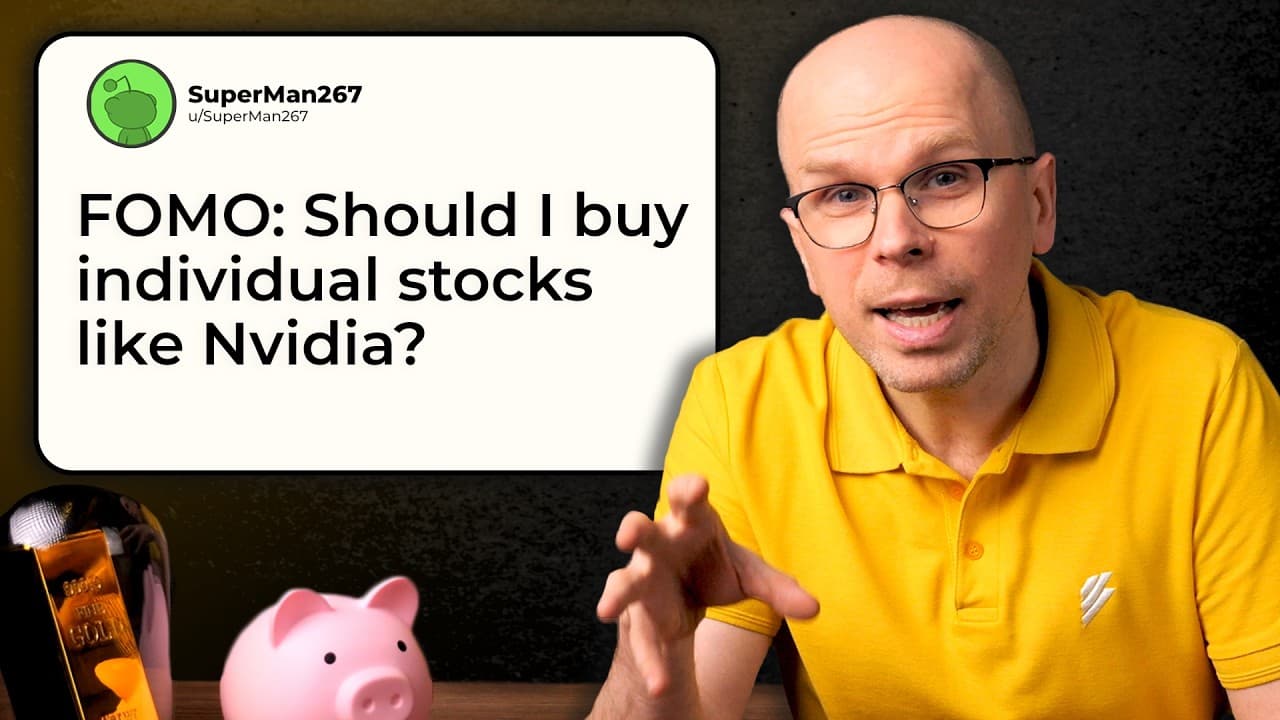
hey I'm Tom Crosshill I'm a professional investor with 17 years of experience and in this video I will answer investing questions from the internet wild Pokemon asks I'm 27 and looking for ways to get independent from my salary in 10 to 15 years while having a good lifestyle any advice well my first piece of advice is to buy some Nvidia stock 10 ye... Read More
Key Insights
- Financial independence in 10 to 15 years may require saving and investing 50% to 70% of income. Because that target is unrealistic for many Europeans, semi-retirement can offer a more attainable balance between passive income, reduced work, and an enjoyable lifestyle.
- Starting to invest is primarily about opening an account with a reputable licensed brokerage and taking the first step. A beginner can deposit 50 or 100 and purchase a familiar stock or ETF, then build knowledge about investments and strategies through experience and continued education.
- Active portfolio management is unlikely to add value for most investors. The research described in the discussion indicates that expected results generally worsen as management becomes more active, making continued employment, higher earnings, regular saving, and passive investing a more practical combination.
- Stock markets reach all-time highs regularly because profitable companies expand and innovate over time. A typical year can include 15 to 20 all-time highs, while market declines remain unpredictable, so regular investing is preferred to waiting for a supposedly ideal entry point.
- Short-term house deposit money should prioritize stability rather than maximum growth. High-yield savings accounts or European money market ETFs can be suitable because the funds invest in very short-term, high-quality bonds, helping protect the principal while producing a profit of a few percent per year.
- Investment taxes vary by European country, and local exemptions can materially change outcomes. The UK offers ISA accounts for tax-free investing, while Czech investors can usually sell stocks tax-free after holding them for at least three years, making country-specific research important before investing.
- Insurance-linked investment funds can impose exceptionally high costs. Some packages combine minimal life insurance with investment funds charging 3% to 5% annually, so prospective buyers should request the key information document and verify the product’s total costs before making a commitment.
- Broad passive funds reduce dependence on identifying a tiny group of winning stocks. Research cited in the discussion found that 83 of 26,000 US stocks generated half of investor profits over 90 years, illustrating why amateurs may fare better with ETFs or index funds.
Install to Summarize YouTube Videos and Get Transcripts
Explore YouTube Video Summarizer or Get YouTube Transcript Extractor
Questions & Answers
Q: How can someone pursue financial independence in 10 to 15 years?
Reaching financial independence within 10 to 15 years may require saving and investing 50% to 70% of income. That level is not realistic for many people in Europe, so semi-retirement may be a better target. With enough capital and passive income to cover many needs, a person can work less, choose more enjoyable work, and improve life without stopping work completely.
Q: How should a complete beginner start investing in Europe?
A beginner can open an account with almost any reputable licensed brokerage, deposit a manageable amount such as 50 or 100, and buy a familiar stock or ETF. The important first step is becoming an investor instead of overthinking the initial decision. After starting, the investor can gradually study different investments, strategies, risks, costs, and other practical aspects of portfolio building.
Q: Should investors actively manage their portfolios or invest passively?
Most investors are better served by passive investing while continuing to work and earn income. The research described in the discussion suggests that more active management generally produces worse expected results rather than adding value. Instead of spending substantial time trading, an investor can focus on increasing earnings, saving more of that income, and consistently investing the savings through a passive strategy.
Q: Should investors buy equities when markets are at all-time highs?
All-time highs alone are not a reliable reason to avoid investing. In a typical year, the stock market reaches all-time highs between 15 and 20 times because companies earn money, expand, and innovate. Some years still bring declines, but nobody can predict exactly when they will happen. The suggested response is to stop worrying about record levels and invest money regularly.
Q: Where should money for a future house deposit be kept?
Money needed for a house deposit should generally be protected rather than exposed to long-term market volatility or speculative assets such as Bitcoin. A high-yield savings account may provide the desired stability. If one is unavailable, European money market ETFs are another option because they invest in very short-term, high-quality bonds, protecting the money while potentially earning a few percent per year.
Q: How can European investors reduce taxes on stock profits?
European investors should investigate the exemptions and incentives available in their own countries before investing. The UK allows investors to place substantial amounts into ISA accounts and invest tax-free. In the Czech Republic, stocks held for at least three years can usually be sold without tax. The applicable rules differ by country, so identifying local benefits is an important part of planning an investment strategy.
Q: Is moving to a low-cost country enough to retire early?
Moving to a lower-cost country can help retirement savings last longer, but actual expenses depend heavily on the desired lifestyle. Living like a local may be inexpensive but can involve basic housing, food, and difficulty obtaining necessities. A comfortable Western lifestyle and additional services can cost more than living in many European countries. Retirees also should not automatically cash out all investments because bank-held money loses value through inflation.
Q: Are insurance company investment funds worth buying?
Insurance company investment funds can be among the most expensive products available to European investors. Some combine life insurance worth very little with an investment fund charging 3% to 5% every year. Combining insurance and investing in one package can therefore produce poor value. Before purchasing one, an investor should request the key information document, which provides reliable details about the investment’s total costs.
Summary & Key Takeaways
-
Building financial independence in 10 to 15 years may require saving and investing 50% to 70% of income, which is unrealistic for many Europeans. Semi-retirement can be a more practical goal because accumulated capital and passive income may cover many needs while allowing someone to work less or pursue enjoyable work.
-
Beginners can start with almost any reputable licensed brokerage, deposit a small amount such as 50 or 100, and buy a familiar stock or ETF. The initial objective is to begin investing, then gradually learn about different assets and strategies rather than delaying action while searching for a perfect platform or portfolio.
-
Passive investing is presented as the sensible default because frequent portfolio management and amateur stock picking are unlikely to improve results. Regular investing reduces concern about market timing, while short-term savings require stable options. Investors should also investigate national tax benefits and examine every product’s complete costs before committing money.
Read in Other Languages (beta)
Share This Summary 📚
Summarize YouTube Videos and Get Video Transcripts with 1-Click
Try YouTube Summary with ChatGPT & Claude or YouTube Transcript Generator
Explore More Summaries from Tom Crosshill 📚
Summarize YouTube Videos and Get Video Transcripts with 1-Click
Try YouTube Summary with ChatGPT & Claude or YouTube Transcript Generator