How to Profit Using Head and Shoulders Pattern
TL;DR
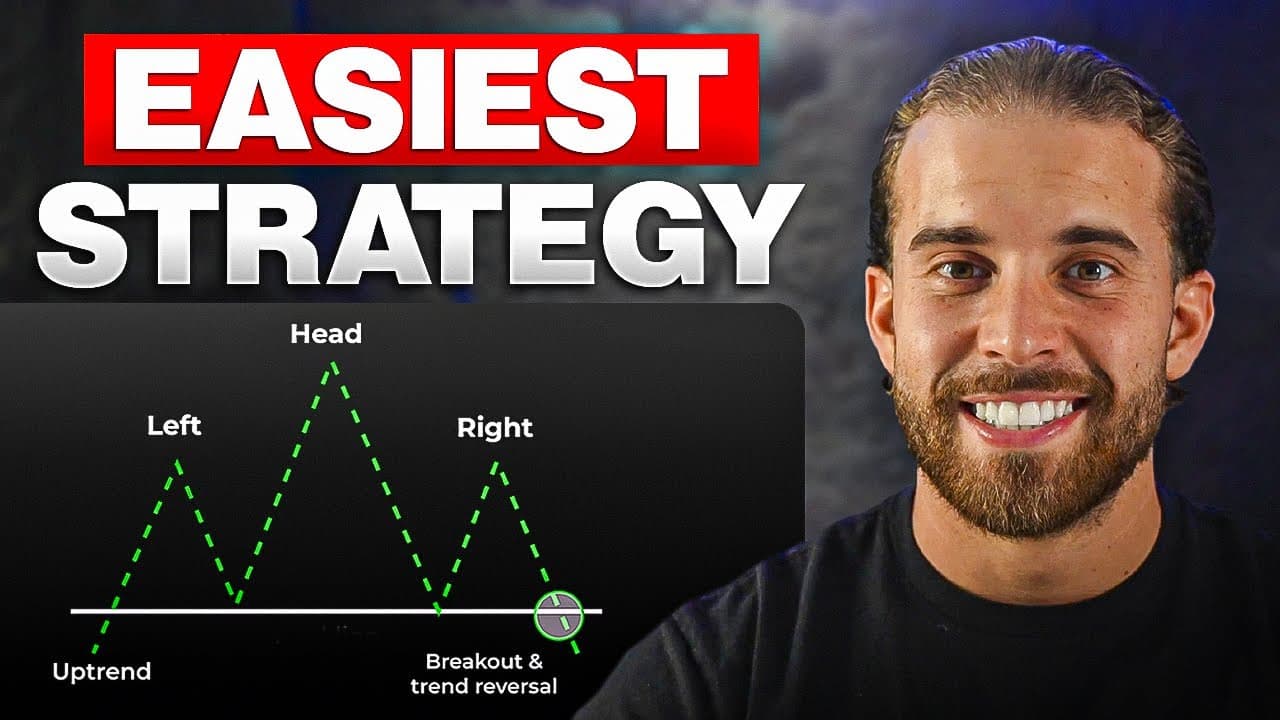
The head and shoulders pattern is a reversal trading pattern that signals a market direction change. It is identified by three peaks: two smaller ones (shoulders) on either side of a larger one (head). Traders can enter trades at the right shoulder or the neckline retest for higher accuracy, using it on various time frames for potential profits.
Transcript
if you don't know the head and shoulders pattern then you won't know how it made be $7,000 in this trade alone in literally 45 hours now if you don't understand it it's okay don't worry about it in this video I'm going to explain to you everything you need to know in order for you to understand how to use the head and shoulders pattern and how you ... Read More
Key Insights
- The head and shoulders pattern is a reversal pattern indicating a market trend change.
- It consists of three peaks: two smaller shoulders and one larger head.
- The pattern is confirmed when the price breaks the neckline, suggesting a reversal.
- An inverted head and shoulders pattern indicates a bullish reversal from a bearish trend.
- Traders can enter high-risk trades at the potential right shoulder before confirmation.
- More conservative trades occur at the neckline retest after confirmation.
- The pattern appears on various time frames, with higher time frames being more reliable.
- Proper risk management and a trading plan are crucial for successful trading using this pattern.
Install to Summarize YouTube Videos and Get Transcripts
Explore YouTube Video Summarizer or Get YouTube Transcript Extractor
Questions & Answers
Q: How to identify a head and shoulders pattern?
A head and shoulders pattern is identified by three distinct peaks: two smaller ones (shoulders) on either side of a larger central peak (head). The pattern is confirmed when the price breaks below the neckline, a line drawn connecting the lowest points of the two troughs between the peaks. This break suggests a reversal in the market trend.
Q: What is an inverted head and shoulders pattern?
An inverted head and shoulders pattern is the opposite of the standard pattern and indicates a bullish reversal. It forms after a downtrend, with three troughs: a central deeper trough (head) and two shallower ones (shoulders) on either side. The pattern is confirmed when the price breaks above the neckline, signaling a potential upward trend.
Q: When should traders enter a trade using the head and shoulders pattern?
Traders can enter a trade using the head and shoulders pattern at two points: a high-risk entry at the potential right shoulder before confirmation, or a more conservative entry after the neckline is broken and retested. The latter provides a stronger confirmation of the reversal and reduces the risk of false signals.
Q: Why is the head and shoulders pattern significant in trading?
The head and shoulders pattern is significant because it provides a reliable indication of a trend reversal, allowing traders to anticipate and capitalize on potential market shifts. By identifying this pattern, traders can make informed decisions about entering or exiting trades, thus improving their chances of profitability.
Q: How does the neckline affect the head and shoulders pattern?
The neckline is a critical component of the head and shoulders pattern, acting as a support or resistance level. A break of the neckline confirms the pattern and indicates a potential reversal. The direction of the neckline (upward or downward slope) can also provide additional context about the strength and direction of the anticipated trend change.
Q: What role does time frame play in the head and shoulders pattern?
Time frame plays a crucial role in the reliability of the head and shoulders pattern. Patterns on higher time frames, such as daily or weekly charts, tend to be more reliable and significant, as they reflect broader market trends. Conversely, patterns on lower time frames may be more frequent but less reliable due to market noise.
Q: What are the risks associated with trading the head and shoulders pattern?
Risks associated with trading the head and shoulders pattern include false signals, where the pattern appears but the market does not reverse. This can lead to losses if trades are entered prematurely. Proper risk management, including setting stop-loss orders and waiting for pattern confirmation, can mitigate these risks.
Q: How can traders improve their success with the head and shoulders pattern?
Traders can improve their success with the head and shoulders pattern by thoroughly understanding its structure, waiting for confirmation before entering trades, and using it in conjunction with other technical analysis tools. Additionally, implementing a solid trading plan and risk management strategy is essential for consistent profitability.
Summary & Key Takeaways
-
The head and shoulders pattern is a key reversal indicator in trading, consisting of three peaks: two shoulders and a head. It signals a market shift when the neckline is broken, allowing traders to anticipate trend reversals.
-
Traders can enter at the potential right shoulder for higher risk or wait for the neckline retest for a more conservative approach. The pattern is versatile, appearing across different time frames, and is more reliable on higher time frames.
-
Utilizing the head and shoulders pattern effectively requires understanding its structure, identifying strong support or resistance levels, and implementing a solid trading plan and risk management strategy for consistent profits.
-
(Content reviewed on 2026-08-27.)
Read in Other Languages (beta)
Share This Summary 📚
Summarize YouTube Videos and Get Video Transcripts with 1-Click
Try YouTube Summary with ChatGPT & Claude or YouTube Transcript Generator
Explore More Summaries from fxalexg 📚





Summarize YouTube Videos and Get Video Transcripts with 1-Click
Try YouTube Summary with ChatGPT & Claude or YouTube Transcript Generator