How to turn daily tasks into reusable AI skills
TL;DR
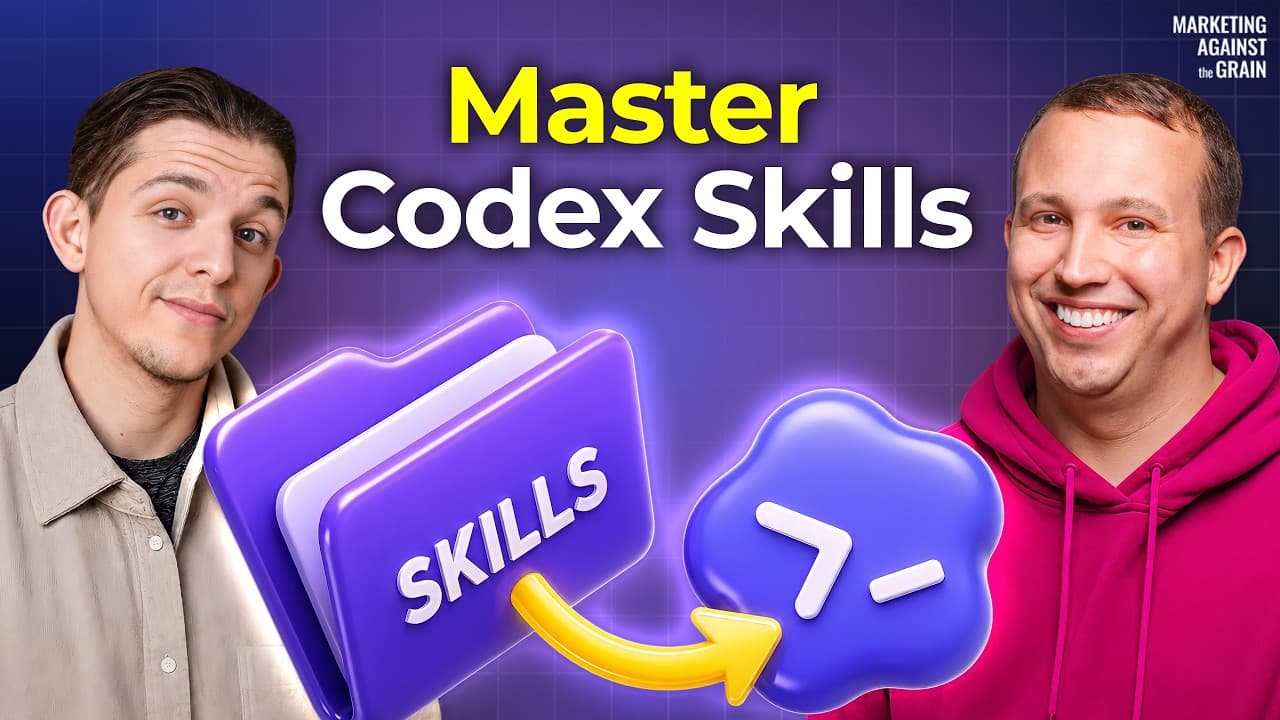
AI skills turn daily, repetitive work into repeatable workflows. Build granular tasks and convert them into reusable Codex skills like YouTube Researcher to pull transcripts and analyze videos. Document steps, optimize for parallel multitasking, and use an in app browser to keep workflows centralized and scalable.
Transcript
Welcome to today's show. This is a [music] wild one. We're sitting down with Riley Brown, who is one of my favorite AI thought leaders and [music] experts, and he's taken us behind the scenes, how he builds agents, skills, how he works with them across his company, how he even went through his [music] entire six-year iMessage backlog and was brough... Read More
Key Insights
- The key to scalable AI usage is turning everyday actions into repeatable AI skills that can be reused across tasks. By documenting granular steps, you build a foundation you can leverage with agents and workflows rather than relying on one-off prompts.
- The YouTube Researcher skill demonstrates how a single, simple prompt can pull transcripts and analyze videos, rank content by popularity, and surface actionable advice, illustrating how a lightweight prompt can unlock complex, repeatable outcomes.
- Parallelization of tasks with multiple AI sessions enables faster progress and resembles delegation to a co worker, which is crucial for marketing and content workflows that require multiple data-gathering and drafting steps.
- Quality should not be sacrificed for automation; maintaining high output standards ensures that AI-driven processes produce valuable content and insights, echoing the host’s emphasis on taste and judgment in marketing.
- Documenting core weekly activities forms the backbone of repeatable systems, allowing you to extract repeatable patterns and build robust skills that can be applied to various projects rather than just isolated tasks.
- Notion integration and in app browser support turn AI-generated results into fully usable assets, helping teams access, edit, and publish content within a single workflow rather than switching between tools.
- Skills like hook outlines and brainstorming ideas become reusable templates that can be instantiated for different episodes or topics, reducing decision fatigue and speeding up the production cycle.
- The discussion argues that the future of AI is not just automation, but building structured, repeatable skill sets that AI agents can execute with minimal human intervention while preserving creative direction and quality.
- More videos from this channel:
- More from this channel: Marketing Against the Grain
Install to Summarize YouTube Videos and Get Transcripts
Explore YouTube Video Summarizer or Get YouTube Transcript Extractor
Questions & Answers
Q: What is Codex and why is it important for AI agents according to the video?
Codex is presented as OpenAIs desktop app that lets you interact with AI agents and turn tasks into skills used across multiple applications. It enables building repeatable workflows by converting actions into codified skills, such as a YouTube researcher, which can pull transcripts, search content, and analyze outputs automatically. This structure helps scale AI use by creating dependable, reusable capabilities rather than relying on single prompts.
Q: How does Riley Brown describe turning daily work into AI skills?
Riley explains that the key is to capture every useful action you perform into a repeatable skill. He demonstrates this by showing how he documents granular weekly tasks and converts them into skills that can be executed by AI agents. This process creates a foundation for automating routine work and expanding AI use beyond ad hoc prompts.
Q: What is the YouTube Researcher skill and what can it do?
The YouTube Researcher skill uses an API called SupaData to quickly pull YouTube transcripts and search content. It can rank videos by popularity and analyze the top results to provide actionable advice. The skill is designed as a repeatable prompt that can be reused to study and optimize video content efficiently.
Q: Why is multitasking with parallel AI agents beneficial, according to the interview?
Parallel AI agents allow handling several tasks at once, which speeds up workflows and mimics delegating to multiple team members. This approach is especially useful for processes like content research and outline creation, where different agents can perform separate steps concurrently, reducing overall time to generate a finished piece.
Q: What does the speaker say about documenting core weekly tasks?
The speaker emphasizes documenting every granular task in a typical week to establish a foundation for skills that can be turned into repeatable AI workflows. This documentation helps identify opportunities to automate and optimize recurring activities, enabling more efficient use of AI across tools like Codex, Notion, and browsers.
Q: How are hook outlines used in the workflow, and why are they important?
Hook outlines are treated as a specific, repeatable step in video production. By creating a hook outline as a skill, the creator ensures that the opening of each video is strong and consistent, which is essential for attracting and retaining viewers. The process also allows refining the hook over time to improve performance.
Q: What is the role of Notion in the Codex workflow discussed in the video?
Notion is integrated as a storage and collaboration layer within the Codex workflow. Skills can generate long form content and then publish it as Notion pages or documents, enabling easy access and organization. This integration helps keep the AI-driven process centralized and manageable.
Q: What caution does the host offer about relying on automation for marketing content?
The host warns against sacrificing quality for quantity when automating marketing. While AI can handle repetitive tasks, it should not replace human taste and judgment. The emphasis is on building reliable, repeatable processes that maintain high quality, thereby improving efficiency without diluting the creative value.
Summary & Key Takeaways
-
A practical approach is shown for converting everyday tasks into repeatable AI skills, starting with Codex and the idea of turning actions into reusable prompts. The host emphasizes documenting granular steps to create reliable, repeatable workflows that can be run by AI agents across tools.
-
The discussion covers multitasking with parallel agents, the importance of not sacrificing quality for quantity, and the value of creating structured skills like hook outlines and brainstorm ideas to speed up content production.
-
The episode highlights how to integrate Codex skills with Notion and an in app browser, turning scripts and outlines into concrete tasks and assets, and using these skills to streamline marketing and content creation workflows.
Read in Other Languages (beta)
Share This Summary 📚
Summarize YouTube Videos and Get Video Transcripts with 1-Click
Try YouTube Summary with ChatGPT & Claude or YouTube Transcript Generator
Explore More Summaries from Marketing Against the Grain 📚



Summarize YouTube Videos and Get Video Transcripts with 1-Click
Try YouTube Summary with ChatGPT & Claude or YouTube Transcript Generator