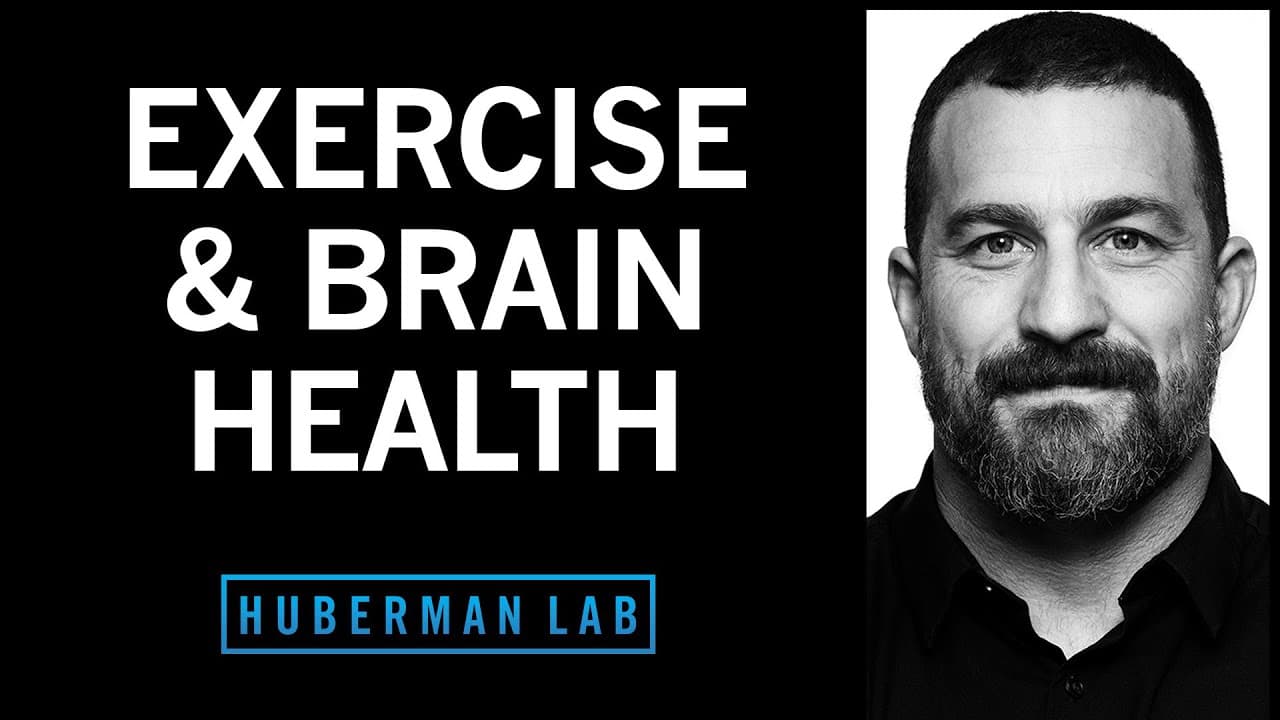
How to Enhance Brain Health with Exercise
TL;DR
Exercise can significantly improve brain health and performance through various mechanisms, including increased neurochemical activity that boosts alertness. Different forms of exercise, such as resistance and cardiovascular training, release beneficial hormones like osteocalcin and bdnf, which enhance neuroplasticity and learning. To optimize brain health, incorporate a mix of high-intensity, resistance, and long-duration exercises into your weekly routine.
Transcript
welcome to the huberman Lab podcast where we discuss science and science-based tools for everyday life I'm Andrew huberman and I'm a professor of neurobiology and Opthalmology at Stanford school of medicine today we are discussing exercise and brain health which includes brain longevity and brain performance our ability to learn new information ove... Read More
Key Insights
- Exercise increases neurochemical activity, enhancing alertness and cognitive function.
- Resistance and cardiovascular training release osteocalcin, benefiting brain health.
- Brain-derived neurotrophic factor (bdnf) is crucial for neuroplasticity and learning.
- High-intensity interval training significantly boosts cognitive flexibility.
- Long-duration cardiovascular exercises improve cerebral blood flow and brain oxygenation.
- Time under tension in resistance training enhances muscle and brain communication.
- Explosive and eccentric exercises stimulate osteocalcin release from bones.
- Regular exercise improves sleep quality, further enhancing brain health.
Install to Summarize YouTube Videos and Get Transcripts
Explore YouTube Video Summarizer or Get YouTube Transcript Extractor
Questions & Answers
Q: How does exercise improve brain health?
Exercise improves brain health by increasing neurochemical activity that enhances alertness and cognitive function. It releases hormones like osteocalcin and bdnf, which promote neuroplasticity and learning. Additionally, exercise improves cerebral blood flow and brain oxygenation, contributing to better brain performance and longevity.
Q: What types of exercise are best for brain health?
A combination of high-intensity interval training, long-duration cardiovascular exercises, and resistance training with time under tension is ideal for brain health. These exercises enhance cerebral blood flow, release beneficial hormones, and improve cognitive flexibility, contributing to overall brain performance and longevity.
Q: Why is osteocalcin important for the brain?
Osteocalcin, a hormone released by bones during exercise, is important for the brain because it crosses the blood-brain barrier and enhances the function of the hippocampus, an area critical for learning and memory. It also works in conjunction with bdnf to support neuroplasticity and cognitive health.
Q: How does bdnf affect learning and memory?
Brain-derived neurotrophic factor (bdnf) is crucial for learning and memory as it supports the growth and stability of neurons and their connections. Exercise-induced bdnf enhances neuroplasticity, allowing the brain to adapt and form new pathways, which is essential for learning new information and retaining it over time.
Q: What role does lactate play in brain function?
Lactate, produced during intense exercise, serves as a fuel for neurons and stimulates the release of vegf, which supports the integrity of the blood-brain barrier. This process helps maintain brain health by ensuring proper nutrient delivery and waste removal, while also suppressing appetite post-exercise.
Q: Can exercise improve sleep quality?
Yes, regular exercise can improve sleep quality by enhancing the architecture of sleep, increasing the amount of deep slow-wave sleep, and regulating sleep patterns. This improvement in sleep further supports brain health and cognitive performance, as sleep is essential for memory consolidation and overall brain function.
Q: What is the impact of not exercising on brain health?
Not exercising for extended periods, such as 10 days or more, can lead to decrements in brain oxygenation and other markers of brain health. Regular physical activity is crucial for maintaining brain function, as it supports cerebral blood flow, neurochemical balance, and the release of hormones that benefit cognitive health.
Q: How does high-intensity interval training benefit the brain?
High-intensity interval training (HIIT) benefits the brain by significantly boosting cognitive flexibility and executive function. It increases cerebral blood flow and the release of neurochemicals that enhance focus and alertness. HIIT also stimulates the production of lactate and bdnf, contributing to improved brain performance and health.
Summary & Key Takeaways
-
Exercise is a powerful tool for enhancing brain health and performance. It increases neurochemical activity, such as norepinephrine, which boosts alertness and cognitive function. Engaging in various forms of exercise, including resistance and cardiovascular training, releases hormones like osteocalcin and bdnf that enhance neuroplasticity and learning.
-
Incorporating high-intensity interval training, long-duration cardiovascular exercises, and resistance training with time under tension into your weekly routine can optimize brain health. These activities improve cerebral blood flow, brain oxygenation, and the release of beneficial hormones.
-
Exercise also significantly impacts sleep quality, which is crucial for long-term brain health and cognitive performance. By following a diverse exercise regimen, you can enhance both physical fitness and brain longevity.
Read in Other Languages (beta)
Share This Summary 📚
Summarize YouTube Videos and Get Video Transcripts with 1-Click
Try YouTube Summary with ChatGPT & Claude or YouTube Transcript Generator
Explore More Summaries from Andrew Huberman 📚




Summarize YouTube Videos and Get Video Transcripts with 1-Click
Try YouTube Summary with ChatGPT & Claude or YouTube Transcript Generator