How Does Impostor Crewmate Control Work?
TL;DR
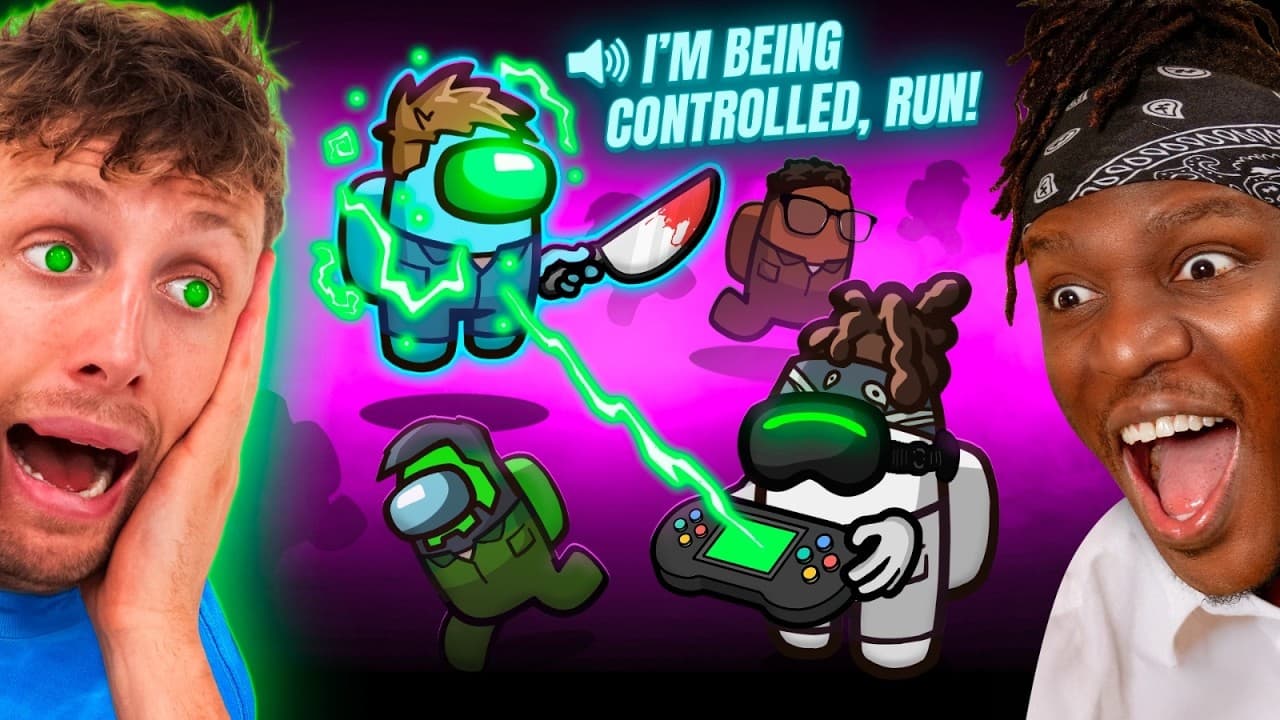
The impostor can control another player’s movement, creating misleading kills and making nearby witnesses suspect the controlled crewmate. Proximity chat adds fragmented conversations, accusations, and audible panic, while technical problems and unfamiliar roles make deductions less reliable. Crewmates must compare locations, movement, and eyewitness accounts before voting.
Transcript
Every time I think we can't get a more scuffed lobby, we do among us with proxs chat. It's proc chat so they can hear me right now, but I'm muted. Um, we've had lots of issues setting up as always. Chip, welcome back. Hello. Hello. Yeah, welcome Chip. Hello. Hello. Hello, Chip. Hey, Chip. This guy's next, bro. I think he just needs to play nerf. Th... Read More
Key Insights
- Proximity chat is central to the lobby because players can hear nearby conversations during movement. Muting, distance, and overlapping speech create incomplete information, while jokes and accusations heard in real time influence whom each participant follows, avoids, or suspects.
- Technical instability affects the match because Chip cannot get his setup working, reports a body without clearly communicating useful information, and then disconnects. The group continues with fewer players, showing how recording problems directly alter both the lobby size and available evidence.
- Unfamiliarity with the game creates avoidable mistakes because one returning player needs help identifying yellow task indicators and completing a task. The same lack of role knowledge later causes Anita to change a vote without understanding what her ability would do.
- Door closures become evidence against Josh because other players associate that behavior specifically with him. Their behavioral read is accurate, and Josh later confirms that he closed the doors, but the group still fails to convert that suspicion into a successful crewmate outcome.
- Voting without firm evidence gives the impostors an advantage because the group removes or nearly removes players based on noise, personality, and incomplete testimony. Several participants also skip when they believe a vote may be necessary to prevent a possible double kill.
- The Puppet Master mechanic works by controlling another player’s movement, allowing suspicious actions to appear connected to the controlled crewmate. A player explicitly announces that he is being controlled while being moved away, complicating eyewitness claims about who approached or left the body.
- Eyewitness testimony becomes unreliable when movement control is active because Anita says she saw the dark green player kill, while others connect the event to a controlled player nearby. The discussion cannot cleanly separate direct actions from movements imposed by the impostor.
- Emotional behavior is treated as evidence when a participant argues that Pie usually becomes genuinely upset when wrongly voted out as a crewmate. Another player rejects this reasoning, illustrating how the lobby mixes behavioral history with positional evidence and role mechanics.
Install to Summarize YouTube Videos and Get Transcripts
Explore YouTube Video Summarizer or Get YouTube Transcript Extractor
Questions & Answers
Q: How does impostor control affect crewmate movement?
The Puppet Master mechanic allows an impostor to control a crewmate’s movement. During the round, one player repeatedly says he is being controlled while moving in the opposite direction from another participant. Because a body appears during this confusion, witnesses struggle to determine whether the nearby crewmate acted voluntarily or was manipulated by the impostor.
Q: Why does proximity chat make deductions more difficult?
Proximity chat limits conversations to players who are close enough to hear one another, so different groups receive different pieces of information. Players also talk over each other, mutter suspicions aloud, chase one another, and react emotionally during emergencies. These fragmented exchanges make it harder to reconstruct movements consistently once everyone reaches a meeting.
Q: What evidence makes the players suspect Josh?
The players suspect Josh partly because doors close around them and they associate frequent door closures with his usual behavior. One participant directly votes for him based on that pattern. Josh later confirms that he did close the doors, so the behavioral observation was accurate even though confusion and voting decisions prevented the crewmates from using it effectively.
Q: How does misunderstanding a role change the first round?
Anita uses an unfamiliar ability and changes Josh’s vote without knowing what the action means. She later admits that she was experimenting to discover its effect. The altered vote benefits Josh, who is an impostor, and contributes to the crewmates losing the round. The incident shows why understanding modifiers matters before using them during a meeting.
Q: Why is Chip unable to provide useful information?
Chip reports a body, but his technical setup prevents normal communication and participation. The group tries to determine whom he can hear and even discusses calling him directly. He then disconnects, leaving the remaining players without a clear account of what he saw. His absence removes potentially important evidence from the meeting and reduces the lobby.
Q: Why do players think they may need to vote immediately?
The group reasons that if the previously ejected player was not an impostor and two impostors remain, those impostors could perform a double kill and end the round. That possibility makes another vote seem necessary. Despite articulating this risk, some players still skip, while others vote based on behavioral suspicion rather than confirmed evidence.
Q: How does the group identify the Puppet Master round?
Suspicion of the Puppet Master mechanic begins when a player says he is being controlled while others observe strange movement near a body. Another participant explicitly identifies the mechanic and connects it to Josh, although the meeting remains disputed. The group then debates whether the visible player killed voluntarily or was moved by someone elsewhere.
Q: What causes the meetings to become chaotic?
The meetings become chaotic because players combine eyewitness claims, proximity-chat fragments, behavioral assumptions, technical excuses, and unfamiliar role mechanics. Several people interrupt one another, some cannot clearly establish their locations, and others vote simply to silence a loud participant. With controlled movement also involved, even seeing someone near a body does not settle responsibility.
Summary & Key Takeaways
-
The group plays Among Us with proximity chat after experiencing several setup problems. Chip returns but struggles to get the game working and eventually disconnects. Meanwhile, players explain basic tasks to less experienced participants, joke through nearby voice conversations, and begin making accusations with limited reliable information.
-
In the first featured round, Josh uses door closures and quiet play while suspicion moves between several players. Anita unknowingly changes the vote after experimenting with an unfamiliar ability, helping the impostors. Josh and his partner secure the win, although the crewmates quickly recognize how confusion and role misunderstanding affected the result.
-
A later round introduces the Puppet Master mechanic, which allows an impostor to control a crewmate. One player announces that he is being controlled as a body appears, producing conflicting eyewitness accounts. The meeting becomes chaotic because players disagree about who moved, who killed, and which absent participants could be responsible.
Read in Other Languages (beta)
Share This Summary 📚
Summarize YouTube Videos and Get Video Transcripts with 1-Click
Try YouTube Summary with ChatGPT & Claude or YouTube Transcript Generator
Explore More Summaries from MoreSidemen 📚






Summarize YouTube Videos and Get Video Transcripts with 1-Click
Try YouTube Summary with ChatGPT & Claude or YouTube Transcript Generator