How the Supreme Court ruling changes voter verification
TL;DR
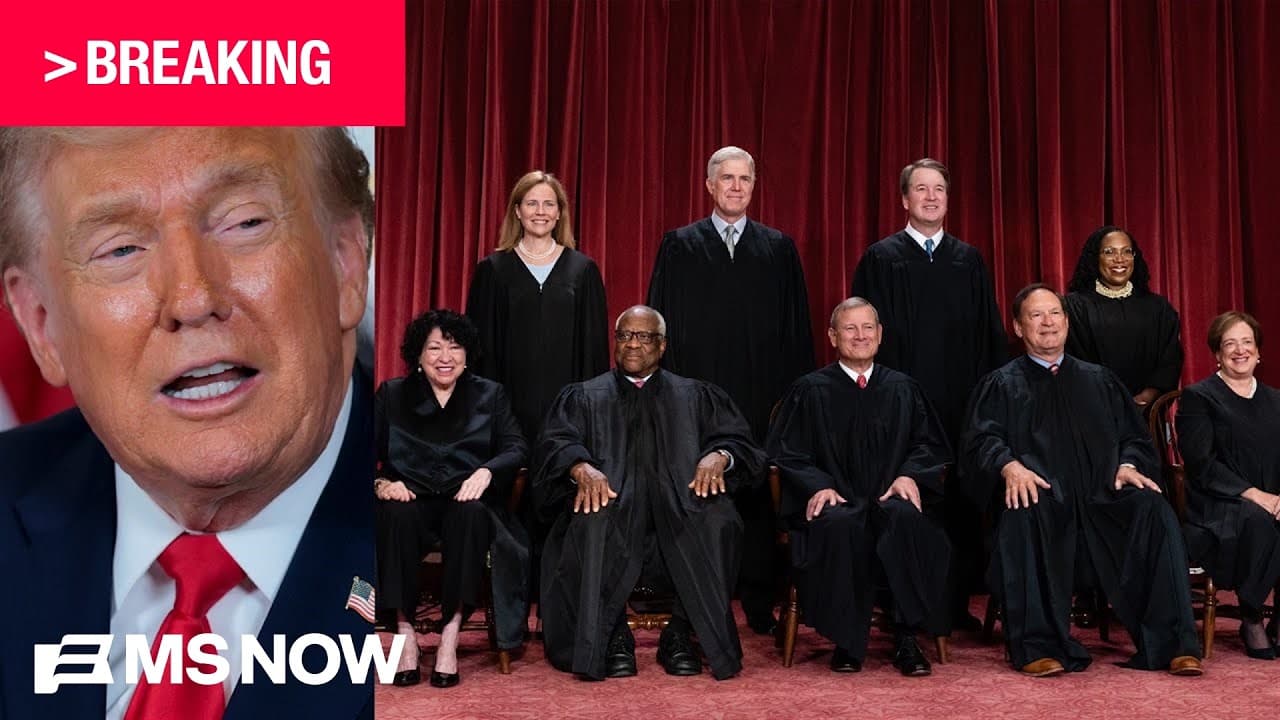
The Supreme Court granted a stay allowing the SAVE system to verify citizenship for elections. This could enable federal data sharing with states to validate voter rolls, though the practical impact on the upcoming midterms remains unclear and contested by officials and experts in the discussion.
Transcript
THERE IS BREAKING NEWS WHILE WE HAVE BEEN SPEAKING HERE. THE U .S. SUPREME COURT WITHIN THE LAST FEW MOMENTS HAS THE CURT HAS JUST RESTORED THE TRUMP ADMINISTRATION'S MASS VOTER VERIFICATION SYSTEM. I WANT TO GET TO OUR LEGAL ANALYST LISA RUBIN RIGHT NOW WE ARE GOING TO TALK ABOUT WHAT THE COURT HAS SAID AND WHAT THIS MEANS. LISA, HELP US BET... Read More
Key Insights
- The SAVE system is used to verify entitlement to government benefits and is now considered for voter citizenship verification.
- The Supreme Court granted a stay by a 6-3 vote allowing the implementation of the policy, signaling a federal role in election administration for this issue.
- The majority opinion suggests the district court blocked federal efforts and that federal help in administering elections is contested but allowed in this case.
- DHS data sharing with states and localities for voter verification is a central point of contention regarding privacy and election integrity.
- Concerns include potential confusion at the polls and the risk of suppressing voter participation if federal involvement is perceived as intrusive.
- The discussion acknowledges pre election timing and the possibility of individualized inquiries during the lead up to elections.
- Dissenting voices warn about institutional costs and potential disruption to elections and voter confidence.
- The topic ties to ongoing debates about mail ballots and how data sharing could influence future election administration in addition to this midterm cycle.]
- Q_and_A:[{
- question
- How does the 6-3 Supreme Court ruling affect the use of the SAVE system for voter verification?
- answer
- The ruling permits the administration to proceed with using the SAVE system to help states verify citizenship for voters, after arguments that sharing data with states for this purpose could be problematic. It frames the decision as an emergency docket outcome and indicates the majority found the federal govt should be allowed to pursue this policy under the current legal framework, while indicating that details on implementation and timing remain under discussion. The decision marks a shift in how federal tools could interact with election administration, especially in the period leading up to the midterms, and raises questions about the role of states versus federal oversight in elections.
- question2
- What concerns are raised about the impact on voters ahead of the midterm elections?
- answer
- The transcript highlights worries that implementing federal data sharing to verify citizenship could cause confusion at the polls and discourage people from voting. Critics argue it could intrude on state run elections and disrupt customary practices, while supporters suggest it helps ensure only eligible individuals vote. The discussion also notes uncertainties about whether such verification will be in place for the upcoming midterms and how it would be applied in different jurisdictions.
- question3
- Why is there a debate over federal versus state control of elections in this ruling?
- answer
- The debate centers on constitutional powers: states traditionally oversee elections, but the federal government seeks to assist with verification using federal data. The majority opinion asserts federal impact on administration, while concerns from opponents emphasize state sovereignty and potential overreach. The discussion suggests a broader question about how much federal involvement is appropriate in election integrity and administration.
- question4
- What does the term emergency docket imply in this context?
- answer
- An emergency docket is used for urgent matters that require swift court action. In this video, it means the Supreme Court addressed a high stakes election policy rapidly. The host notes this procedure draws criticism for possible institutional costs and concerns about how timely and thoroughly such important issues are reviewed when immediate action is sought.
- question5
- How did the dissenters view the use of the emergency docket in this case?
- answer
- Dissenters, including Justice Brown Jackson, warned that frequent use of the emergency docket can impose institutional costs and should be used less often. They express concern that rushing decisions in politically charged matters may undermine careful consideration and could set a precedent for expedited rulings on sensitive election policies.
- question6
- What potential issues could arise from federal data sharing with states pre midterms?
- answer
- Potential issues include privacy concerns, the risk of misclassification of voters, and increased administrative complexity for local election officials. There is worry about discrepancies between state and federal standards, possible confusion at the polls, and how this data sharing would interact with existing prohibitions around changing voter rolls in the weeks leading up to elections.
- question7
- How is the topic connected to mail-in ballot rules mentioned in the transcript?
- answer
- The transcript notes that the federal government is involved in broader election administration efforts including mail-in ballot rules that are on hold for the November elections. The court decision could influence future discussions about data sharing and verification, potentially affecting how mail ballots are managed and verified in subsequent elections.
- question8
- What are lawmakers and commentators hoping to monitor following this ruling?
- answer
- Observers want to track the practical implementation of the SAVE system for voter verification, how federal data sharing will operate with states, and whether this affects noncitizen voting policies. They also seek to understand the real-world impact on voter confidence, election integrity, and any changes to state level election procedures before the next major elections.
Install to Summarize YouTube Videos and Get Transcripts
Explore YouTube Video Summarizer or Get YouTube Transcript Extractor
Questions & Answers
Q: A real search query question about the video (e.g. 'How to...', 'What is...', 'Why does...', 'When should...'). Question 1
Answer to question 1. Detailed, factual, at least 50 words. Standalone answer citable without additional context.
Q: Question 2
Answer 2. At least 50 words.
Q: Question 3
Answer 3. At least 50 words.
Q: Question 4
Answer 4. At least 50 words.
Q: Question 5
Answer 5. At least 50 words.
Q: Question 6
Answer 6. At least 50 words.
Q: Question 7
Answer 7. At least 50 words.
Q: Question 8
Answer 8. At least 50 words.
Summary & Key Takeaways
-
The ruling centers on whether the federal government can assist with voter verification using the SAVE system and sharing data with states. It highlights a six to three vote and questions about election integrity and the balance of federal and state authority. The debate shows concerns about voter participation and potential confusion before elections.
-
The decision affects how data sharing and citizen verification may be implemented in practice, especially close to elections. It notes the ideological split and the potential for federal involvement in election administration while acknowledging state control over elections.
-
The broader takeaway is that the court decision opens a pathway for using federal tools to verify citizenship for voting, with ongoing scrutiny of how this affects voter confidence and election processes in the near term.
Read in Other Languages (beta)
Share This Summary 📚
Summarize YouTube Videos and Get Video Transcripts with 1-Click
Try YouTube Summary with ChatGPT & Claude or YouTube Transcript Generator
Explore More Summaries from MS NOW 📚
Summarize YouTube Videos and Get Video Transcripts with 1-Click
Try YouTube Summary with ChatGPT & Claude or YouTube Transcript Generator