How to Lose Fat Fast Without Losing Muscle?
TL;DR
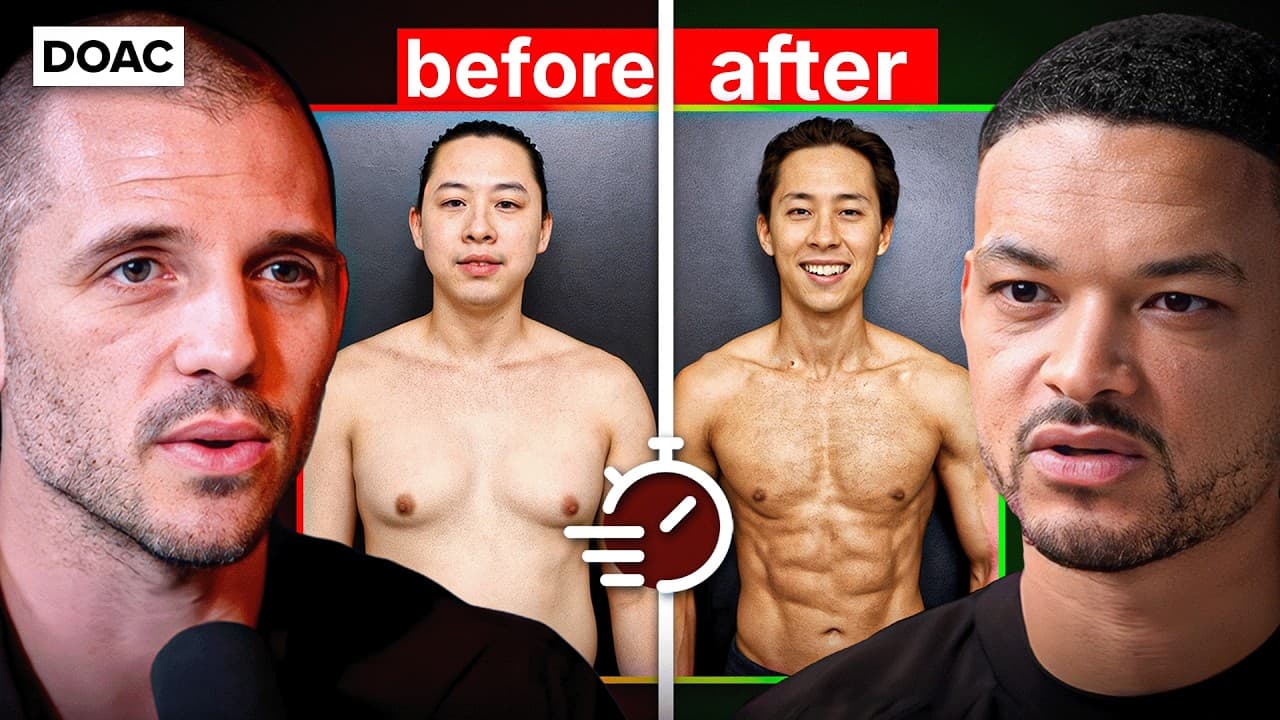
Adherence to both your workout and nutrition plan is the single best predictor of long term fat loss. Build a sustainable caloric deficit with adequate protein, include strength training, and mix in cardio, then personalize the plan to your hunger, cravings, and lifestyle to maintain results over time.
Transcript
I've definitely grown up my whole life thinking that the way that you burn fat is by running. I mean, this is what most people think, right? They think you want to burn fat around here, the belly fat, the best way to do is go for a run. And a lot of people have very little luck with that and end up beating themselves up. So, to close off on this co... Read More
Key Insights
- Adherence to the workout program and the nutrition plan is the top predictor of long term fat loss. Without consistent behavior, even the best diet or exercise strategy fails.
- A caloric deficit is necessary, but it must be implemented in a way that preserves energy and hunger control. Sustainable strategies reduce cravings and prevent psychological scarcity.
- Protein intake should be maintained high to support lean mass, especially during a deficit. Adequate protein helps preserve muscle while fat loss occurs.
- Strength training at least once a week helps preserve muscle mass during fat loss, alongside cardio or higher intensity efforts that burn calories and improve fitness.
- Exercise order matters: performing strength work before endurance can protect strength and may enhance overall performance during workouts.
- Personalization is critical: adjust nutrition and training based on cravings, hunger, triggers, and lifestyle to improve adherence and outcomes.
- There is value in a mixed training approach that includes aerobic, anaerobic, and low to moderate intensity work, supporting both fat loss and muscle preservation.
- Avoidance of scarcity is key: long term success depends on avoiding deprivation and building a flexible plan that still meets deficit goals.
- More videos from this channel:
- More from this channel: The Diary Of A CEO Clips
Install to Summarize YouTube Videos and Get Transcripts
Explore YouTube Video Summarizer or Get YouTube Transcript Extractor
Questions & Answers
Q: A real search query question about the video (e.g. 'How to...', 'What is...', 'Why does...', 'When should...'). Question 1
Question 1 asks how to lose fat without sacrificing muscle and emphasizes adherence as the primary predictor of success. It explains that a sustainable caloric deficit paired with high protein and regular resistance training can preserve lean mass while reducing fat. Personalization based on hunger and lifestyle makes the plan resilient over time.
Q: Question 2
Question 2 explores why running is not mandatory for fat loss and what alternatives can still produce fat loss while preserving muscle. It highlights that you can achieve fat loss through a combination of diet and various training modalities and that enjoyment and consistency are more important than sticking to one modality.
Q: Question 3
Question 3 addresses the role of genetic testing and its limitations. It states that precision nutrition tools often show variance across populations, and that relying on such markers without considering ethnic background can lead to misleading conclusions. The focus should remain on adherence and personal response.
Q: Question 4
Question 4 discusses the balance between different training modalities. It explains that a mix of strength training, high heart rate intervals, and longer steady state work can optimize fat loss while preserving muscle. The goal is to design a weekly plan that is sustainable and enjoyable.
Q: Question 5
Question 5 considers the psychological aspect of dieting. It describes scarcity as a barrier that drives yo yo dieting and emphasizes creating a plan that feels abundant, allowing occasional indulgences while still maintaining a deficit. This reduces cravings and supports long term adherence.
Q: Question 6
Question 6 focuses on protein and its role in preserving lean mass during weight loss. It asserts that adequate protein is hard to maintain with a severe deficit and that prioritizing protein supports muscle maintenance while fat loss occurs.
Q: Question 7
Question 7 explores the idea of sequencing workouts. It explains that performing strength training before endurance work can protect strength and performance, whereas endurance first can lead to fatigue that undermines resistance training outcomes.
Q: Question 8
Question 8 looks ahead to future developments like precision exercise and the concept of a human digital twin. It explains that integrating data from sleep, movement, and biomarkers could enable rapid simulations to optimize individual fat loss strategies, though such tools are not yet ready for broad use.
Summary & Key Takeaways
-
A sustainable approach beats trendy diets or rigid plans because consistency drives results. Focus on a flexible nutritional strategy that keeps you feeling balanced while still creating a deficit. Pair this with a balanced exercise routine that preserves muscle and promotes fat loss over the long term.
-
Personalization matters more than chasing a universal method. Tailor protein intake, training style, and hunger management to fit your physiology and daily life. This increases adherence and reduces yo-yo dieting.
-
A practical plan emphasizes protein, resistance training, and varied cardio to maintain lean mass during fat loss. The aim is to lose fat while preserving muscle and ensuring the plan works with real life and long term adherence.
Read in Other Languages (beta)
Share This Summary 📚
Summarize YouTube Videos and Get Video Transcripts with 1-Click
Try YouTube Summary with ChatGPT & Claude or YouTube Transcript Generator
Explore More Summaries from The Diary Of A CEO Clips 📚






Summarize YouTube Videos and Get Video Transcripts with 1-Click
Try YouTube Summary with ChatGPT & Claude or YouTube Transcript Generator