What Is High Agency? The Top 0.1% of Ideas I've Stumbled Upon on the Internet
TL;DR
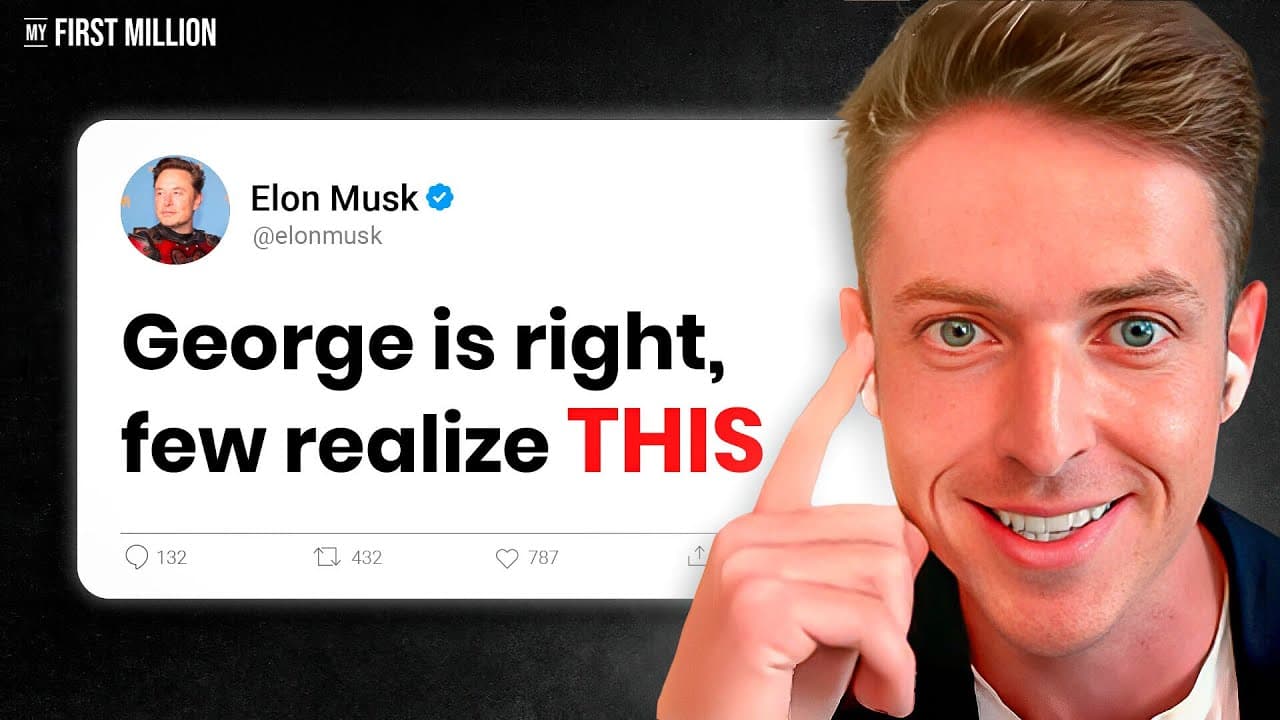
High agency means taking control, choosing a direction, finding resources, and acting instead of waiting for rescue. A stranded person building a boat from available wood illustrates the idea, while relentless resourcefulness describes its value for founders. Agency may have a genetic component, but better inputs, deadlines, clear steps, and modeled behaviors may strengthen it. Read on for practical signs and development strategies.
Transcript
well let let's do it so part two okay here's part two with George if you wanted the business ideas we did that five Banger business ideas that was amazing I got like Goosebumps from it this is part two we're going to do some of your Frameworks the biggest one I think the one that went the most viral is about high agency you did a threat about one i... Read More
Key Insights
- High agency is the tendency to shape events rather than wait for circumstances or other people to determine the outcome. The discussion illustrates it with a stranded person who uses available wood to build a boat instead of only arranging the wood into a request for help.
- High agency consists of four connected qualities: an internal locus of control, intentional direction, resourcefulness, and a strong bias toward action. Together, these qualities describe someone who believes they have influence, selects an outcome, finds a path, and begins moving toward it.
- Relentless resourcefulness is presented as the closest related concept to high agency. Paul Graham's founder observation, as described in the conversation, is that this trait matters more than intelligence, charisma, or engineering prowess because effective founders repeatedly find ways around obstacles.
- A high bias for action can make one employee perform like an entire team. The example employee makes decisions, implements ideas while conversations are still happening, and fixes problems before slower colleagues have begun, although her speed can sometimes become mildly frustrating.
- Intolerance for being blocked is a useful signal of high agency. One hiring indicator is whether an employee willingly spends personal money to move faster, not to impress a manager, but because delays and stalled progress are personally difficult for that person to accept.
- High agency may be partly innate but can still change through environmental inputs and repeated behavior. The argument is that if circumstances can reduce a person's agency, other circumstances should be capable of increasing it, much as training can improve a trait despite genetic differences.
- Agency can be developed by first identifying practices that produce low agency and then avoiding them. Examples mentioned include excessive generalization, missing deadlines, and failing to divide work into step-by-step instructions, followed by studying highly agentic people and reverse engineering their values and behavior.
- Unusual teenage hobbies can reveal future high-agency behavior because resisting social pressure is especially difficult during adolescence. Examples include creating and monetizing game servers, hacking a school system to alter grades, and building a device that could remotely control a nearby streetlight.
Install to Summarize YouTube Videos and Get Transcripts
Explore YouTube Video Summarizer or Get YouTube Transcript Extractor
Questions & Answers
Q: What is high agency?
High agency is the tendency to influence circumstances rather than passively accept them. It combines an internal locus of control, intentional direction, resourcefulness, and a strong bias toward action.
Q: What are the main components of high agency?
The components are locus of control, intentionalism, resourcefulness, and a high bias for action. Together, they mean believing you have influence, choosing an outcome, finding a workable path, and starting promptly.
Q: What does the stranded-island example reveal about high agency?
One stranded person arranges available wood into a request for help, while another uses the same wood to build a boat. The boat builder represents high agency because that person acts directly on the problem instead of waiting for rescue.
Q: Why does high agency matter for founders?
Founders repeatedly face uncertainty, limited resources, and obstacles that require action. The discussion connects high agency with Paul Graham's concept of relentless resourcefulness, presented as more valuable in founders than intelligence, charisma, or engineering prowess.
Q: How can you recognize a high-agency employee?
A high-agency employee makes decisions quickly, implements ideas immediately, and fixes mistakes as they emerge. Another signal is intolerance for blocked progress, including a willingness to spend personal money to remove a delay rather than wait.
Q: Can high agency be developed?
The discussion suggests that agency may have a genetic component but can still increase or decrease depending on environmental inputs. If certain conditions reduce agency, different conditions and repeated behaviors may help strengthen it.
Q: How can someone strengthen high agency?
Start by identifying and avoiding conditions that encourage passivity. Use deadlines, divide work into clear steps, study highly agentic people, copy useful behaviors, and shorten the gap between deciding and acting.
Q: Why can unusual teenage hobbies signal high agency?
Unusual teenage hobbies can show independence, experimentation, and willingness to resist social pressure. Because conformity can be powerful during adolescence, self-directed projects from that period may reveal lasting initiative and resourcefulness.
Summary & Key Takeaways
-
Definition: High agency means shaping circumstances instead of waiting for life or other people to determine the outcome.
-
Definition: Locus of control is the belief that you can influence what happens.
-
Definition: Intentionalism means selecting a direction rather than drifting without a chosen outcome.
-
Definition: Resourcefulness means finding a workable path to the desired result despite obstacles.
-
Definition: Bias for action means starting promptly, sometimes before a discussion or plan is complete.
-
Compare: One stranded person spells help with wood, while the high-agency person builds a boat from it.
-
Compare: Relentless resourcefulness is presented as more valuable for founders than intelligence, charisma, or engineering prowess.
-
Who: Paul Graham is associated in the discussion with the concept of relentlessly resourceful founders.
-
Tool: Deadlines and step-by-step instructions can reduce passivity and support more agentic behavior.
-
Tool: Studying highly agentic people can reveal values and behaviors worth copying.
-
When: Unusual hobbies during adolescence may expose independence, experimentation, and resistance to social pressure.
-
Compare: Agency may have a genetic component, but environmental inputs can still increase or decrease it.
Read in Other Languages (beta)
Share This Summary 📚
Summarize YouTube Videos and Get Video Transcripts with 1-Click
Try YouTube Summary with ChatGPT & Claude or YouTube Transcript Generator
Explore More Summaries from My First Million 📚


Summarize YouTube Videos and Get Video Transcripts with 1-Click
Try YouTube Summary with ChatGPT & Claude or YouTube Transcript Generator