The Uncertain Future of Nuclear Power
TL;DR
Nuclear power's potential is hindered by safety, waste, and cost issues.
Transcript
Over the past 5 decades nuclear power has prevented the release of 50 gigatonnes of carbon dioxide. That’s equivalent to 2 years of total global energy generation related emissions. [REF][1] Nuclear Power is the most powerful tool at our disposal to stop human driven climate change in its tracks, yet powerful industrial countries like Germany have ... Read More
Key Insights
- Nuclear power has prevented the release of 50 gigatonnes of CO2 over the past five decades, showcasing its potential in combating climate change.
- Incidents like Three Mile Island and Fukushima highlight the critical need for robust safety systems and the risks associated with human error and natural disasters.
- Nuclear waste management remains a significant challenge, with most countries struggling to implement long-term storage solutions, causing political and public resistance.
- Recycling nuclear waste is technically feasible but economically unviable due to the abundance and lower cost of mined uranium.
- Generation IV reactors aim to improve efficiency and safety by using alternative coolants and passive cooling systems, but they face development delays and funding issues.
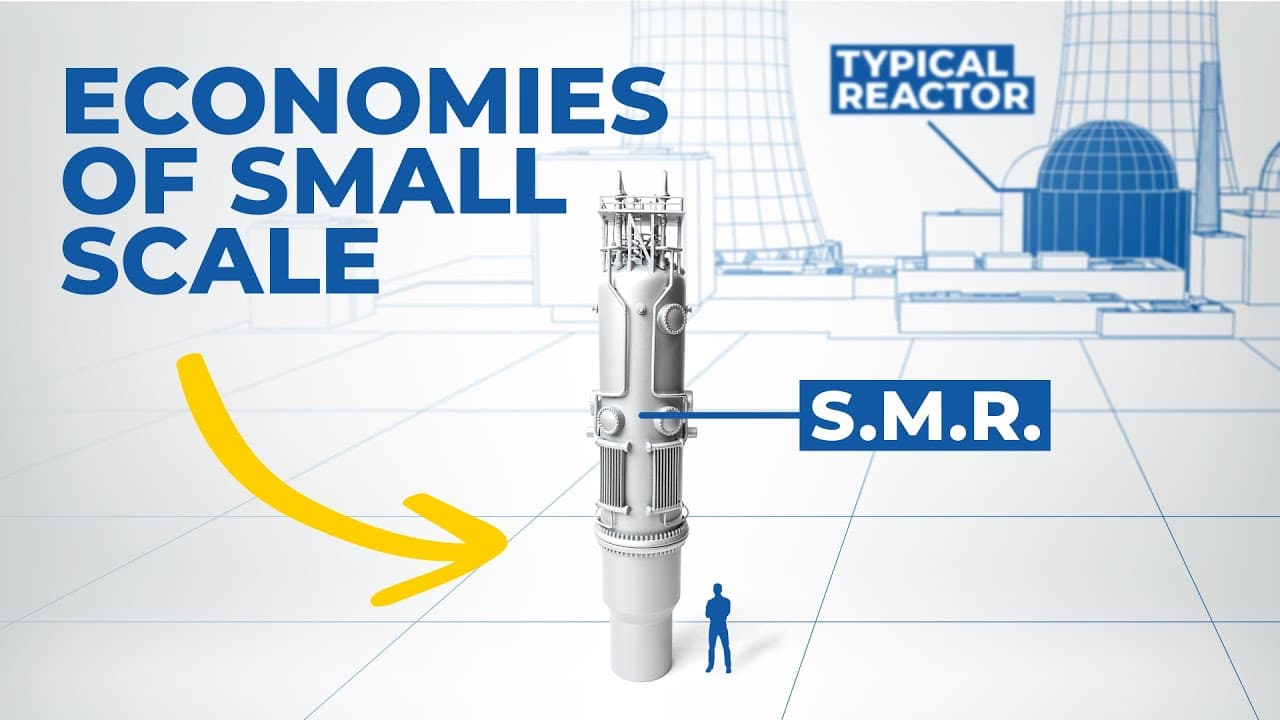
- Small Modular Reactors (SMRs) propose a cost-effective and scalable solution to nuclear power generation, but they are not yet commercially viable due to high costs and lack of customers.
- The cost of nuclear energy remains a major barrier, with current estimates significantly higher than renewable options like wind and solar.
- Government funding and international collaboration are crucial for advancing nuclear technologies to ensure energy security and combat climate change.
Install to Summarize YouTube Videos and Get Transcripts
Explore YouTube Video Summarizer or Get YouTube Transcript Extractor
Questions & Answers
Q: What are the main challenges facing nuclear power today?
The main challenges facing nuclear power today include safety concerns, waste management, and high costs. Incidents like Three Mile Island and Fukushima have highlighted the risks associated with nuclear energy, particularly in terms of human error and natural disasters. Additionally, managing nuclear waste remains a significant issue, with many countries struggling to implement long-term storage solutions. The cost of nuclear energy is also a major barrier, as it is currently more expensive than renewable options like wind and solar.
Q: How can nuclear waste be managed effectively?
Nuclear waste management can be improved through the development of deep geological storage facilities, which are designed to isolate spent fuel from the environment. Countries like Sweden and Finland have made progress in creating such repositories. Recycling nuclear waste is another potential solution, but it is currently economically unfeasible due to the abundance of mined uranium. International collaboration and government funding are crucial to advancing waste management technologies and addressing public concerns.
Q: What are Generation IV reactors, and how do they differ from current reactors?
Generation IV reactors are advanced nuclear reactor designs that aim to improve efficiency, safety, and waste management. Unlike current reactors, they use alternative coolants such as gas, supercritical water, molten salts, or metals, which allow for higher operating temperatures and improved thermal efficiency. These reactors also incorporate passive cooling systems that do not require external power sources, reducing the risk of accidents. However, they face development delays and funding challenges, hindering their commercial readiness.
Q: What are Small Modular Reactors (SMRs), and what advantages do they offer?
Small Modular Reactors (SMRs) are a new design concept that aims to miniaturize nuclear reactors into standardized modules that can be fabricated in factories. This approach offers several advantages, including cost reduction, increased reliability, and enhanced safety due to passive cooling mechanisms. SMRs can be deployed in expandable modules, allowing for gradual capacity increases. However, they are not yet commercially viable due to high costs and lack of utility customers, posing challenges for widespread adoption.
Q: Why is nuclear energy more expensive than renewable options like wind and solar?
Nuclear energy is currently more expensive than renewable options like wind and solar due to high construction and operational costs, regulatory hurdles, and long development timelines. Additionally, nuclear projects often face delays and cost overruns, further increasing expenses. In contrast, wind and solar technologies have benefited from significant cost reductions due to technological advancements, economies of scale, and supportive policies, making them more competitive in the energy market.
Q: What role can government funding play in advancing nuclear technologies?
Government funding is crucial for advancing nuclear technologies, as it can help overcome financial barriers and support research and development efforts. By investing in nuclear projects, governments can facilitate the commercialization of advanced reactor designs like Generation IV reactors and SMRs. Public funding can also support waste management initiatives and address regulatory challenges, ensuring that nuclear energy remains a viable option for achieving energy security and combating climate change.
Q: How can nuclear power contribute to combating climate change?
Nuclear power can play a significant role in combating climate change by providing a low-carbon energy source that prevents the release of greenhouse gases. Over the past five decades, nuclear energy has prevented the release of 50 gigatonnes of CO2, equivalent to two years of global energy-related emissions. By offering a reliable and scalable energy solution, nuclear power can complement renewable technologies and help achieve decarbonization goals, particularly in regions with high energy demands.
Q: What are the potential risks associated with nuclear power, and how can they be mitigated?
The potential risks associated with nuclear power include safety concerns, such as accidents and radioactive releases, as well as challenges related to waste management and nuclear proliferation. These risks can be mitigated through improved reactor designs that incorporate passive safety features, robust regulatory frameworks, and international collaboration on safety standards. Additionally, advancements in waste management technologies and secure storage solutions can address public concerns and enhance the overall safety of nuclear energy.
Summary & Key Takeaways
-
Nuclear power has significant potential to combat climate change by preventing CO2 emissions, but safety, waste management, and cost issues hinder its adoption. Incidents like Three Mile Island and Fukushima underscore the need for improved safety systems and highlight the risks of human error and natural disasters.
-
Managing nuclear waste is a persistent challenge, with limited progress in implementing long-term storage solutions. Recycling waste is technically possible but economically unfeasible due to the abundance of mined uranium. Generation IV reactors and SMRs offer promising advancements but face development and funding hurdles.
-
The high cost of nuclear energy remains a significant barrier compared to cheaper renewable options like wind and solar. Government funding and international collaboration are essential to advance nuclear technologies, ensuring energy security and addressing climate change effectively.
Read in Other Languages (beta)
Share This Summary 📚
Summarize YouTube Videos and Get Video Transcripts with 1-Click
Try YouTube Summary with ChatGPT & Claude or YouTube Transcript Generator
Explore More Summaries from Real Engineering 📚


Summarize YouTube Videos and Get Video Transcripts with 1-Click
Try YouTube Summary with ChatGPT & Claude or YouTube Transcript Generator