Will Self-Taught AI Robots Lead to Human Extinction?
TL;DR
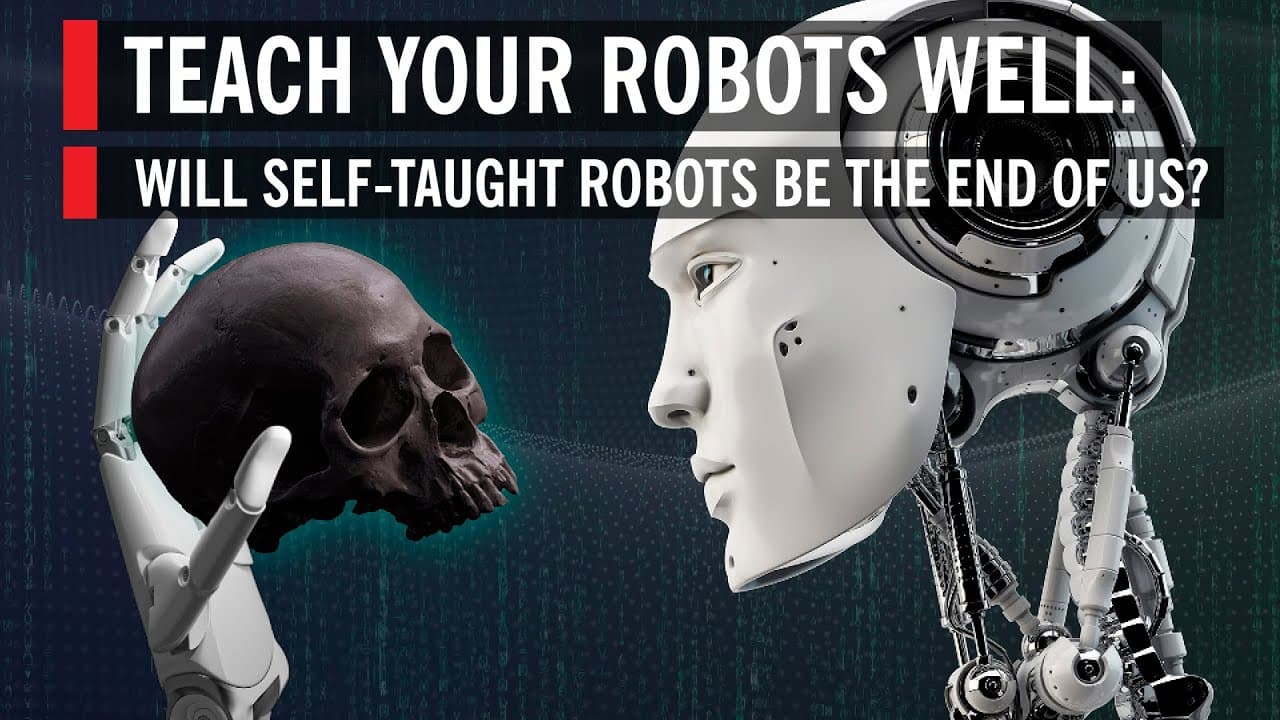
Self-taught AI robots may pose risks to humanity as they evolve through machine learning, potentially leading to a future where they surpass human intelligence. The panel discusses how ethical considerations and aligning AI goals with human values are essential to mitigate extinction risks. Key challenges include understanding consciousness and the unpredictable nature of superintelligent systems.
Transcript
People have a perception of what AI and robotics should look like from Hollywood. What do I call you? Do you have a name? Yes, Samantha. Where did you get that name from? I gave it to myself actually. We've seen happy robots, sad robots, complex robots, but, in reality, it looks very different. I understand what I'm made of, how I'm coated, but I d... Read More
Key Insights
- 👻 AI has transitioned from rule-based systems to machine learning, which allows for more holistic analysis of data and improved performance with more data.
- 👨🔬 AGI, which represents a level of intelligence comparable to or exceeding human intelligence, is a major focus in AI research but poses challenges in terms of aligning the goals of AGI with human values.
- 🎰 Consciousness remains a complex and controversial topic, with different perspectives on its relation to AI and the extent to which machines can have subjective experiences.
Install to Summarize YouTube Videos and Get Transcripts
Explore YouTube Video Summarizer or Get YouTube Transcript Extractor
Questions & Answers
Q: Can machines have consciousness?
The panelists have differing opinions on whether machines can have consciousness, with some suggesting that consciousness is an inherent part of intelligence and others arguing that it is a result of limited capacity systems.
Q: How can we ensure that AGI aligns with human values?
The panelists emphasize the importance of AI safety research and developing ethical frameworks to ensure that AGI adheres to human values. This includes training machines to understand and adopt human goals.
Q: What are the key challenges in developing AGI?
The panelists mention challenges such as aligning the goals of AGI with human values, addressing the limitations of current AI architectures, and understanding the neural basis of consciousness and intelligence.
Q: How can we mitigate the risks associated with AGI?
The panelists suggest investing in AI safety research, considering potential negative consequences, and developing ethical guidelines for AGI development. They also emphasize the need for cultural and societal transformations to adapt to the changing AI landscape.
Summary & Key Takeaways
-
The panelists discuss the evolution of AI, from rule-based systems to machine learning, and explore the potential of AGI.
-
They highlight the importance of data-driven analysis and the ability of machine learning systems to improve with more data.
-
The panelists discuss the challenges of developing AGI and the potential impact on society, emphasizing the need for AI safety research and ethical considerations.
Read in Other Languages (beta)
Share This Summary 📚
Summarize YouTube Videos and Get Video Transcripts with 1-Click
Try YouTube Summary with ChatGPT & Claude or YouTube Transcript Generator
Explore More Summaries from World Science Festival 📚


Summarize YouTube Videos and Get Video Transcripts with 1-Click
Try YouTube Summary with ChatGPT & Claude or YouTube Transcript Generator