How kindness spreads to hundreds of people through one act
TL;DR
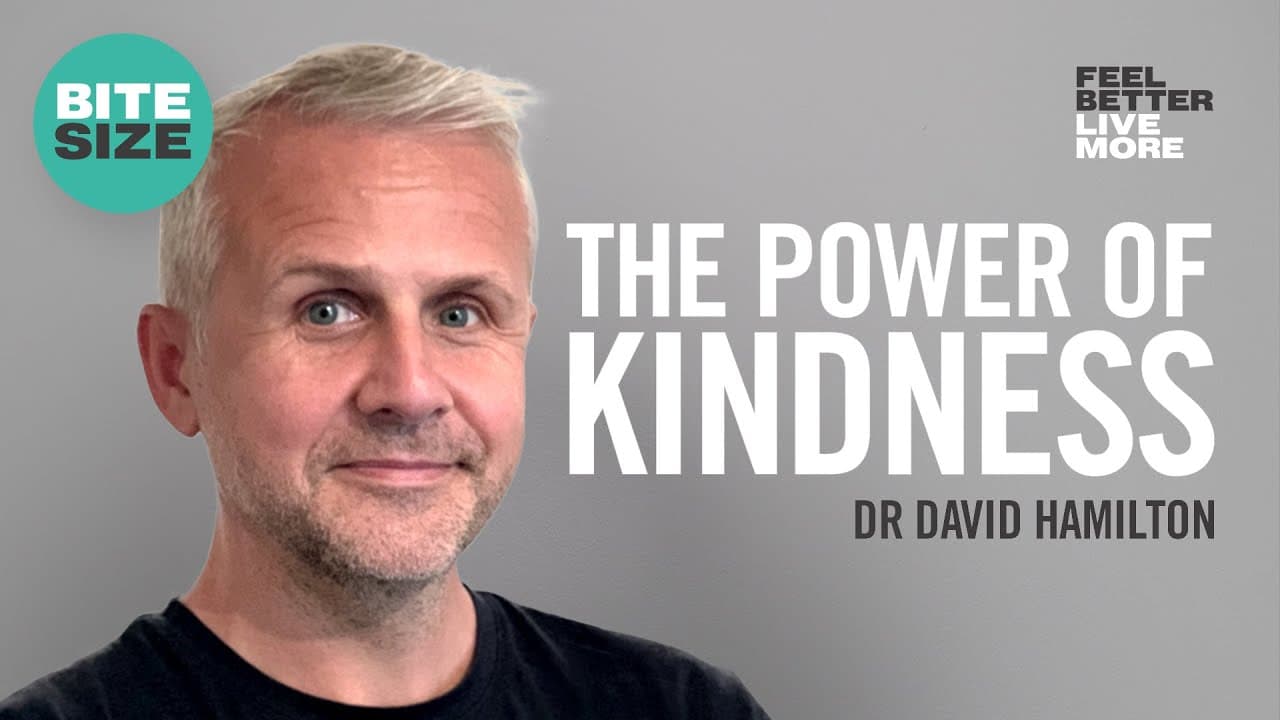
One small act of kindness triggers a ripple effect that reaches many people. Elevation makes the recipient more likely to be kind, and the kindness spreads across multiple social steps, potentially influencing about 125 people or more in a connected community. Practically, a seven day kindness challenge can boost daily compassionate actions.
Transcript
You said that kindness is contagious… Yeah, so a study between Harvard and Yale they looked at…. they did a clever little business game simulation a lot of these studies are done in little simulations...you create a game and what you're secretly measuring is kindness or cooperative behaviour and what they found is if you be kind to someone Then bec... Read More
Key Insights
- Kind acts trigger elevation in the recipient, which makes them more likely to respond with kindness to others.
- The ripple effect of kindness can extend across multiple social steps, moving from one person to their connections and beyond.
- Each person reached by a kind act can influence approximately five more people, creating exponential growth in cooperative behavior.
- In real life, the average connected footprint of a kind act could affect around 125 people in a community.
- Kindness benefits the giver as well, contributing to happiness and emotional well being.
- The seven day kindness challenge provides a concrete, repeatable method to increase kind acts each day.
- One anonymous act can remove the desire for recognition and increase authentic generosity.
- Sustained kindness is linked to social connectedness, improved relationships, and potential health benefits.
- More videos from this channel:
- More from this channel: Dr Rangan Chatterjee
Install to Summarize YouTube Videos and Get Transcripts
Explore YouTube Video Summarizer or Get YouTube Transcript Extractor
Questions & Answers
Q: How does one kind act spread to 125 people and beyond
A single considerate action initiates a chain reaction because the recipient experiences elevation, a felt sense of connection or gratitude, which increases their likelihood of acting kindly toward others. As those individuals respond with generosity, the ripple continues through approximately three social steps, often affecting around 125 people in a densely connected community. This propagation relies on everyday interactions and the natural social ripple created by positive behavior.
Q: What is the Seven Day Kindness Challenge and its rules
The Seven Day Kindness Challenge is a practical, repeatable framework to increase daily acts of kindness. It requires seven different actions across seven days, ensuring you do not repeat an action. At least one act must push you out of your comfort zone, and at least one act must be completely anonymous to remove the need for recognition, thereby focusing on genuine generosity.
Q: Why is elevation important in kindness research
Elevation is the emotional response that occurs when someone experiences kindness and feels uplifted or grateful. This feeling makes the recipient more inclined to be kind to others, creating a chain of cooperative behavior that propagates through social networks. Elevation serves as the key mechanism explaining why small acts of kindness can have outsized social effects.
Q: How many people can be influenced by a single act of kindness according to the talk
According to the described research and reasoning, a single act can influence roughly five people in the next step, and those five individuals can influence five more each, expanding the reach to about 125 people in three social steps in a typical densely connected setting. The exact number depends on the level of interconnectedness in the community.
Q: What are the benefits of kindness beyond social impact
Kindness benefits extend beyond social impact to personal happiness and health. Acts of kindness can improve mood, support immune health, and slow aging, while also strengthening relationships. The discussion links kindness to broad wellbeing outcomes, suggesting that generosity not only helps others but also enhances the giver’s own quality of life.
Q: Can kindness be measured or proven in a lab setting
The standard approach described uses business game simulations to measure cooperative behavior and kindness, by creating controlled scenarios in which participants’ responses to acts of kindness are observed. Through these simulations, researchers assess how elevation and subsequent prosocial actions ripple through a network, providing evidence for the contagious nature of kindness.
Q: What practical tips can people apply today to be kinder
People can start with small, daily acts of kindness that are visible, like holding a door or giving a compliment, and progress toward more deliberate actions. The Seven Day Kindness Challenge encourages variety, personal growth through discomfort, and at least one anonymous act. These steps help sustain a habit of generosity and maximize ripple effects across social circles.
Q: How does the video link kindness to immune health and aging
The video notes that acts of kindness have benefits that extend to physical health, mentioning improvements to the immune system and slower aging as part of the broader wellbeing impact of compassionate behavior. While the exact mechanisms are not deeply explained, the emphasis is on overall health benefits associated with kindness.
Summary & Key Takeaways
-
A single act of kindness can create a ripple effect that travels through social networks and influences others beyond the initial recipient. This ripple effect is described through the idea of elevation and increased cooperative behavior.
-
The video explains a practical way to amplify kindness through the Seven Day Kindness Challenge, which requires unique acts, pushing outside comfort zones, and including at least one anonymous act to reduce seeking recognition.
-
The overall message is that frequent small acts of kindness contribute to personal happiness, stronger relationships, and better health, while spreading goodwill in ways that may extend far beyond the initial moment of action.
Read in Other Languages (beta)
Share This Summary 📚
Summarize YouTube Videos and Get Video Transcripts with 1-Click
Try YouTube Summary with ChatGPT & Claude or YouTube Transcript Generator
Explore More Summaries from Dr Rangan Chatterjee 📚


Summarize YouTube Videos and Get Video Transcripts with 1-Click
Try YouTube Summary with ChatGPT & Claude or YouTube Transcript Generator