How to Break Blame Cycles in Relationships
TL;DR
Breaking recurring relationship problems starts with examining your own patterns without assuming that every hardship is your fault. Vanessa Bennett and John Kim recommend honest self-reflection, clearer boundaries, vulnerability, and outside perspective, while emphasizing that therapists also struggle and that common conflicts can be explored without blaming either partner.
Transcript
we've seen a big change in that more recently which has been refreshing that it's actually more helpful to know that your therapist is a human who struggles so that was also I think part of the the kind of motivation to write this the way that we did yeah and Michaela I don't know if you know this but um um you and your whol... Read More
Key Insights
- Relationship difficulties are not always proof that one person is causing every problem. Repeated hardship may warrant self-examination, but severe illness, bad luck, unhealthy relationships, and stressful family circumstances can also destabilize a person's life and affect how relationships function.
- An outside perspective is valuable when stress makes personal responsibility difficult to judge. Peterson sought therapeutic help because she wanted to identify and change any problems she was causing, while also determining whether some of her difficulties came from circumstances and people beyond her control.
- Codependent tendencies can make saying no feel difficult and guilt-inducing. Peterson describes improving her ability to establish limits after recognizing these tendencies, receiving therapeutic support, seeing her family become healthier, and reducing contact with people who were not good for her.
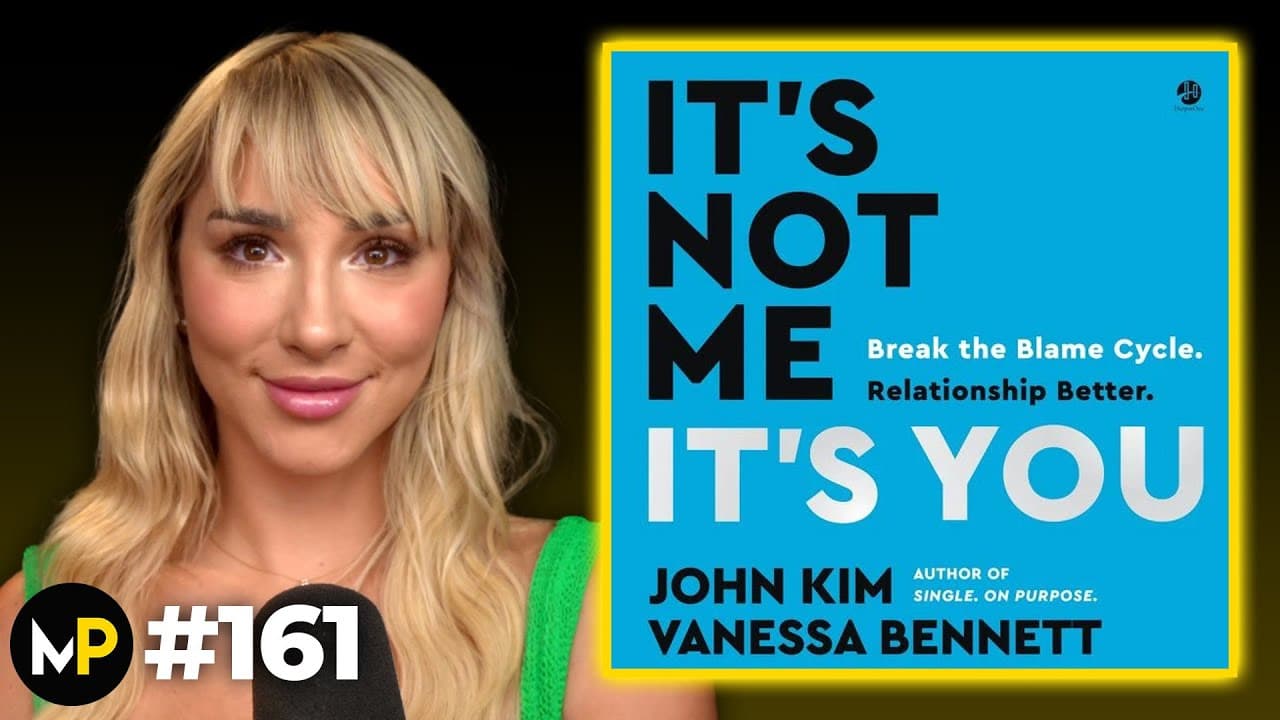
- The book's central approach is to break cycles of blame rather than point fingers at either partner. Kim wanted the authors to come alongside readers instead of speaking down to them, using their combined experience as therapists and partners to examine recurring relationship problems.
- Therapists are human beings with personal histories, trauma, conflicts, and unresolved struggles. Bennett rejects the misconception that therapists have everything figured out and argues that honest acknowledgment of their humanity can be more helpful than presenting themselves as emotionally untouched authorities.
- Personal disclosure can make relationship guidance more relatable when it serves a clear therapeutic purpose. Bennett and Kim included memoir-like anecdotes about their own struggles because the same issues appearing in their professional work with couples also arise within their relationship.
- Writing honestly with a romantic partner can be emotionally activating. Kim found the process challenging because creating a useful book required both partners to address uncomfortable experiences and call attention to each other's behavior rather than protecting an idealized public image.
- Relationship education can connect professional principles with lived experience. Bennett and Kim discuss common couples-therapy concerns through their own partnership, while the episode's description also identifies attachment styles, vulnerability, discernment, separate sleeping arrangements, breakups, love languages, and conflict as discussion topics.
Install to Summarize YouTube Videos and Get Transcripts
Explore YouTube Video Summarizer or Get YouTube Transcript Extractor
Questions & Answers
Q: How can someone tell whether they are causing their relationship problems?
A useful starting point is honest self-examination combined with an outside perspective. Peterson sought therapy because she wanted to change any problems she was creating, but she also needed help recognizing that severe family illness, bad luck, and unhealthy people could generate turmoil. Repeated problems deserve reflection, yet repetition alone does not prove that one person is solely responsible.
Q: How can therapy help with codependent relationship tendencies?
Therapy can help a person identify patterns that make boundaries difficult, including feeling guilty when saying no. Peterson describes Bennett as especially helpful while she was caring for an ill parent and navigating a separation that became a divorce. With greater perspective, she became more capable of refusing demands without excessive guilt and recognizing relationships that were not good for her.
Q: What does it mean to break the blame cycle in a relationship?
Breaking the blame cycle means examining recurring problems without approaching the relationship as a contest to identify one guilty partner. Kim wanted the book to come alongside readers rather than lecture them or point fingers. The authors use professional observations and their own relationship experiences to show how both partners can look honestly at patterns, reactions, and conflicts.
Q: Why do Vanessa Bennett and John Kim share their own relationship struggles?
Bennett and Kim share personal experiences to challenge the assumption that therapists have perfectly ordered lives. They believe readers benefit from knowing that therapists also carry personal histories, trauma, and relationship difficulties. Their book is partly memoir, so their professional guidance is paired with candid examples of issues they actively encounter and work through as a couple.
Q: Why can therapist self-disclosure be helpful to clients?
Bennett argues that acting as a blank slate and pretending to have no background, trauma, or personal difficulties is not necessarily helpful. Appropriate disclosure can show clients that their therapist is a real person who also struggles. In the authors' approach, this humanity supports connection and makes discussions of common relationship problems feel less judgmental and more grounded.
Q: What made writing a relationship book challenging for the authors?
Writing together required Bennett and Kim to discuss their own relationship with unusual openness. Kim describes the process as emotionally activating because a meaningful book could not avoid difficult material. Each partner had to be willing to address personal behavior and be called out by the other, turning the writing process into an examination of their actual conflicts and patterns.
Q: What relationship topics are addressed in the conversation?
The episode description identifies attachment styles, common relationship problems, vulnerability, discernment, couples sleeping in separate beds, breakups, love languages, and conflict as subjects of the conversation. The provided transcript focuses most directly on codependent tendencies, boundaries, blame, therapist humanity, personal disclosure, and the authors' decision to connect couples-therapy themes with experiences from their own partnership.
Q: When is an outside perspective useful during a relationship crisis?
An outside perspective is particularly useful when several major pressures overlap and make cause and responsibility hard to assess. Peterson sought Bennett's help while her father was severely ill and she was navigating a separation. Therapy helped her evaluate whether she was producing the turmoil, recognize circumstances beyond her control, and make clearer decisions about boundaries and unhealthy relationships.
Summary & Key Takeaways
-
Vanessa Bennett and John Kim wrote their relationship book as both therapists and romantic partners. They wanted to address common problems they encounter in couples therapy without speaking from a pedestal. Their approach combines professional experience with candid accounts of the conflicts, emotional reactions, and personal patterns present in their own relationship.
-
The conversation challenges the idea that therapists have perfectly managed personal lives. Bennett argues that the traditional blank-slate approach can be less helpful than acknowledging that therapists have histories, trauma, and relationship struggles. Carefully shared personal experience can humanize therapy and help clients recognize that difficult patterns are common and workable.
-
Mikhaila Peterson describes seeking Bennett's outside perspective while managing her father's severe illness, a separation that became a divorce, and her own codependent tendencies. Therapy helped her distinguish personal responsibility from circumstances outside her control, become more comfortable saying no, and reduce the guilt she associated with setting boundaries.
Read in Other Languages (beta)
Share This Summary 📚
Summarize YouTube Videos and Get Video Transcripts with 1-Click
Try YouTube Summary with ChatGPT & Claude or YouTube Transcript Generator
Explore More Summaries from Mikhaila Peterson 📚





Summarize YouTube Videos and Get Video Transcripts with 1-Click
Try YouTube Summary with ChatGPT & Claude or YouTube Transcript Generator