How Should Europeans Diversify US Stock Risk?
TL;DR
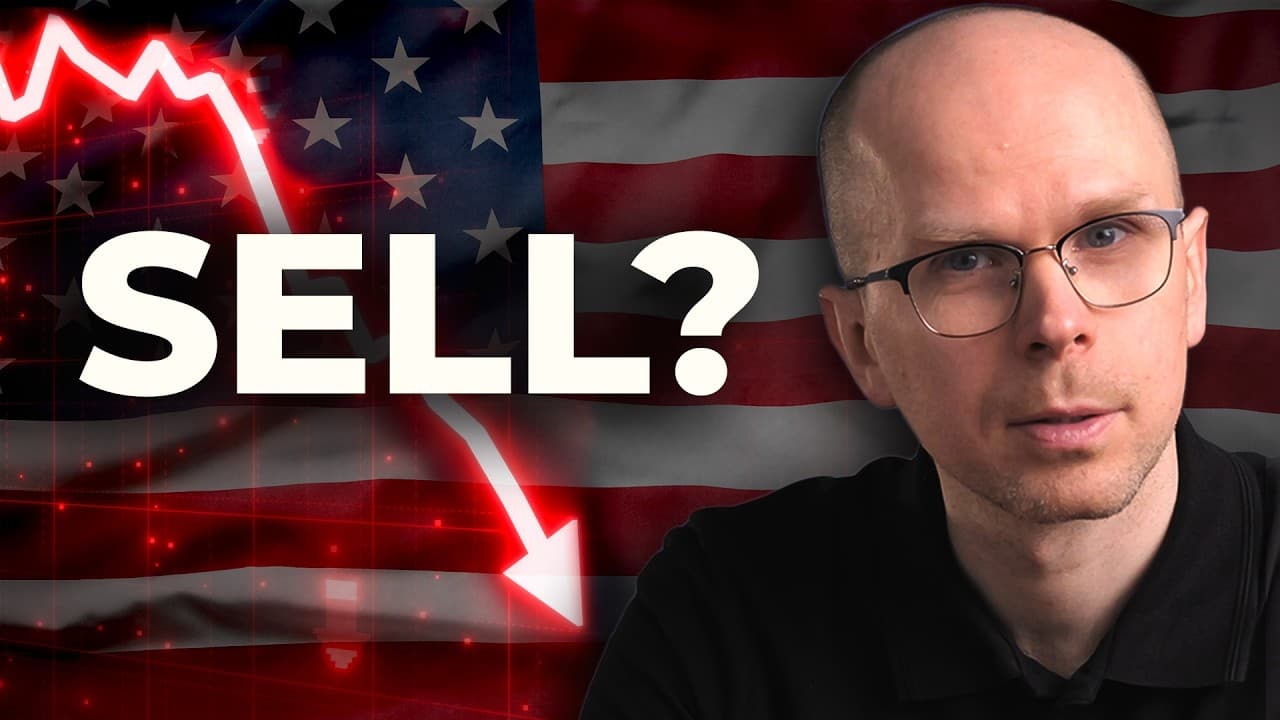
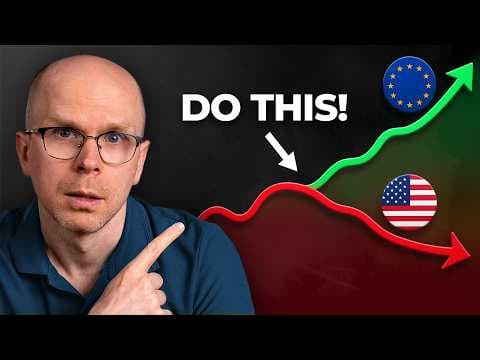
European investors should not panic-sell US stocks, but a portfolio invested only in the S&P 500 deserves reconsideration. US shares remain globally important, yet high valuations, concentration in a few technology companies, and policy uncertainty create meaningful risks. A diversified global portfolio, potentially including international markets, emerging markets, and smaller companies, can reduce dependence on one country or group of stocks.
Transcript
with Donald Trump putting tariffs on allies pulling support from Ukraine and threatening the European Union many European investors are worried about their us Investments people asked me what if Trump crashes the US Stock Market and in fact he said he's doing exactly that we may have shortterm some little pain and people understand that from mid-Fe... Read More
Key Insights
- The S&P 500 is increasingly concentrated, with Apple, Nvidia, Microsoft, Amazon, and Meta representing 25% of the index, while 30 large American companies account for half of an investor's exposure.
- US stock valuations are substantially higher than those of several other markets. Investors pay around $35 for one dollar of US corporate profits, compared with $21 in Europe, $25 in Canada, and $22 in Australia.
- Higher purchase valuations are associated with lower expected future returns. The adjustment can occur through a market decline or through stock prices growing more slowly, although faster-growing American technology companies may partly justify premium valuations.
- Trump's policies create risks for both the US economy and European investors. Tariffs can increase imported-goods prices, while government layoffs can make households fearful and less willing to spend, potentially contributing to a recession.
- The long-term effects of policy changes remain uncertain because economies are highly complex. Tariffs and policy swings could cause short-term weakness, while deregulation, lower government spending, or unexpected consequences from tariff negotiations could potentially support later economic growth.
- Market timing is unreliable because markets frequently rise when investors expect declines and fall when they expect gains. Repeatedly reacting to alarming news can lead investors to sell and repurchase at unfavorable prices, reducing long-term results.
- Global diversification can preserve meaningful American exposure without making the entire portfolio dependent on US stocks. A developed-world fund described in the transcript holds about 70% in the United States, while an all-world example holds around 61%.
- Small-cap funds reduce dependence on a few dominant corporations by spreading investments across smaller businesses. The small-cap example's largest constituent represents just 2.5%, although these companies can experience larger price swings and an exclusively small-cap strategy excludes large-company growth.
Install to Summarize YouTube Videos and Get Transcripts
Explore YouTube Video Summarizer or Get YouTube Transcript Extractor
Questions & Answers
Q: Should European investors sell all their US stocks?
European investors should not automatically sell all US stocks because of political uncertainty or a recent market decline. The American market remains the world's largest, contains globally active companies, and provides exposure that is difficult to reproduce elsewhere. The transcript favors maintaining a long-term strategy while diversifying, especially when a portfolio currently consists entirely of American stocks or only the S&P 500.
Q: Why is the S&P 500 less diversified than before?
The S&P 500 is less diversified because a growing portion of the index is concentrated in a small number of very large technology companies. Apple, Nvidia, Microsoft, Amazon, and Meta together represent 25% of the index, and 30 major American companies account for half of the investment. Problems affecting those companies can therefore have an unusually large effect on the entire portfolio.
Q: Why are high US stock valuations a concern?
High valuations mean investors must pay more for each dollar of corporate profits. The transcript says US stocks cost around $35 for one dollar of profits, compared with approximately $19 to $20 in 2010. Financial theory indicates that buying at higher prices lowers expected future returns, either because prices decline or because the market subsequently grows at a slower pace.
Q: How could Trump's policies affect US investments?
Tariffs can harm the US economy by making imported goods more expensive, while firing thousands of government employees can increase financial anxiety and discourage consumer spending. These pressures could contribute to a recession. The transcript also notes that declining trust among allies may affect profits for decades, although deregulation and lower government spending could potentially support longer-term economic growth.
Q: Why should investors avoid timing the stock market?
Market timing is difficult because prices often move contrary to expectations. Investors reacting to frightening news may sell before a recovery or buy after prices have already risen, producing poorly timed transactions at unfavorable prices. The strategy presented in the transcript is to continue investing in a diversified global portfolio through both declines and recoveries instead of repeatedly changing course based on current headlines.
Q: How can international ETFs reduce US market risk?
International and global ETFs can dilute US exposure while retaining access to American companies. The developed-market example invests about 70% in the United States and 30% across other developed countries. The all-world example includes developed and emerging markets, with around 61% invested in the United States. This structure reduces dependence on one country without eliminating American stocks from the portfolio.
Q: How can small-cap funds improve portfolio diversification?
Small-cap funds spread money across smaller companies rather than concentrating it in dominant corporations such as Apple, Nvidia, and Microsoft. In the small-cap example, the largest constituent, Interactive Brokers Group, represents just 2.5% of the investment. This reduces exposure to any single company, although small-company prices tend to fluctuate more and an exclusive small-cap allocation misses potential benefits from larger businesses.
Q: What portfolio approach does the investor personally follow?
The investor uses a diversified portfolio containing thousands of stocks from around the world, with approximately 60% invested in American companies. He does not plan to change that allocation because of the current political situation and intends to continue investing even if US markets fall. His stated preference is broad global diversification rather than an allocation consisting entirely of the S&P 500.
Summary & Key Takeaways
-
The S&P 500 has become less diversified because a large share of the index is concentrated in major American technology companies. US stocks also trade at higher valuations than European, Canadian, and Australian stocks, which suggests lower expected future returns through either a correction or slower subsequent growth.
-
Tariffs, government layoffs, and deteriorating international relationships could weaken the US economy, but their long-term effects remain difficult to predict. American markets still contain many globally successful and innovative businesses, have historically outperformed global stocks, and benefit from a strong entrepreneurial culture, so abandoning them entirely could create different risks.
-
The preferred response is diversification rather than market timing. International or all-world funds can retain substantial US exposure while adding other developed and emerging markets. Small-cap funds can reduce concentration in dominant corporations, while broader investable-market funds can combine companies of different sizes without excluding potential growth from large businesses.
Read in Other Languages (beta)
Share This Summary 📚
Summarize YouTube Videos and Get Video Transcripts with 1-Click
Try YouTube Summary with ChatGPT & Claude or YouTube Transcript Generator
Explore More Summaries from Tom Crosshill 📚

Summarize YouTube Videos and Get Video Transcripts with 1-Click
Try YouTube Summary with ChatGPT & Claude or YouTube Transcript Generator