How to Grab Attention and Build Trust in a Noisy World
TL;DR
To cut through endless content, attach your message to a human character, convey genuine conviction, and tie facts into a bigger narrative people feel compelled to follow. Find the overlap between what you care about and what your audience cares about, lead with a sharp hook, and make yourself so interesting that others spread the message for you.
Transcript
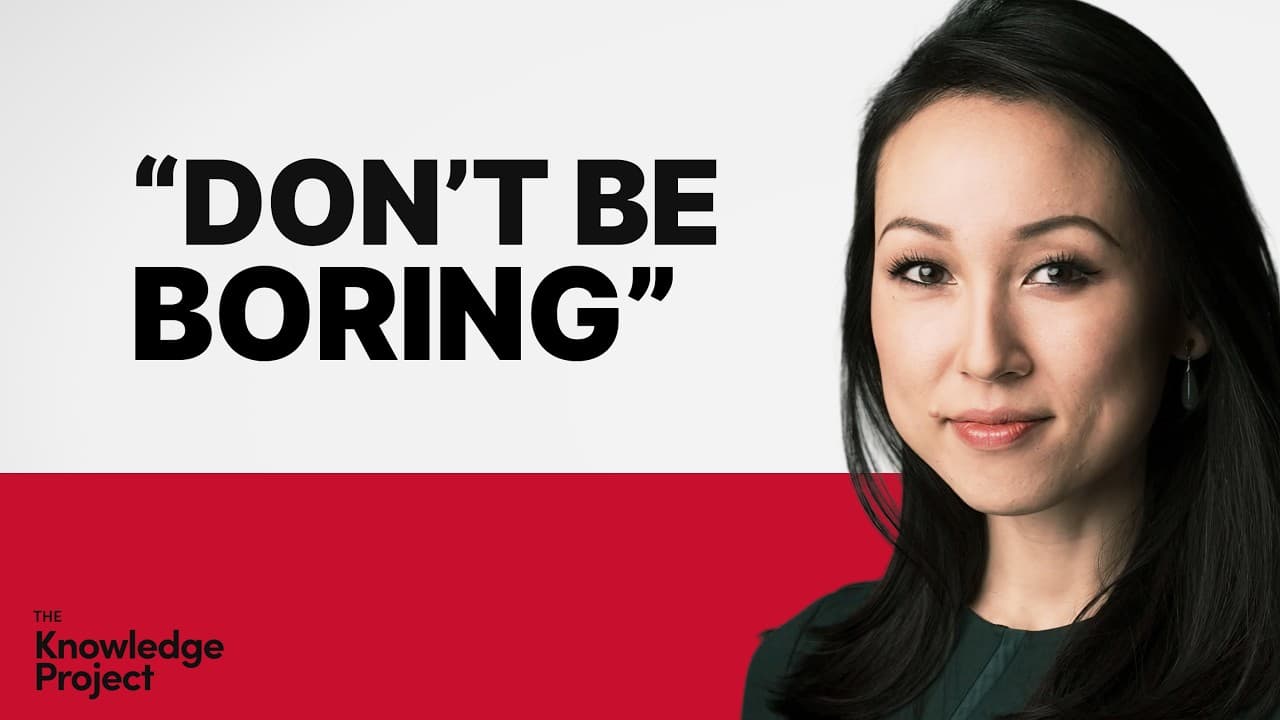
The surface area of the opportunity we have to latch on is getting more and more fine which means that the hook that we need to use has to get more and more sharp. Lulu Chang Maservi is one of the sharpest minds in communications today. Having been CCO and EVP of corporate affairs at Activision Blizzard and VP of comms at Substack, she is now the c... Read More
Key Insights
- Standing out in a flood of content works best when a message is attached to a human being, because individual human characters give people someone to root for and care about in a way generic content cannot.
- Human conviction is uniquely persuasive because people find it hard to resist someone looking them in the eye and stating with absolute certainty that something is true, which is why charismatic liars and cult leaders can recruit despite terrible pitches.
- Narrative arc holds attention because tying facts together into a chain that promises something bigger makes people feel compelled to stay tuned, the same mechanism behind serialized storytelling and how journalists cover an ongoing beat.
- The right story lives in the center of a Venn diagram between what you want to say and what your audience already cares about, so you meet them in the overlap first and then walk them into the rest of your message.
- The overlap functions as an API into people's minds or a gateway drug: you start with the hook, and only once the hook is in do you begin reeling people toward the message you actually wanted to deliver.
- One-to-many communication works only when the many is a circumscribed set of people, because addressing everyone forces you to water the message down until it becomes a drop in the ocean that means nothing.
- In order of importance the hook comes first, then how you tell the story, and lastly where you tell it, yet most people reverse this and obsess over the medium and distribution channel instead.
- The most powerful distribution is becoming so interesting that people cannot get your message out of their heads and share it with others themselves, a high-leverage move that almost no one thinks about.
Install to Summarize YouTube Videos and Get Transcripts
Explore YouTube Video Summarizer or Get YouTube Transcript Extractor
Questions & Answers
Q: How do you get people to pay attention in a world full of AI-generated content?
The flood of content is unrelenting, so you stand out by attaching your message to a human being, because people gravitate toward human stories and individual characters give them someone to root for. You also lead with human conviction, which people find hard to resist, and you tie your facts into a larger narrative arc that makes audiences feel compelled to stay tuned rather than dropping isolated facts.
Q: Why is human conviction so persuasive in communication?
There is something within us that finds it hard to resist when someone looks us in the eye and tells us with absolute conviction that something is true. This is why pathological liars and sociopaths can be so powerful, because we cannot resist the gravity of that conviction, and if what they say is false we become very vulnerable. Conviction cannot be conveyed through any other means, making it a uniquely powerful tool.
Q: What role does narrative arc play in capturing attention?
If you drop a pile of facts in a vacuum, they compete with endless other facts. But if you tell people that what you are saying is part of something bigger and they need to stay tuned, it gives them something to hang on to. This is the mechanism behind serialized storytelling and how journalists cover an ongoing beat, linking stories together so audiences feel compelled to follow the arc over time.
Q: How do you determine what narrative to tell your audience?
The wrong way is to simply say what you want to say, because what you care about may not be what anyone else cares about. Picture two circles: one of what you care about and one of what your audience cares about. Do not tell the story in only your circle or only theirs. Tell the story in the overlap of the Venn diagram, meet them there, and then walk them into the rest of your message.
Q: Does the Venn diagram approach work for one-to-many communication?
Yes, it works well for one-to-many, but the many cannot be infinite. If you try to speak to the whole world you must water down your message until it becomes nothing. The many should be a circumscribed set, like people at your company or those passionate about a specific topic. Then you find what those people have in common that outsiders do not, and speak to that shared overlap.
Q: What is a communication hook and why does it matter most?
The hook is the overlap you use to enter someone's mind, described as an API into their thinking or a gateway drug. It is not the thing you want to say but the thing that gets people to engage; once the hook is in, you can start reeling them toward your actual message. In order of importance the hook comes first, then how you tell your story, and lastly where you tell it.
Q: Why do most people get communication priorities wrong?
Most people reverse the correct order by spending an inordinate amount of time on where to speak, which podcast to pitch, whether to start a blog or get on TV. They fixate on the medium and form factor instead of on becoming so interesting that their message spreads on its own. Getting the hook and story right matters far more than the distribution channel, yet the channel is where attention wrongly goes.
Q: What is the most powerful distribution method for a message?
The most powerful and high-leverage distribution is becoming so interesting that your message spreads because people tell other people. When something is tickling their brain and they cannot get it out of their heads, they share it with their families and start conversations about it. This word-of-mouth spread is described as the single most powerful thing you can achieve, yet almost nobody focuses on it.
Summary & Key Takeaways
-
Lulu Cheng Meservey, founder of Rostra and former comms leader at Activision Blizzard and Substack, explains that the relentless flood of content, now including AI-generated material, means the hook you use must get sharper as the surface area for attention narrows.
-
To stand out, she says to attach messages to human characters, lead with genuine human conviction that people instinctively respond to, and weave facts into a narrative arc that compels audiences to keep following the story over time.
-
She frames targeting as a Venn diagram: tell the story in the overlap between what you care about and what a specific, circumscribed audience cares about, use it as a hook, and prioritize the hook over storytelling and distribution channels.
Read in Other Languages (beta)
Share This Summary 📚
Summarize YouTube Videos and Get Video Transcripts with 1-Click
Try YouTube Summary with ChatGPT & Claude or YouTube Transcript Generator
Explore More Summaries from The Knowledge Project Podcast 📚

Summarize YouTube Videos and Get Video Transcripts with 1-Click
Try YouTube Summary with ChatGPT & Claude or YouTube Transcript Generator