What Did Trump and Xi Agree to on Trade?
TL;DR
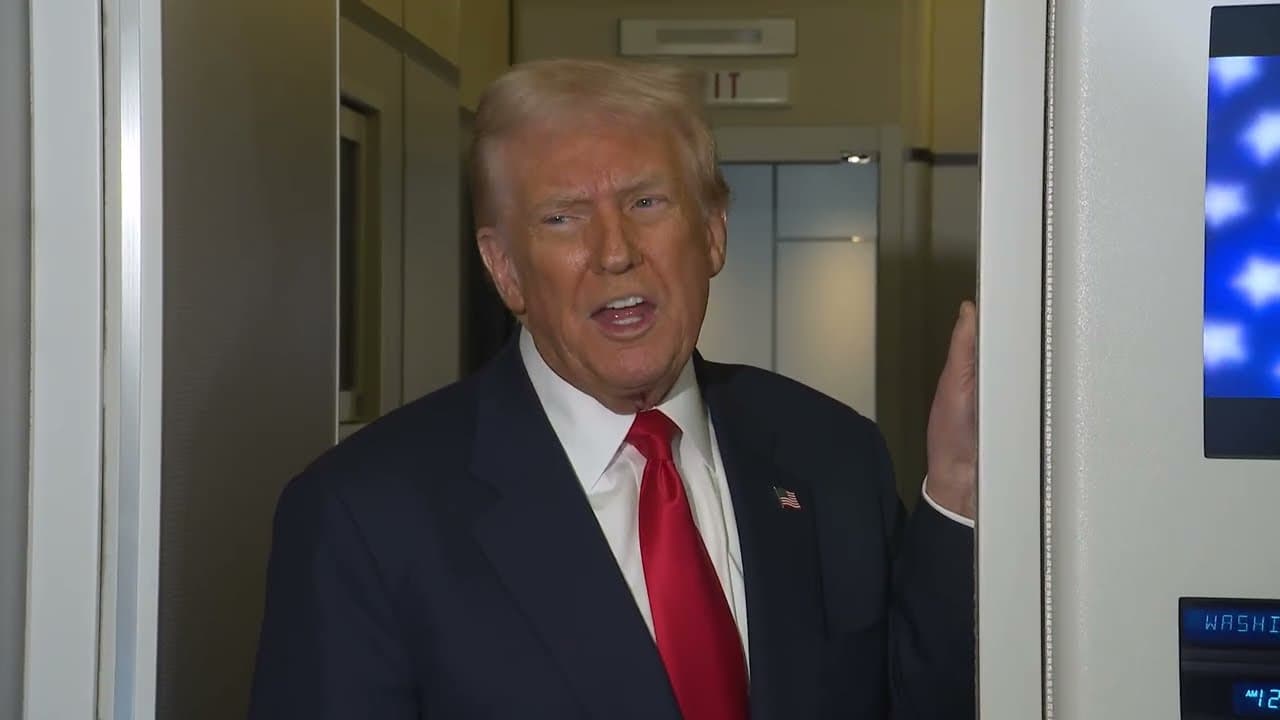
Trump said the United States and China reached understandings on soybean purchases, fentanyl controls, rare earth supplies, chip discussions, and shipping fees. He reduced the fentanyl-related tariff from 20% to 10% immediately, while describing the broader tariff level as about 47%, and said the one-year rare earth agreement would likely be extended.
Transcript
Okay. Hello everybody. Mr. President, I thought it was an amazing meeting. He's a great leader, great leader of a very powerful, very strong country, China. And uh we I mean what can I say? We have uh it was an outstanding uh group of decisions I think that was made. A lot of decisions were made to there wasn't too too much left out there. And we'v... Read More
Key Insights
- China is expected to begin purchasing large quantities of soybeans and other American farm products immediately, according to Trump. He said Xi had authorized the purchases before the meeting and described that decision as a welcome gesture within the broader understanding.
- The fentanyl-related tariff is being reduced from 20% to 10% effective immediately. Trump linked the reduction to Xi's commitment to enforce Chinese laws, control fentanyl precursors, and take strong measures against people who violate the relevant domestic regulations.
- The broader tariff level is about 47%, according to Trump's clarification after initially mentioning other figures. An accompanying official said several Section 301 and Section 232 tariffs remain, with rates around 40% for some products and as high as 100% for certain individual goods.
- Rare earth supplies are covered by a one-year agreement that Trump expects will be routinely extended. Officials said China would not impose its proposed rare earth controls, removing what Trump described as a worldwide roadblock rather than an issue affecting only the United States.
- Advanced chip trade will remain subject to discussions between China, Nvidia, and other companies. Trump said the United States would act as an arbitrator or referee, while explicitly stating that the newly introduced Blackwell chips were not discussed or included.
- Shipping fees connected to the Section 301 investigation are being postponed while the United States and China negotiate. An official connected this issue to American shipbuilding goals and cited a Korean commitment to invest $150 billion in shipbuilding as part of the path forward.
- Ukraine was discussed at length, with Trump saying the United States and China would work together to seek an end to the war. He said Russian oil purchases were not specifically discussed, and he framed stopping the deaths of young soldiers as his principal concern.
- Taiwan was not discussed during the meeting, according to Trump. He nevertheless described the overall encounter as friendly and productive, said many matters reached finalization, and announced plans to visit China in April before Xi makes a later visit to the United States.
Install to Summarize YouTube Videos and Get Transcripts
Explore YouTube Video Summarizer or Get YouTube Transcript Extractor
Questions & Answers
Q: What trade agreements did Trump announce after meeting Xi?
Trump said the two sides reached understandings covering soybeans and other farm products, fentanyl controls, rare earth supplies, chips, and shipping fees. China would begin major agricultural purchases immediately, strengthen enforcement involving fentanyl precursors, and keep rare earth materials flowing. Shipping fees would be postponed during negotiations, while chip sales would remain subject to further discussions.
Q: How did the meeting change tariffs on Chinese goods?
Trump said he reduced the tariff imposed over fentanyl from 20% to 10%, effective immediately, because he believed China was taking strong enforcement action. Other tariffs remained in place. He later described the overall rate as about 47%, while an official said rates vary by product and may reach 100% for some individual goods.
Q: What did China agree to do about fentanyl precursors?
Trump said Xi committed to work hard to stop the flow of fentanyl-related materials and to enforce Chinese laws governing precursors. An accompanying official said China could control certain precursors and that Xi promised strong internal enforcement. The stated measures included action against people who disobey the regulations, with the United States monitoring implementation and cooperating with China.
Q: What was agreed about rare earth export controls?
Officials said China would continue allowing rare earth materials to flow and would not impose the controls it had proposed. Trump described the arrangement as a one-year agreement that he expected would be routinely extended. He also presented the resolution as globally important because the rare earth roadblock affected the world, not only the United States.
Q: Did Trump approve exports of Blackwell chips to China?
Trump explicitly said the newly introduced Blackwell chips were not part of the discussion. He said China could speak with Nvidia and other companies about obtaining many other chips, with the United States acting as an arbitrator or referee. An accompanying official likewise said Blackwell chips were not discussed and linked the conversation to broader export-control questions.
Q: When will Trump and Xi meet again?
Trump said he planned to travel to China in April. He also said Xi would visit the United States sometime afterward, with Florida, Palm Beach, or Washington, DC mentioned as possible locations. No more precise dates were provided. The planned reciprocal visits were presented as another point agreed upon during their meeting.
Q: Did Trump and Xi discuss Ukraine and Taiwan?
Ukraine was discussed at length, according to Trump, and both leaders agreed to work together to seek an end to the Russia-Ukraine war. Trump said they did not specifically discuss China's Russian oil purchases. Taiwan, by contrast, never came up during the meeting and was not discussed at all, according to his answer.
Q: Why did Trump call for renewed nuclear testing?
Trump said other countries appeared to be conducting nuclear tests while the United States had stopped testing many years earlier. He argued that testing by others made it appropriate for the United States to test as well. He said test sites existed and that details would be announced, but he provided no location, date, or operational plan.
Summary & Key Takeaways
-
Trump characterized his meeting with President Xi as friendly and productive, saying the two sides reached acceptable understandings on most subjects discussed. He emphasized immediate Chinese purchases of soybeans and other farm products, stronger enforcement against fentanyl precursors, continued rare earth flows, and further commercial discussions involving Nvidia chips.
-
The announced trade arrangements included reducing the fentanyl-related tariff from 20% to 10%, leaving other tariffs in place, and postponing shipping fees while negotiations continued. Trump described the general tariff level as about 47%, while another official noted that rates varied by product and could reach 100% in some cases.
-
Beyond trade, Trump said he and Xi discussed the Russia-Ukraine war at length and agreed to work together toward ending it. Taiwan did not arise during the meeting. Trump also defended renewed nuclear testing as an appropriate response to testing by others, although he gave no specific location or schedule.
Read in Other Languages (beta)
Share This Summary 📚
Summarize YouTube Videos and Get Video Transcripts with 1-Click
Try YouTube Summary with ChatGPT & Claude or YouTube Transcript Generator
Explore More Summaries from The White House 📚
Summarize YouTube Videos and Get Video Transcripts with 1-Click
Try YouTube Summary with ChatGPT & Claude or YouTube Transcript Generator