How to Use and Manipulate Objects in JavaScript
TL;DR
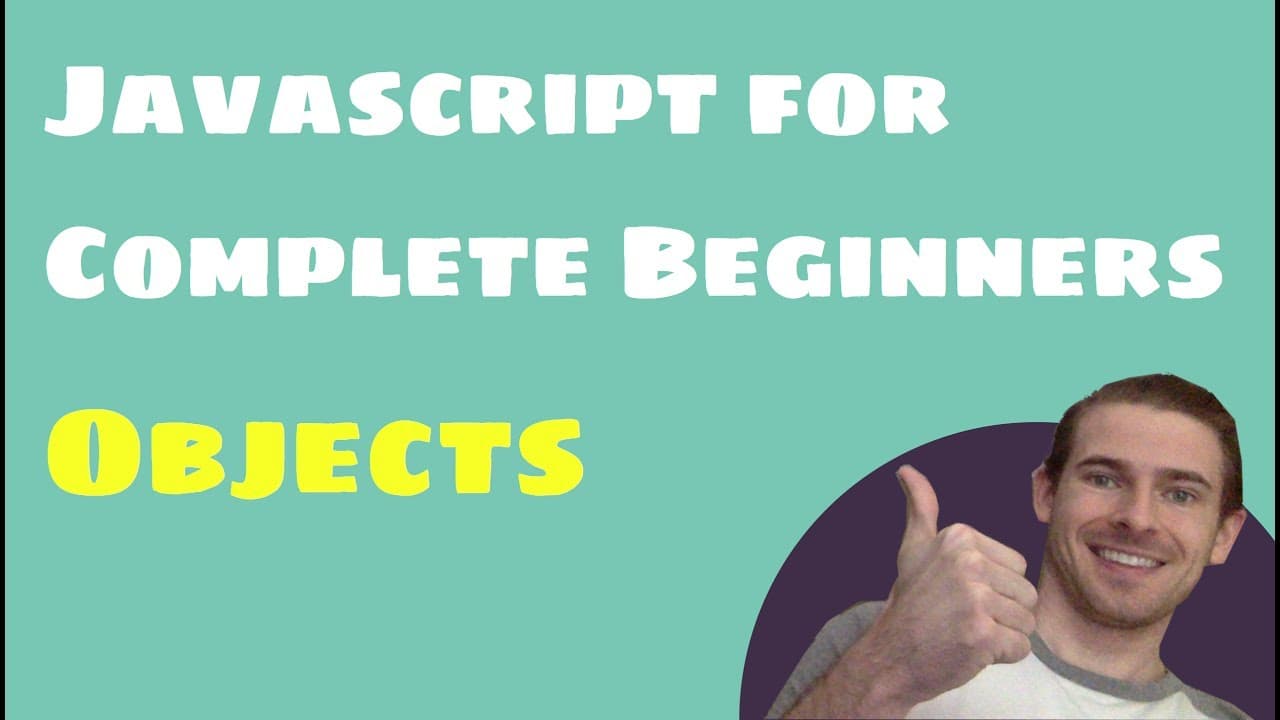
To use objects in JavaScript, define them with properties like strings and functions. You can dynamically add, modify, or delete properties at runtime to adapt to changing requirements. Factory functions can be employed for creating objects efficiently, promoting code reusability and organization.
Transcript
hey coders and welcome to another JavaScript for complete beginners in this video we're going to be diving into how to use objects in JavaScript so like always let's go ahead and look at a whiteboard example of what an object is so I'm going to start off with an object called Bob and then objects are going to be denoted with this rectangle and obje... Read More
Key Insights
- #️⃣ Objects in JavaScript can have various properties, including strings, numbers, functions, arrays, and other objects, providing flexibility in data management.
- 👻 Properties of an object can be changed in real time, allowing developers to build dynamic applications that respond to user input or other factors.
- 🆘 The delete operator effectively removes properties from objects, which helps in maintaining a clean and relevant data structure.
- 👻 Nested objects allow for complex data representation, where a single property can itself be an object containing multiple properties.
- 🧑🏭 Factory functions enhance code reusability and organization, making it easier to create multiple, similar objects without redundancy.
- 🌍 Understanding objects is crucial for mastering JavaScript, as they are fundamental to representing real-world entities and data structures in programming.
- 😒 The instructor suggests that using factory functions is often more advantageous than leveraging classes for object creation, especially in simpler use cases.
Install to Summarize YouTube Videos and Get Transcripts
Explore YouTube Video Summarizer or Get YouTube Transcript Extractor
Questions & Answers
Q: What defines an object in JavaScript?
An object in JavaScript is a collection of properties, each defined by a key-value pair. Properties can hold values of different types, including strings, numbers, functions, arrays, and even other objects. For example, an object named Bob can have properties like age, gender, and weight, which define its characteristics.
Q: How can properties be added or removed from an object?
Properties can be dynamically added or removed from an object using dot notation or bracket notation. To add a property, simply assign a value using dot notation, like Bob.weight = 150. For removal, the delete operator can be used, like delete Bob.weight, which eliminates that property from the object.
Q: Why are factory functions useful for creating objects?
Factory functions are useful for creating objects because they eliminate repetition and streamline the process of object creation. By defining a function that returns an object, developers can create multiple instances with shared properties and methods efficiently, reducing code duplication and improving maintainability.
Q: How do you access nested properties within an object?
Nested properties can be accessed using dot notation, where you chain properties together. For instance, if Bob has a pet object with an age property, it can be accessed using Bob.pet.age. This allows you to navigate through the object structure easily to retrieve or modify values.
Summary & Key Takeaways
-
The video introduces JavaScript objects, explaining their structure, properties, and how they can be modified dynamically at runtime.
-
It demonstrates creating objects with various data types as properties, such as strings, integers, functions, and nested objects.
-
Viewers learn about adding, modifying, and deleting properties, along with creating objects using factory functions for better code organization.
Read in Other Languages (beta)
Share This Summary 📚
Summarize YouTube Videos and Get Video Transcripts with 1-Click
Try YouTube Summary with ChatGPT & Claude or YouTube Transcript Generator
Explore More Summaries from Web Dev Cody 📚

Summarize YouTube Videos and Get Video Transcripts with 1-Click
Try YouTube Summary with ChatGPT & Claude or YouTube Transcript Generator