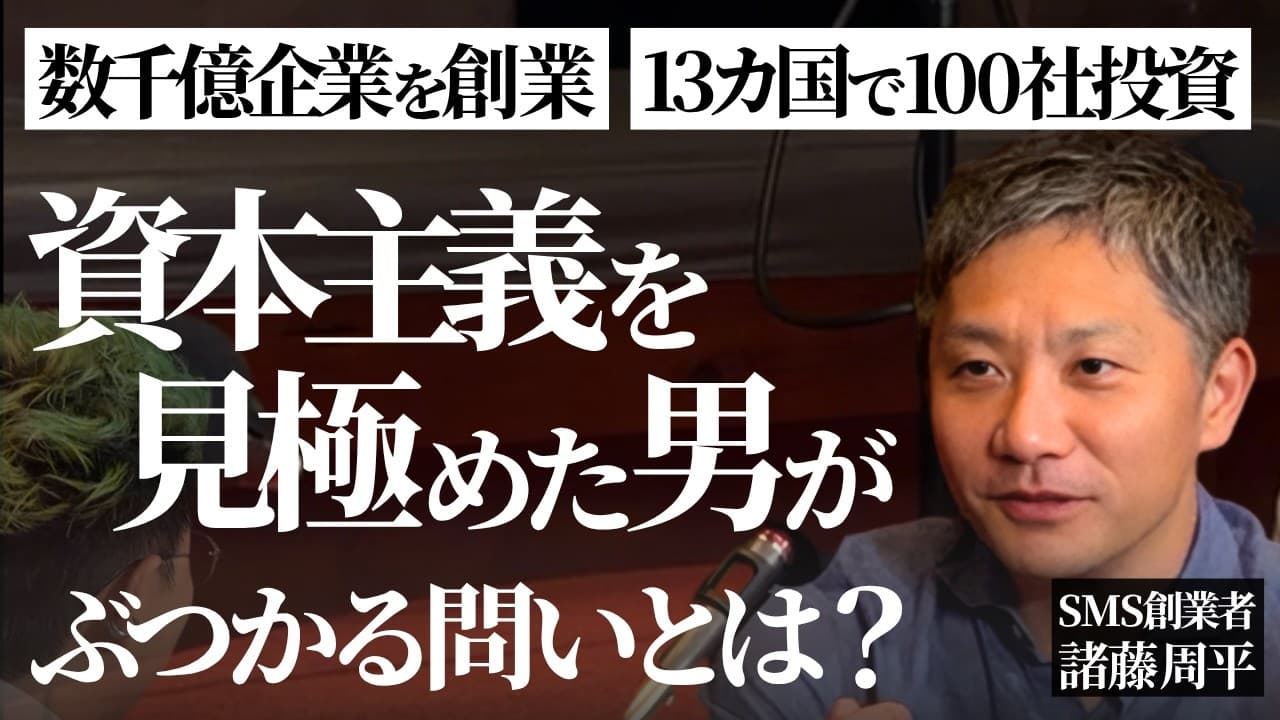
How did Shihei Morofuji rethink success after ADHD?
TL;DR
Morofuji redefines success beyond a large exit, choosing a future facing mission at 50 and focusing on creating new industries with REAPRA. He attributes his drive to early environment and ADHD, and argues that impact thinking can harm mental health if pursued to extremes. The conversation explores turning points, internal conflicts, and a vision that blends research with practice to shape economies.
Transcript
I was a believer in the "religion" that growing a company equals making society better, and I thought that would solve everything. Yes. >> Tonight's guest is Mr. Morohei. It's a pleasure to be here. >> Thank you for joining us. I mentioned a turning point in my life, and since I've decided to quit at 50, I’m thinking about what to do next. >... Read More
Key Insights
- Morofuji intends to retire at 50 to pursue a new form of leadership and industry creation.
- The core idea is to research and practice creating new economic clusters that improve lives.
- ADHD and early environment shaped his risk tolerance and career choices.
- He believes impact thinking can become depressive if used as the sole lens for success.
- He critiques the religious belief that corporations alone solve social problems.
- Reapra combines investing with hands on learning to benefit both entrepreneurs and the team.
- The shift from SMS to Repla to Reapra shows a pattern of seeking long term impact, not merely growth.
- The next venture centers on a field like fishing to redefine environments for youth and society.
Install to Summarize YouTube Videos and Get Transcripts
Explore YouTube Video Summarizer or Get YouTube Transcript Extractor
Questions & Answers
Q: What triggered Morofuji to start considering a new path after his initial successes?
Morofuji describes a turning point where he decided to retire at 50 and rethink his approach to business. He explains that despite leading a company to scale and listing, the inner question of what comes next pushed him to seek a mission that could create meaningful economic clusters. This reflects a deliberate pivot from personal achievement to societal impact.
Q: How did his childhood experiences influence his view of success and risk?
From early childhood Morofuji recalls an environment of safety and freedom that allowed spontaneous exploration. He also describes ADHD and family pressure, which later translated into a fear of failure and a desire to find a path that would not trap him in a conventional corporate role. These experiences contribute to a long horizon mindset and caution about premature risk.
Q: Why does Morofuji criticize the notion that corporations alone fix social issues?
He argues that the belief in corporations as the sole solution is a kind of religion that can blind people to alternative, potentially more holistic approaches. This skepticism leads him to emphasize research and practice in creating new industries, where collaboration and diverse actors contribute to social betterment beyond traditional corporate paradigms.
Q: What is the mission of Reapra and how does it differ from typical investment firms?
Reapra stands for Research and Practice and aims to research how to create new industries and economic clusters that improve lives. Unlike traditional investors, it emphasizes hands on learning and close collaboration with entrepreneurs to co-create value, balancing financial returns with the development of practical, scalable industries.
Q: How does Morofuji view the future of his work after 50, and what field does he plan to explore?
He envisions a future focused on shaping new industries rather than chasing rapid growth. He mentions fishing as a field he wants to explore, signaling a shift toward building environments and opportunities that nurture younger generations and encourage sustainable, long term thinking in society.
Q: What role does internal conflict play in Morofuji’s philosophy of leadership?
Internal conflict, including the tension between wanting a comfortable, stable career and seeking meaningful, high impact work, drives his willingness to quit traditional paths. This tension pushes him to redesign his organizations and investments to support ventures that align with his deeper values and long term vision.
Q: How does Morofuji’s view of ADHD influence his career decisions?
ADHD is described as a factor that complicated learning and perceived future outcomes, contributing to a sense of urgency and the need to design environments that support diverse cognitive styles. This perspective informs his emphasis on flexible, resilient structures within Reapra and a cautious but ambitious approach to entrepreneurship.
Q: What does Morofuji hope to achieve by reshaping entrepreneurship education and culture?
He wants to create cultures where experimentation, failure, and long term planning are valued, not just rapid scaling. By investing in early stage entrepreneurs and fostering collaboration, he aims to build ecosystems that generate sustainable industries, improve lives, and prepare the next generation for thoughtful engagement with markets and society.
Summary & Key Takeaways
-
Morofuji describes his decision to retire at 50 as a deliberate shift toward pursuing a new vision with REAPRA. He emphasizes learning from failures and reshaping culture to align investments with entrepreneurs who can create new industries. The summary highlights the personal and professional pivots guiding his current path.
-
He reflects on childhood trauma, ADHD, and the impact of his environment on his career choices. He contrasts a childhood sense of limitless curiosity with later anxiety about the future, leading to a philosophy that prioritizes long term impact over conventional success.
-
The discussion links personal history to a broader critique of how society defines success, arguing that early exposure to markets and competition can distort development. It ends with a clear plan to explore fishing as a field and to build environments that nurture future generations.
Read in Other Languages (beta)
Share This Summary 📚
Summarize YouTube Videos and Get Video Transcripts with 1-Click
Try YouTube Summary with ChatGPT & Claude or YouTube Transcript Generator
Explore More Summaries from インサイドビジョン | 深夜1時の経営者ラジオ 📚
Summarize YouTube Videos and Get Video Transcripts with 1-Click
Try YouTube Summary with ChatGPT & Claude or YouTube Transcript Generator