What Are Personal AI Agents and How Do They Differ?
TL;DR
Personal AI agents differ by memory, proactivity, and ease of use. DIY agents require you to set up folders and files so they remember and compare information, while personal agents are ready to use and can push updates without being asked. They can proactively flag issues like upcoming appointments or overdue tasks, reducing mental load.
Transcript
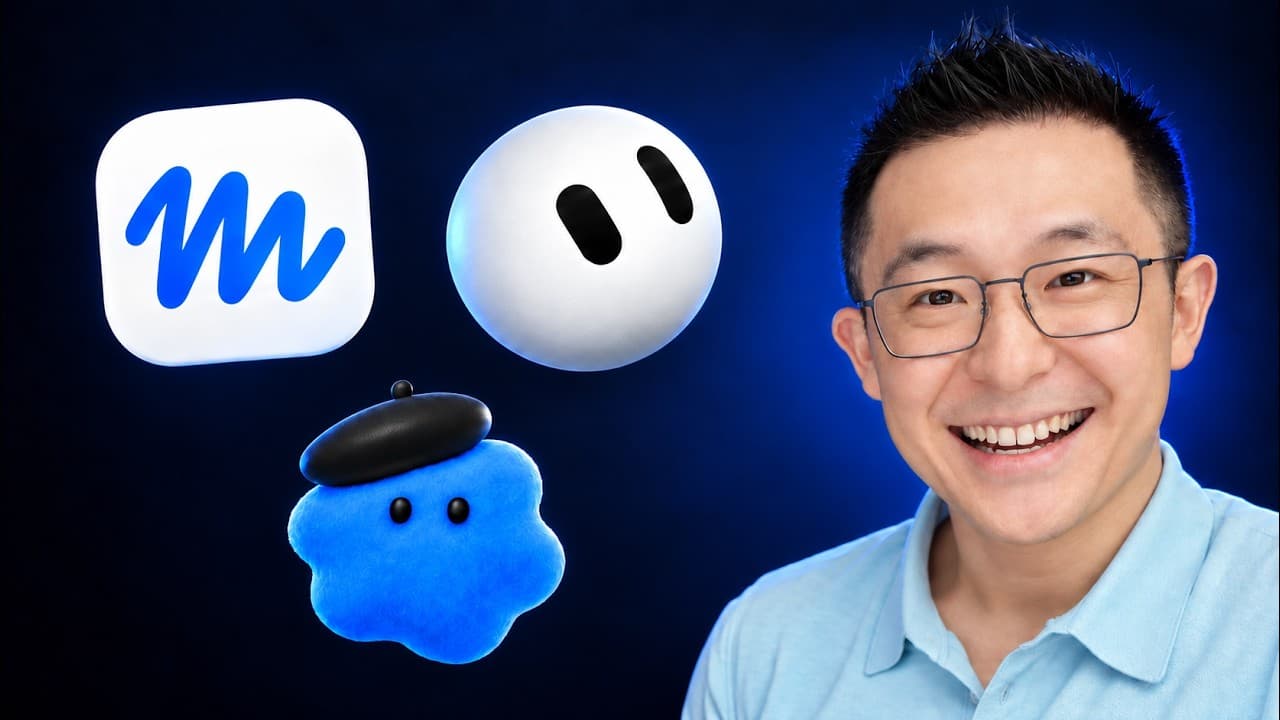
If you already use ChatGPT, Claude, or Google Gemini, then you might be wondering what makes personal agents like Muse, Dots, and GrokBot any different. [music] I mean, the demos and the headlines are extremely impressive, as usual, but are personal agents actually worth investing your time and effort to set up? [music] In this video, I'll explain ... Read More
Key Insights
- Personal agents are the proactive version of DIY agents that remember and act on your data automatically.
- DIY agents require you to create and manage a memory and file system that the AI uses to inform decisions.
- Personal agents reduce setup friction by offering ready-made workflows like goal setting and habit plans.
- DIY agents can connect multiple data sources and contexts to form a comprehensive memory for tasks.
- Personal agents can push alerts about upcoming events or tasks without being prompted.
- The comparison between health planning in DIY and personal agents shows similar underlying data structures with different access levels.
- Governance rules can be saved and followed by both DIY and personal agents to maintain consistent replies.
- Proactive memory and context integration are the key differentiators driving adoption of personal agents over traditional chatbots.
Install to Summarize YouTube Videos and Get Transcripts
Explore YouTube Video Summarizer or Get YouTube Transcript Extractor
Questions & Answers
Q: What is the core difference between chatbots and personal AI agents?
Chatbots are typically used for one-off tasks with no ongoing memory of user data, whereas personal AI agents are designed to remember long term preferences and information and to act proactively. This means personal agents can offer reminders, summarize past trends, and flag relevant issues before you ask, reducing repeated setup and manual tracking.
Q: How do DIY agents handle memory and rules?
DIY agents store rules and preferences in plain text files and read them back when needed. You tell the AI your preferences once, it writes them to memory files, and it uses those files to guide future tasks. This creates a persistent but user-managed memory layer across sessions and tasks.
Q: Why might someone prefer a personal agent over a DIY setup?
A person might prefer a personal agent because it eliminates manual setup and ongoing management. Personal agents are ready to use, can automatically monitor for relevant events, and provide proactive assistance, which reduces cognitive load and ensures important information is not forgotten.
Q: What is meant by the term proactive in personal agents?
Proactive means the agent watches for relevant events or changes and offers help before you ask. For example, it might remind you of an upcoming health checkup or flag overdue invoices in a business, ensuring you act on important items promptly rather than waiting for a manual prompt.
Q: How does the video illustrate the use of a personal agent in health planning?
The video describes a health scenario where a personal agent could remind you of a health checkup and summarize health trends from five years of data. This demonstrates proactive assistance, where the agent connects existing data to upcoming needs and provides a ready summary without you initiating the task.
Q: What role do memory and data connections play in these AI setups?
Memory and data connections allow AI to relate different facts across time and apps. In DIY setups, you connect Notion, Google Drive, and calendars, while personal agents use built-in memory and integrations to maintain context across tasks. This enables more accurate recommendations and timely updates.
Q: How do DIY and personal agents compare in terms of setup effort?
DIY agents require you to create and maintain a file-based memory system, setting up folders, memory files, and governance rules. Personal agents, by contrast, come ready to use and require less initial configuration, offering immediate value with proactive capabilities and simplified onboarding.
Q: What is a practical takeaway about choosing between the two approaches?
A practical takeaway is to weigh setup effort against desired control. If you want deep customization and are willing to manage files and rules, DIY agents can be powerful. If you prefer speed, simplicity, and proactive help, a personal agent provides usable capabilities with less friction and a lower learning curve.
Summary & Key Takeaways
-
Personal AI agents are the proactive, ready-to-use evolution of DIY agents that remember and act on your data without manual setup.
-
DIY agents require configuring a memory and file system to track information across life areas, enabling deeper automation but demanding user effort to maintain.
-
Personal agents simplify onboarding and daily use by providing proactive assistance and built-in memory, making it easier to start and scale personal automation.
Read in Other Languages (beta)
Share This Summary 📚
Summarize YouTube Videos and Get Video Transcripts with 1-Click
Try YouTube Summary with ChatGPT & Claude or YouTube Transcript Generator
Explore More Summaries from Jeff Su 📚
Summarize YouTube Videos and Get Video Transcripts with 1-Click
Try YouTube Summary with ChatGPT & Claude or YouTube Transcript Generator