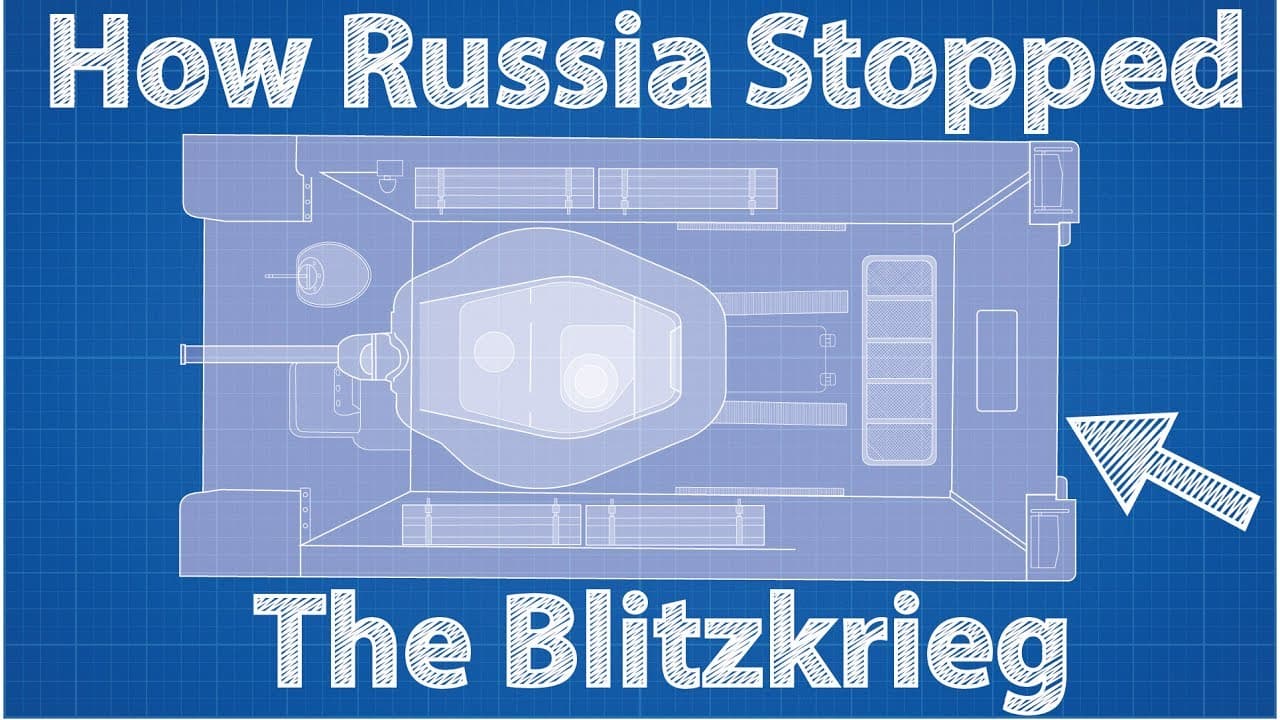
How Russia Stopped The Blitzkrieg
TL;DR
Russia halted Germany's blitzkrieg with sheer numbers and resilience.
Transcript
This episode of real engineering is brought to you by Skillshare. Home to 15,000 classes that could teach you a new life skill. The first 400 people to sign up using the link in the description will get a 2 month free trial. World War one was a static, grueling war. Weapon technology had advanced quickly, but the technology to carry these weapons l... Read More
Key Insights
- World War I's static nature was transformed by advancements in motorized vehicles, leading to Germany's blitzkrieg strategy in World War II.
- Germany's blitzkrieg involved rapid advances and psychological warfare, utilizing dive bombers and armored divisions to create disarray.
- The invasion of Poland demonstrated blitzkrieg's effectiveness, despite Poland's valiant resistance with anti-tank rifles.
- Germany's invasions of Holland, Belgium, and Luxembourg showcased strategic diversions, misleading the Allies about their true invasion routes.
- The French were unprepared for blitzkrieg's speed, despite having superior tanks, leading to their quick defeat.
- Germany's focus on advanced tank designs, like the Panzer VIII, was hindered by production inefficiencies and insufficient numbers.
- Russia countered blitzkrieg by mass-producing T-34 tanks, prioritizing quantity over quality, and leveraging strategic defensive positions.
- The Battle of Kursk marked a turning point, as Russia's massive defenses and resources blunted Germany's advance, shifting momentum in World War II.
Install to Summarize YouTube Videos and Get Transcripts
Explore YouTube Video Summarizer or Get YouTube Transcript Extractor
Questions & Answers
Q: What was the significance of the blitzkrieg strategy?
Blitzkrieg was a revolutionary military strategy developed by Germany during World War II, characterized by rapid, coordinated attacks using motorized vehicles, air support, and psychological warfare. It aimed to create disarray and quickly overpower enemy defenses, leading to swift victories. This approach fundamentally changed the dynamics of warfare, rendering traditional trench warfare obsolete.
Q: How did Poland resist the initial German invasion?
Poland resisted the German invasion with notable bravery, utilizing anti-tank rifles capable of penetrating early German tanks. Despite being outmatched, Polish forces managed to delay German advances in some battles. However, the overwhelming speed and coordination of the blitzkrieg, combined with German propaganda, ultimately led to Poland's defeat within weeks.
Q: Why did Germany's invasion of the low countries succeed so quickly?
Germany's invasion of the low countries succeeded quickly due to strategic deception and overwhelming force. By focusing Allied attention on a northern invasion route, Germany executed a rapid advance through the Ardennes, catching the Allies off guard. Superior tactics, including airborne assaults and targeted bombings, further facilitated the swift capture of these territories.
Q: What factors contributed to France's rapid defeat?
France's rapid defeat was due to several factors: unpreparedness for blitzkrieg's speed, inadequate strategic planning, and underutilization of their superior tanks. The German strategy of bypassing fortified positions and exploiting weak points left French forces unable to effectively respond, leading to their surrender within weeks of the German invasion.
Q: How did Russia counter Germany's blitzkrieg tactics?
Russia countered Germany's blitzkrieg tactics by leveraging sheer numbers, producing vast quantities of T-34 tanks, and employing strategic defensive measures. Despite crude construction, the T-34s' sloped armor and powerful guns proved effective. Russia's extensive trench systems, mines, and artillery further blunted German advances, culminating in the pivotal Battle of Kursk.
Q: What was the impact of the Battle of Kursk?
The Battle of Kursk was a turning point in World War II, marking the first major defeat of Germany's blitzkrieg strategy. Russia's massive defensive preparations, including extensive trench networks and anti-tank measures, successfully repelled German forces. This battle showcased Russia's resilience and shifted the momentum, putting Germany on the defensive for the remainder of the war.
Q: Why did Germany's advanced tank designs not secure victory?
Germany's advanced tank designs, like the Panzer VIII, were hindered by production inefficiencies and logistical challenges. The focus on creating technologically superior tanks led to limited numbers, insufficient to counter the mass-produced Russian T-34s. Additionally, the complex designs increased production time and costs, ultimately contributing to Germany's inability to sustain their blitzkrieg momentum.
Q: How did Russia's production strategy differ from Germany's?
Russia's production strategy prioritized quantity over quality, focusing on mass-producing the T-34 tank to overwhelm German forces. In contrast, Germany aimed for technological superiority, developing advanced but complex tanks. This approach resulted in fewer units and higher costs. Russia's simpler, more efficient production allowed them to field large numbers of tanks, effectively countering Germany's blitzkrieg tactics.
Summary & Key Takeaways
-
Germany's blitzkrieg strategy revolutionized warfare with rapid, mechanized advances, overwhelming European defenses in World War II.
-
Despite superior tank designs, Germany's production inefficiencies and Russia's sheer numbers turned the tide against the blitzkrieg.
-
The Battle of Kursk epitomized Russia's resilience, marking a pivotal moment where Germany's blitzkrieg was effectively neutralized.
Read in Other Languages (beta)
Share This Summary 📚
Summarize YouTube Videos and Get Video Transcripts with 1-Click
Try YouTube Summary with ChatGPT & Claude or YouTube Transcript Generator
Explore More Summaries from Real Engineering 📚





Summarize YouTube Videos and Get Video Transcripts with 1-Click
Try YouTube Summary with ChatGPT & Claude or YouTube Transcript Generator