How Is Nylon Made from Adipic Acid and Hexamethylenediamine?
TL;DR
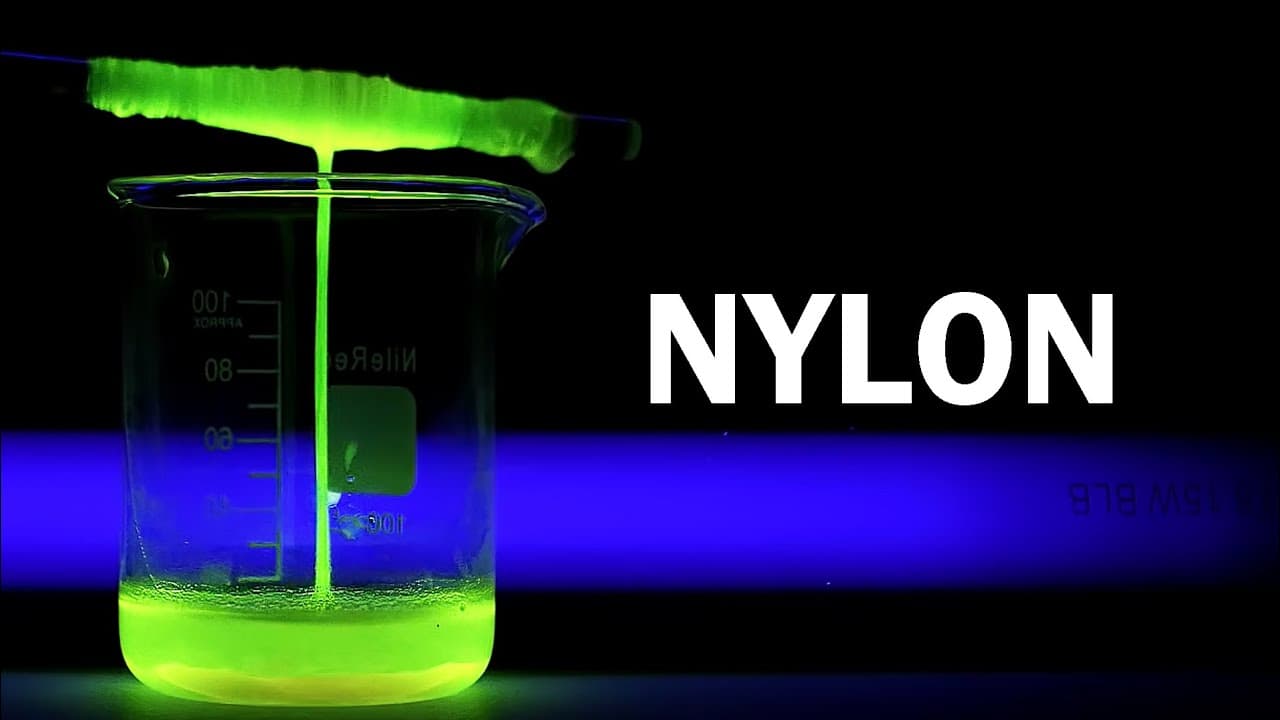
Nylon is produced by combining adipic acid with hexamethylenediamine, resulting in a polymer used for various applications. The process involves converting adipic acid to adipoyl chloride, followed by a reaction with hexamethylenediamine. Different nylon forms, like Nylon 6 and Nylon 66, have unique properties that suit them for specific uses.
Transcript
this video is sponsored by audible nylon is an extremely important family of polymers that can be used to make a huge range of different products it can be strung into fibers to make things like clothing and textiles or molded into plastic parts and tools nylon was first used to make the bristles for toothbrushes and it's still being used today it'... Read More
Key Insights
- 🧡 Nylon is a versatile polymer used in various industries, ranging from clothing to tools.
- ❓ Nylon can be produced through different methods, including the combination of adipic acid with hexamethylenediamine or the conversion of adipic acid to adipoyl chloride prior to reacting it with hexamethylenediamine.
- 💁 Different forms of nylon, such as nylon 6 and nylon 66, have different properties, making them suitable for specific applications.
- ⚾ The production process of nylon involves filtration, acid-base reactions, and the removal of impurities.
- 🫢 Good ventilation is crucial in the production of nylon, as it involves the release of hydrochloric acid gas and carbon monoxide.
- 🥳 Nylon can be made into various forms, such as fibers or molded plastic parts.
- ✋ A thorough washing and drying process is essential to obtain clean and high-quality nylon.
Install to Summarize YouTube Videos and Get Transcripts
Explore YouTube Video Summarizer or Get YouTube Transcript Extractor
Questions & Answers
Q: What are the most common types of nylon?
The most common types of nylon are nylon 6 and nylon 66. Nylon 6 is made from one six-carbon chemical, while nylon 66 is made from two ingredients, each with six carbons.
Q: Why is nylon 610 preferred for making toothbrush bristles?
Nylon 610 has the property of retaining its properties when wet, which makes it ideal for toothbrush bristles that are regularly exposed to water.
Q: What are the two major ways to produce nylon industrially?
The two major methods for producing nylon industrially are the combination of adipic acid with hexamethylenediamine or the conversion of adipic acid to adipoyl chloride, followed by reacting it with hexamethylenediamine.
Q: How is impurity removed from adipic acid before the nylon production process?
Impurities present in adipic acid are removed by adding distilled water, followed by the gradual addition of sodium hydroxide, which reacts with adipic acid to form sodium adipate, a more soluble compound. The solution is then filtered to remove impurities.
Summary & Key Takeaways
-
Nylon is an important family of polymers that can be used to make a wide range of products, including clothing, textiles, and tools.
-
Nylon can be produced through two major methods: combining adipic acid with hexamethylenediamine or converting adipic acid to adipoyl chloride and then reacting it with hexamethylenediamine.
-
The length of the building blocks in nylon affects its properties, with different forms of nylon having different characteristics.
Read in Other Languages (beta)
Share This Summary 📚
Summarize YouTube Videos and Get Video Transcripts with 1-Click
Try YouTube Summary with ChatGPT & Claude or YouTube Transcript Generator
Explore More Summaries from NileRed 📚
Summarize YouTube Videos and Get Video Transcripts with 1-Click
Try YouTube Summary with ChatGPT & Claude or YouTube Transcript Generator