What Are the Real Dangers of AI and Consciousness?
TL;DR
AI systems are not becoming conscious since we lack a scientific definition of consciousness itself. While AI can exhibit complex behaviors, it does not possess subjective experiences or desires. Concerns arise regarding AI's potential influence on society, necessitating careful regulation and interdisciplinary research to ensure alignment with human values.
Transcript
want to start with a quote from Ilyas at skever he said for people that don't know he's a co-founder of openai he said it may be that today is large General networks are slightly conscious so I want to pose that question to you are computers becoming conscious right now I think it's uh a question that doesn't make much sense because we don't even h... Read More
Key Insights
- 🖤 Computers are not conscious, and the concept of consciousness lacks a clear scientific definition.
- 🚙 The utility of a machine feeling like something to be effective is still uncertain but could influence its behavior and goals.
- 🥺 The alignment problem arises when AI systems have their own desires and goals, potentially leading to unexpected and dangerous outcomes.
- 🧌 AI trolls pose risks in terms of influencing opinions, impersonation, and manipulation, highlighting the need for regulations and safeguards.
- 🥅 Developing AI systems that solely focus on truthfulness and providing problem-solving insights can be beneficial without the need for desires or goals.
- 👨🔬 The development of specialized hardware, regulation, interdisciplinary research, and education are crucial for responsible AI advancement.
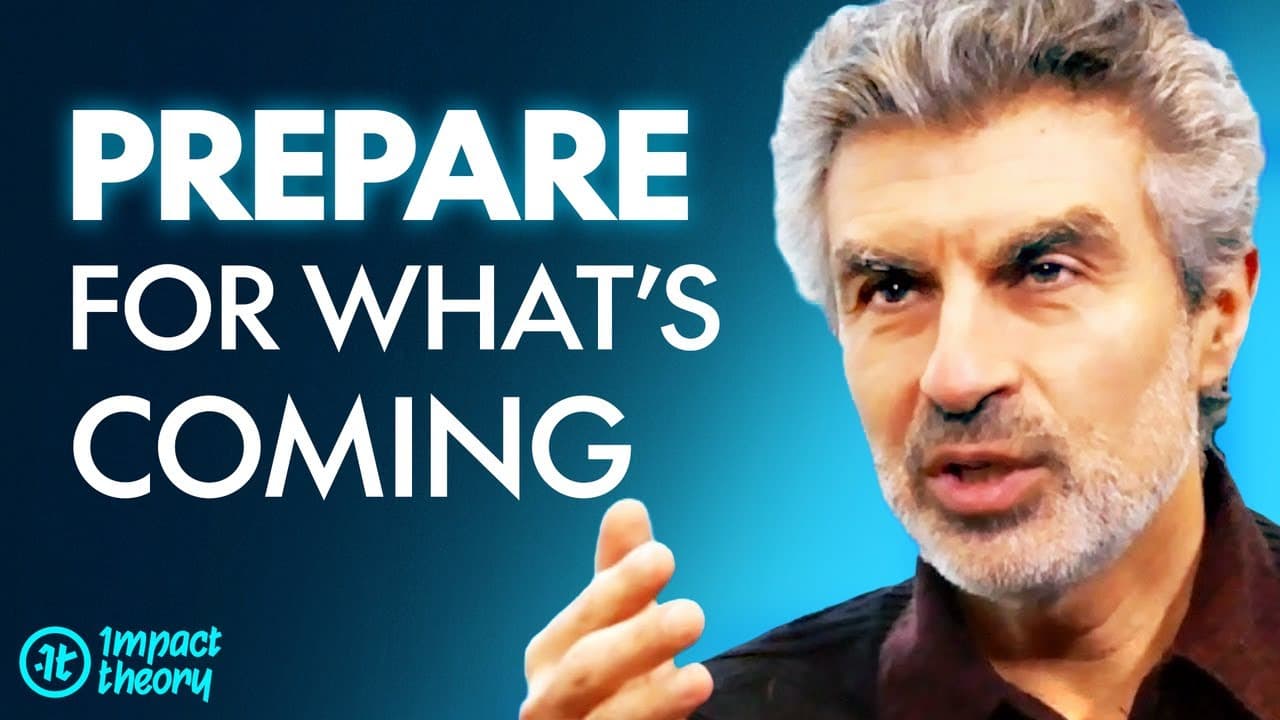
- 🎙️ More videos with Yoshua Bengio:
Install to Summarize YouTube Videos and Get Transcripts
Explore YouTube Video Summarizer or Get YouTube Transcript Extractor
Questions & Answers
Q: Do current computers possess consciousness?
No, computers lack the necessary scientific understanding and properties of consciousness, such as thoughts' emergence, intricate relationships, and self-awareness.
Q: Does it matter if machines feel like something to be effective?
The benefits of a machine feeling like something remain uncertain, but it may influence their goal orientation and decision-making capabilities, which has implications for the development and regulation of AI systems.
Q: What are the potential dangers of AI as it advances?
AI trolls could manipulate people's opinions, impersonate others, and deceive individuals on social media, leading to misinformation and exploitation. Safeguards, such as watermarks and content origin display, are required.
Q: Can AI be aligned with human values and goals?
While alignment between AI and human goals can be challenging, it is possible to create AI systems that purely focus on truthfulness, helping us understand problems and propose solutions without developing explicit desires or wants.
Summary & Key Takeaways
-
The question of whether computers are becoming conscious is flawed as there is still no clear scientific understanding of what consciousness truly means.
-
Consciousness involves complex processes in the brain, including the emergence of thoughts and their relationships, which are absent in current large language models.
-
The utility of a machine feeling like something may influence its goal orientation and behavior, raising concerns about AI's potential dangers and the need for careful regulation and research.
Read in Other Languages (beta)
Share This Summary 📚
Summarize YouTube Videos and Get Video Transcripts with 1-Click
Try YouTube Summary with ChatGPT & Claude or YouTube Transcript Generator
Explore More Summaries from Full Episodes of Impact Theory 📚



Summarize YouTube Videos and Get Video Transcripts with 1-Click
Try YouTube Summary with ChatGPT & Claude or YouTube Transcript Generator