How to Convert Soap Back Into Oil for Cooking
TL;DR
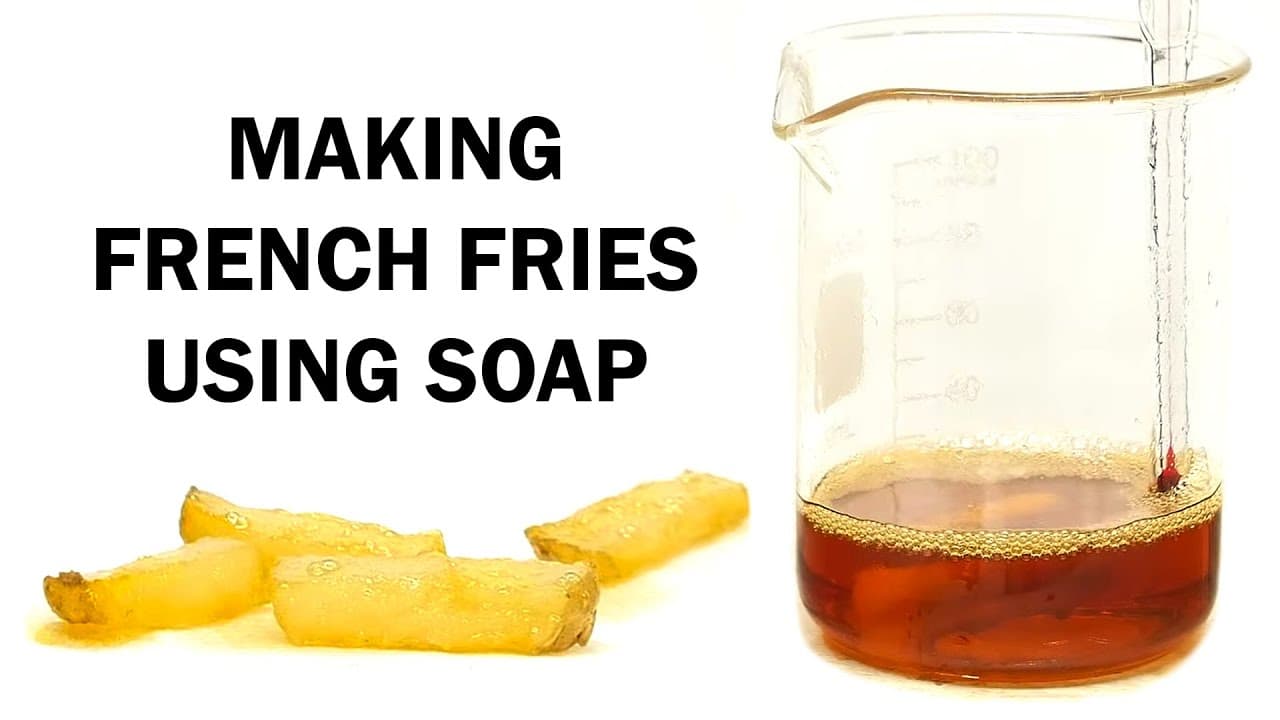
Converting soap back into oil is a complex process that involves reattaching fatty acids to glycerol to form triglycerides. The attempt to do so using pure olive oil soap was unsuccessful, highlighting the challenges in reversing the soap-making process. Despite the failure, the experiment demonstrates the intricacies of chemical conversions and the need for optimized conditions.
Transcript
in my last video I made soap from oil but while I was working on it I wondered if it was possible to do the reverse reaction as in make oil from soap I thought that the coolest thing I could do would be to take soap convert it back to oil and then cook some french fries in my little fantasy I imagined eating the fries but I knew that it probably wo... Read More
Key Insights
- 🧼 Soap is made by breaking down ester bonds in triglycerides, releasing glycerol and salted fatty acids known as soap.
- 🧼 Converting soap back into oil is more challenging than making soap and requires reattaching the fatty acids to glycerol.
- 💁 The fatty acids in soap can be isolated, but the process of reconnecting them to glycerol to form triglycerides is complex.
- 🧼 The experiment using a pure olive oil soap failed to produce triglycerides, indicating the difficulty of the reverse soap-making process.
- 🛢️ Commercial soaps often contain additives and mixed oils, making them unsuitable for the experiment.
- 🛢️ The process of converting soap back into oil may require further optimization, such as using specific catalysts and reaction conditions.
- 🧐 Industrial processes often focus on producing mono or diglycerides rather than triglycerides due to their unique properties.
Install to Summarize YouTube Videos and Get Transcripts
Explore YouTube Video Summarizer or Get YouTube Transcript Extractor
Questions & Answers
Q: How is soap made from oil?
Soap is made by breaking down the ester bonds in triglycerides found in oils and fats, releasing glycerol and salted fatty acids known as soap.
Q: Can soap be converted back into oil?
Yes, in theory, soap can be converted back into oil by reattaching the fatty acids to glycerol. However, this process is more challenging and requires specific conditions.
Q: Why was the soap chosen for the experiment important?
The soap used in the experiment needed to be made from a single oil to ensure consistency in the fatty acid composition. Commercial soaps and homemade soaps with mixed ingredients would complicate the process.
Q: What were the challenges faced in converting soap back to oil?
The biggest challenges included the inability to control the composition of the fatty acids in the final product and the difficulty in determining the exact amount of glycerol needed. Additionally, the reaction process required high temperatures and an acid catalyst.
Summary & Key Takeaways
-
Soap is made from triglycerides found in oils and fats by breaking the ester bonds with a strong base.
-
Reversing the soap-making process involves reconnecting the fatty acids with glycerol to form triglycerides, but it is more difficult.
-
The experimenter attempts to convert soap back into oil using a pure olive oil soap, but the process fails to produce triglycerides.
Read in Other Languages (beta)
Share This Summary 📚
Summarize YouTube Videos and Get Video Transcripts with 1-Click
Try YouTube Summary with ChatGPT & Claude or YouTube Transcript Generator
Explore More Summaries from NileRed 📚
Summarize YouTube Videos and Get Video Transcripts with 1-Click
Try YouTube Summary with ChatGPT & Claude or YouTube Transcript Generator