How to Optimize Content for AI Search Citations
TL;DR
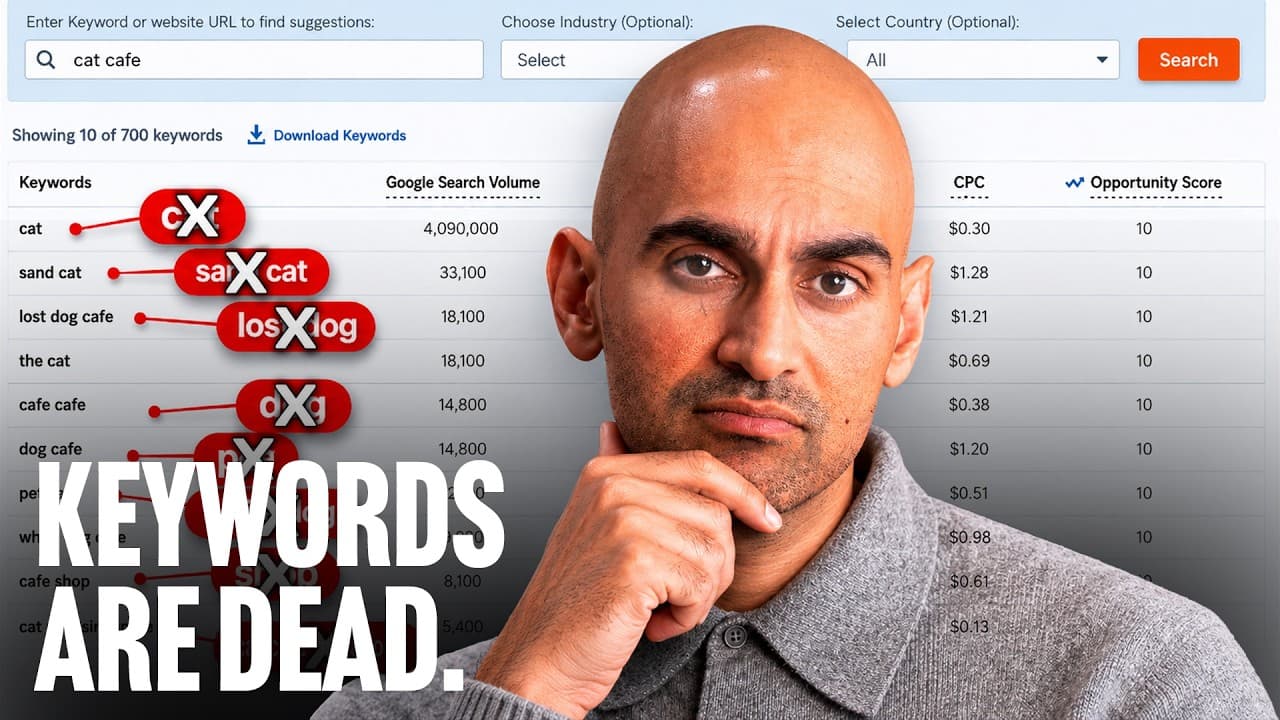
Optimize for the user’s full situation, not merely the keyword, by leading with a direct answer, using conversational questions as headings, and adding clear FAQs. To improve AI visibility, also earn mentions on sources AI already trusts, including Reddit, review platforms, and roundup articles, because rankings and AI citations now behave as separate signals.
Transcript
Google told us exactly [music] how SEO would change. Back in 2015, almost nobody listened because the old way still worked. It doesn't anymore. AI just made the thing Google warned us about impossible to ignore. Let me show you what everyone missed. But before we talk about [music] where SEO is headed, we need to go back to where it all began, the ... Read More
Key Insights
- Keyword matching is not the same as understanding users because identical terms can represent research, pain, budget, doubt, local, or purchase situations. Earlier search systems rewarded exact wording strongly enough that marketers could achieve rankings without fully addressing the circumstances and needs behind each query.
- Google’s Micro-Moments framework defines four search states: want to know, want to go, want to do, and want to buy. These moments reveal what a person is trying to accomplish, allowing marketers to create substantially different content for searches that appear to share the same core keyword.
- Zero-click search was already widespread before broad AI Overview adoption, rising from 57% to 59% afterward according to the transcript. When an AI Overview appeared, the top result’s click-through rate fell from 1.76% to 0.61%, even though its ranking remained unchanged.
- Long conversational queries are more likely to generate AI answers because they communicate a complete human situation. Queries containing one to three words triggered an AI answer 23% of the time, while queries containing six or more words did so 77% of the time.
- Google ranking and AI visibility are separate scores because AI systems increasingly cite pages outside conventional top results. The study described found that a number-one ranking produced a 31.4% chance of appearing in an AI answer, while rank four produced only a 2.6% chance.
- AI-readable content is structured around extractable answers because models divide pages into chunks and look for complete, confident responses. Leading with the answer, placing conversational questions in headings, and building genuine FAQ sections make relevant passages easier for AI systems to identify and cite.
- AI citation performance can change between model versions, so optimizing for one model’s current behavior is unreliable. The Brandwatch example moved from 8% to 56% citation visibility during one update and later declined, supporting a durable strategy based on clear, consistently extractable content.
- External mentions are central to AI visibility because most citations described in the transcript came from outside a brand’s website. Reddit, review platforms such as G2, Capterra, and Trustpilot, and established roundup articles are prominent sources where brands should seek credible inclusion.
Install to Summarize YouTube Videos and Get Transcripts
Explore YouTube Video Summarizer or Get YouTube Transcript Extractor
Questions & Answers
Q: How should content be optimized for AI search citations?
Content should lead with a direct answer, use the user’s natural-language question as a heading, and provide complete explanations that can stand alone when extracted from the page. It should address the full situation behind the query rather than repeat a keyword. A genuine FAQ section can cover related questions, while external mentions can help AI find the brand on sources it already trusts.
Q: Why is keyword-based SEO becoming less effective?
Keyword-based SEO is becoming less effective because a keyword only represents the surface of a user’s need. People increasingly describe complete situations in conversational searches, including their constraints, goals, and doubts. AI systems respond to that context directly, while search features can answer queries without generating a click. Content built only around exact wording may therefore rank but still lose traffic or citations.
Q: What are Google’s four Micro-Moments in search?
Google’s four Micro-Moments are want to know, want to go, want to do, and want to buy. Want to know covers research, want to go concerns finding a location, want to do reflects an attempt to solve a problem, and want to buy signals readiness to make a decision. The framework helps marketers distinguish different needs that may exist beneath similar keywords.
Q: Does ranking first on Google guarantee visibility in AI answers?
Ranking first on Google does not guarantee visibility in AI answers. The study described in the transcript found that the number-one result had a 31.4% chance of appearing in an AI response. By rank four, that chance fell to 2.6%. It also found that 90% of pages cited by AI ranked 21 or lower, showing that ranking and AI visibility operate as separate scores.
Q: Why do longer search queries trigger more AI answers?
Longer queries reveal more of the user’s circumstances, which gives AI enough context to construct a direct response. According to the transcript, searches containing one to three words triggered an AI answer 23% of the time, while searches containing six or more words triggered one 77% of the time. Longer prompts behave like complete situations rather than isolated keyword strings.
Q: How can AnswerThePublic help identify search intent?
AnswerThePublic can reveal question clusters that represent different moments behind a topic, rather than merely supplying blog ideas. For example, questions about bad knees indicate pain, questions about a fixed price indicate budget constraints, and questions about whether a product is worthwhile indicate doubt. These conversational questions can become headings and FAQ entries that closely match prompts people give to AI tools.
Q: Where should brands seek mentions for better AI visibility?
Brands should seek mentions on sources that AI systems already cite, including Reddit, review platforms such as G2, Capterra, and Trustpilot, and established roundup articles. The transcript argues that a brand’s own pages represent only part of the opportunity. An AI visibility report can identify the sources citing the brand and its competitors, turning those findings into a focused outreach plan.
Q: What practical AI SEO work can be completed this week?
Start with the five pages receiving the most traffic and examine each page’s core topic in AnswerThePublic. Find the leading what, when, where, and why questions, then select three that match a want-to-know or want-to-buy moment. Add a clear FAQ section to each page and answer those exact conversational questions directly, without introductory filler that buries the response.
Summary & Key Takeaways
-
Traditional SEO often relied on matching the exact words people typed, using keywords as imperfect substitutes for their real needs. Google’s Micro-Moments framework identified four underlying states: want to know, want to go, want to do, and want to buy. Each moment requires content tailored to a different situation and intent.
-
AI search changes discovery because users describe complete situations and expect direct answers instead of lists of links. A high Google position does not guarantee inclusion in an AI response. Content is more likely to be cited when it matches the whole user moment and presents a complete, confident answer that a model can extract cleanly.
-
An effective AI visibility strategy combines on-page formatting with external brand presence. Pages should lead with answers, use natural-language questions as headings, and include useful FAQs. Brands should also pursue mentions in communities, review platforms, and existing roundup articles that AI systems cite, using citation reports to identify practical outreach targets.
Read in Other Languages (beta)
Share This Summary 📚
Summarize YouTube Videos and Get Video Transcripts with 1-Click
Try YouTube Summary with ChatGPT & Claude or YouTube Transcript Generator
Explore More Summaries from Neil Patel 📚

Summarize YouTube Videos and Get Video Transcripts with 1-Click
Try YouTube Summary with ChatGPT & Claude or YouTube Transcript Generator