How to Build Wealth in Europe From Scratch
TL;DR
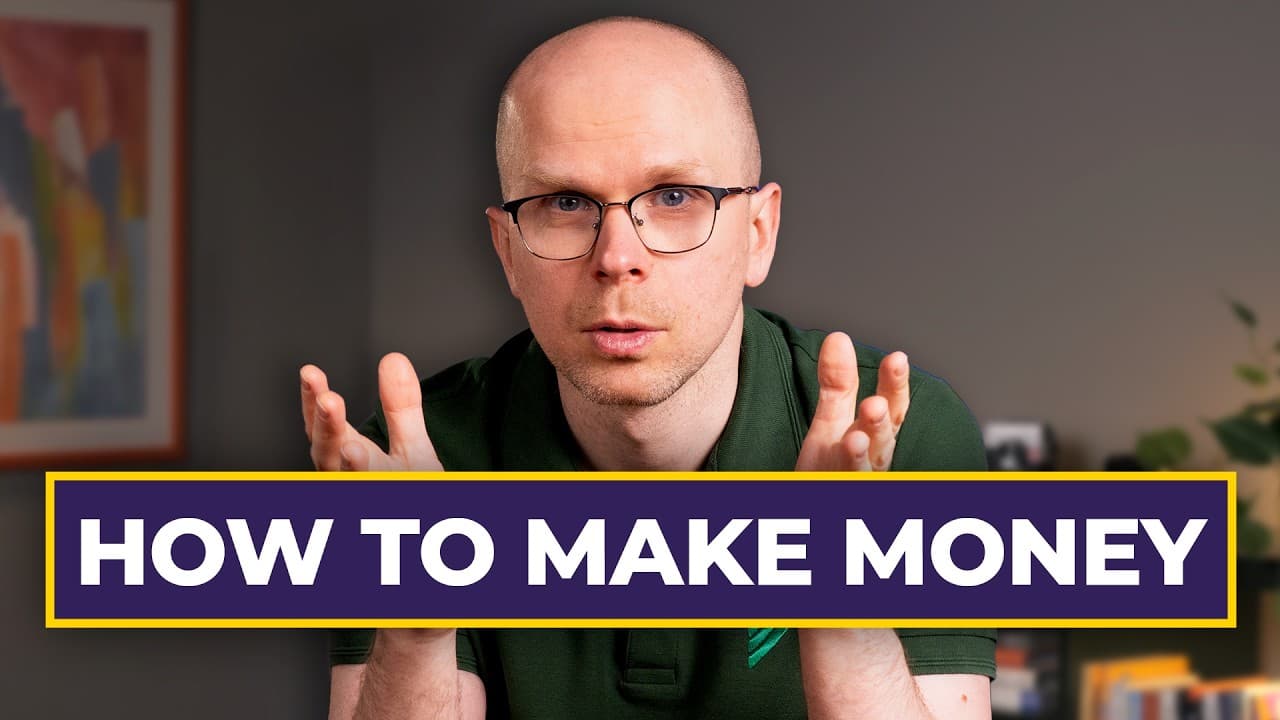
Building wealth in Europe is possible through two main routes: starting a business that solves valuable customer problems or consistently investing in diversified, low-cost index funds and ETFs. Both approaches require controlled spending and accumulated capital, while index investing offers a more accessible option for people who do not want the higher risk of entrepreneurship.
Transcript
People say the only way to get rich in Europe is to have rich parents. But after working with dozens of self-made millionaires over my career, after going from 900 in the bank to seven figures in less than 10 years myself, I can tell you it's simply not true. Yes, salaries are low in many European countries. Housing is expensive. Taxes can be high.... Read More
Key Insights
- Getting rich is defined as accumulating enough wealth to live from passive income for the rest of one’s life. Reaching that level should be difficult because it requires other people and businesses to provide the goods and services that support the investor’s lifestyle.
- Self-made wealth is common among the affluent groups cited in the transcript. Almost half of European billionaires were reportedly self-made, 94% of the United Kingdom’s 1,000 wealthiest people were self-made in 2018, and 85% of people holding $5–$30 million were self-made.
- Starting a business builds wealth by solving problems for paying clients. The required foundations are knowledge of the chosen niche and entrepreneurship, an ability to market and sell, and enough capital to support the venture while it develops.
- Business knowledge is more accessible because entrepreneurs can use business schools, libraries, employment experience, YouTube videos, podcasts, blogs, books, and ChatGPT. The transcript specifically credits The E-Myth Revisited for small-business lessons and DotCom Secrets for online selling lessons.
- Digital marketing can reach paying customers with relatively little capital. Businesses can spend €50–€100 per day on Facebook advertising or publish useful Instagram and YouTube content using a smartphone, including for local services such as cafes, dog walking, yoga, and architecture.
- Modern businesses can require less initial capital because marketing agencies, accounting firms, training companies, real estate agencies, and some software companies can operate primarily through a laptop. Angel investors and venture capitalists also provide potential external funding for promising opportunities.
- Controlled spending is essential for accumulating business or investment capital. The transcript acknowledges poverty and stagnant real wages, but argues that consumer advertising, larger homes, nicer cars, promoted vacations, and lifestyle creep can prevent many earners from retaining their income.
- Index investing works by giving ordinary investors low-cost exposure to hundreds of companies through one investment. Using the transcript’s assumptions, €20,000 initially, €300 monthly, 5% annual contribution increases, and 9% average annual growth produce an illustrated €1.1 million balance after 30 years.
- Related book: How to Get Rich
- Export your Kindle highlights to Glasp: How to Download Highlights and Notes from Kindle
Install to Summarize YouTube Videos and Get Transcripts
Explore YouTube Video Summarizer or Get YouTube Transcript Extractor
Questions & Answers
Q: How can someone build wealth in Europe from zero?
Someone starting from zero can pursue either entrepreneurship or long-term index investing, according to the transcript. Entrepreneurship means developing useful expertise, solving customer problems, learning sales and marketing, and accumulating or raising sufficient capital. The more accessible alternative is controlling spending, saving consistently, and investing through diversified, low-cost index funds or ETFs that provide ownership in many companies.
Q: Is inheritance the only realistic way to become rich in Europe?
Inheritance is not presented as the only realistic route to wealth. The transcript cites research saying almost half of European billionaires were self-made. It also states that 94% of the United Kingdom’s 1,000 wealthiest people were self-made in 2018, while 85% of individuals holding $5–$30 million were self-made according to a 2020 report.
Q: What skills are needed to start a successful business?
A successful business requires three broad resources in the transcript: skill and knowledge concerning both the niche and entrepreneurship, the ability to market and sell, and some starting capital. Relevant knowledge can come from formal education, libraries, employment in a small business, videos, podcasts, blogs, books, and ChatGPT. Practical execution remains necessary because many new businesses fail during their first few years.
Q: How can a European business attract customers with a limited budget?
A business can use paid social advertising or content marketing to attract customers. The transcript says spending €50–€100 per day on Facebook advertisements can generate paying clients. Someone without that budget can use a smartphone to publish quality Instagram or YouTube content. These approaches can support online companies and local businesses such as cafes, yoga studios, dog-walking services, and architectural offices.
Q: How much capital may be needed to launch a small business?
The required capital depends on the business and the founder’s living costs. The speaker spent around €25,000 to establish an investment training company, partly because that money supported the speaker’s family while the company developed. The transcript suggests saving an initial €20,000–€30,000, while also noting that many laptop-based businesses can begin with less infrastructure than factory-based companies.
Q: Why are index funds useful for ordinary investors?
Index funds allow ordinary investors to purchase one investment that spreads their money across hundreds of companies around the world at low cost. Before such funds, the transcript says investors generally needed expertise or had to pay a banker substantial fees for stock selection. Index funds and ETFs therefore make diversified company ownership simpler and less time-consuming for people without finance degrees.
Q: How could regular index investing grow to €1.1 million?
The transcript provides an illustrative 30-year calculation. It starts with €20,000, adds €300 each month, increases the invested amount by 5% each year as income rises, and assumes an average annual profit of 9%. Under those assumptions, total contributions reach €259,000, estimated profit reaches €848,000, and the final balance is approximately €1.1 million.
Q: What risks and limitations should European investors consider?
Investing involves risk, and the description says educational examples are not endorsements or personalized investment advice. Any decision should account for personal finances and risk tolerance, with independent research or help from a licensed financial adviser when appropriate. The transcript also notes that business creation is not easy, many new businesses fail, poverty can make saving extremely difficult, and assumed investment returns are not guaranteed.
Summary & Key Takeaways
-
Building substantial wealth has always been difficult, but the transcript argues that inheritance is not the only viable route in Europe. It cites reports indicating that many billionaires and people holding $5–$30 million are self-made, while acknowledging persistent obstacles such as expensive housing, high taxes, stagnant real wages, and poverty.
-
Entrepreneurship creates wealth by solving problems for enough paying customers. A successful business requires knowledge of its niche, entrepreneurial ability, sales and marketing, and some starting capital. Digital education, social media, affordable advertising, laptop-based services, AI platforms, angel investors, and venture capital have made these resources more accessible than before.
-
Index funds and ETFs let ordinary investors own shares in hundreds of companies at low cost without selecting individual stocks. The example begins with €20,000, adds €300 monthly with contributions rising 5% annually, and assumes 9% average annual growth. After 30 years, the illustrated final balance reaches €1.1 million.
Read in Other Languages (beta)
Share This Summary 📚
Summarize YouTube Videos and Get Video Transcripts with 1-Click
Try YouTube Summary with ChatGPT & Claude or YouTube Transcript Generator
Explore More Summaries from Tom Crosshill 📚

Summarize YouTube Videos and Get Video Transcripts with 1-Click
Try YouTube Summary with ChatGPT & Claude or YouTube Transcript Generator