How Will Open Models Shape Compound AI Agents?
TL;DR
AI’s future depends on systems that combine open and proprietary models, specialized intelligence, tools, data, and orchestration. Compound agents can assign different parts of long, complex tasks to the models best suited for them, while open models provide control and efficiency, proprietary models offer strong general capabilities, and post-training increasingly creates the specialist skills that deliver practical value.
Transcript
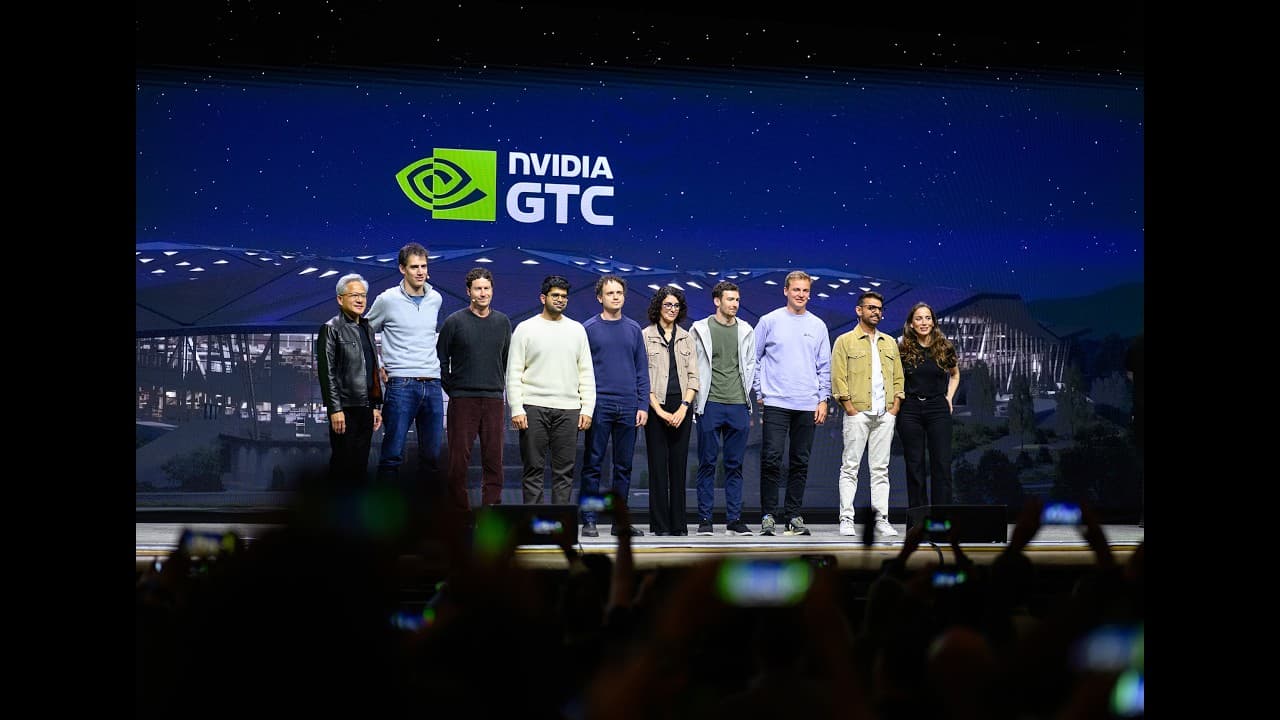
Everybody, welcome! Great to see all of you. I have a special treat for you. We have two sessions. We have so many great speakers for you. We broke it up into two sessions. Let's get right to it. I think we love a world where there's proprietary products, but we also we also need a world where, a whole bunch of companies and different industries... Read More
Key Insights
- Open and proprietary AI models are complementary technologies, not opposing choices. Proprietary models can function as polished products, while open models can serve as adaptable technology that companies transform into products for particular industries, domains, and operational requirements.
- A third type of AI company is emerging between foundation-model providers and application developers. These companies combine leading models accessed through APIs with models they develop themselves, then integrate both into specialized products designed for a particular vertical.
- Compound agents are systems that distribute complex workloads across multiple models. Different models contribute different strengths, allowing an agent to combine general reasoning, computer use, industry-specific intelligence, tools, and company-trained models when completing tasks that may last hours or days.
- AI is a complete system rather than an isolated model. Useful products include chips, inference infrastructure, orchestration software, tools, connectors, data access, and user-facing workflows, all of which can be optimized together to improve how models perform practical work.
- Open models can provide control, token efficiency, and cost efficiency. The panel rejects the assumption that openness must permanently trail proprietary capabilities, arguing that no fundamental technical distinction requires open models to remain behind the frontier.
- Pretraining provides memorization, generalization, and basic knowledge that supports later skill acquisition. The panel predicts that pretraining will represent a smaller portion of future training compute, while post-training will account for most model development as organizations create specialized capabilities.
- Specialist models are likely to produce much of AI’s practical value. Proprietary systems may remain excellent generalists, but they are unlikely to be the best specialists in every domain, making combinations of strong general and specialized capabilities especially useful.
- Reinforcement learning turns some capability improvements into economic allocation decisions. AlphaGo is presented as a 60 million parameter example of an agent that could keep learning with additional compute, suggesting similar approaches may eventually target coding, enterprise work, disease research, and fundamental scientific problems.
Install to Summarize YouTube Videos and Get Transcripts
Explore YouTube Video Summarizer or Get YouTube Transcript Extractor
Questions & Answers
Q: Why do open and proprietary AI models need to coexist?
Open and proprietary models serve different but complementary needs. Proprietary models can provide highly optimized general capabilities, orchestration, reasoning, and complete products. Open models can offer control, token efficiency, cost efficiency, and a foundation that companies adapt to particular domains. The panel therefore frames the industry as proprietary and open, with both model types contributing to broader systems rather than competing as mutually exclusive choices.
Q: What is a compound AI agent?
A compound AI agent is a system that assigns different parts of a complex workload to different models, tools, and sub-agents. It can use a general foundation model for some tasks and a company’s industry-specific models for others. By combining these capabilities, the overall agent can become more effective than any single model and can handle work lasting many hours or days.
Q: How does AI model orchestration simplify work for users?
AI model orchestration hides the complexity of choosing which model should perform each part of a task. A user delegates the desired outcome, while the orchestration system selects models, tools, file systems, connectors, clouds, and multimodal capabilities as needed. The panel compares sub-agents to musicians and models to instruments, with completed work representing the music produced by their coordinated operation.
Q: Why is AI described as a system rather than a model?
AI products depend on far more than model weights. The panel describes an end-to-end stack that includes chips, orchestration software, inference, tools, connectors, data access, and the product itself. Model companies optimize these components together, so purchasing access to a model effectively provides access to a larger system. Open approaches let other organizations optimize their own complete stacks for different requirements.
Q: Will open AI models always remain behind proprietary models?
The panel argues that open models are not fundamentally required to remain behind proprietary models. Any current capability gap is presented as an artifact of the industry’s present stage rather than a permanent feature. AI is described as fundamental knowledge infrastructure that tends toward openness, and the speakers expect equally capable open models to emerge alongside a flourishing ecosystem of powerful proprietary systems over the next few years.
Q: Why will post-training become more important than pretraining?
Pretraining gives a model memorization, generalization, basic knowledge, and the foundation needed to acquire skills. Post-training then develops the specialized capabilities required for useful work. The panel says pretraining represented about 90 percent of training compute two, three, or five years earlier, but predicts its future percentage will become small because most training activity will focus on post-training and specialization.
Q: Why are specialist AI models important for practical value?
Specialist models can be adapted to the data, context, terminology, and workflows of a particular domain. The panel suggests proprietary models may be the strongest generalists while remaining unlikely to be the best specialists everywhere. Since much practical value comes from specialized work, effective AI systems can combine a highly capable general model with domain-specific models that operate within an organization’s data and intended workflows.
Q: How could reinforcement learning affect science and enterprise work?
Reinforcement learning can allow an artificial agent to continue improving as more computing resources are allocated. The panel cites AlphaGo, a 60 million parameter network, as an early example and describes current applications in coding and agentic enterprise systems. It suggests that future decisions may concern whether society will fund enough computation to pursue disease research or fundamental scientific breakthroughs, making progress partly an economic choice.
Summary & Key Takeaways
-
Open and proprietary models are complementary parts of the emerging AI industry. Companies can combine API-based general models with their own domain-specific models, tools, data, and product expertise. This creates a third category between foundation-model providers and application companies, focused on building complete vertical products through sophisticated AI development and orchestration.
-
AI agents are evolving from simple model calls into compound systems capable of handling workloads lasting hours or days. These systems can distribute subtasks among models with different strengths, use tools and connectors, generate multimodal content, and operate across clouds. The intended experience is task delegation without requiring users to select individual models.
-
Future AI value will increasingly come from post-training, specialization, contextual integration, and reliable action. Pretraining supplies basic knowledge, while post-training develops useful skills. General proprietary models may remain strong generalists, but specialist models can serve particular domains more effectively. Open access to models, infrastructure, data, and research can broaden scientific participation.
Read in Other Languages (beta)
Share This Summary 📚
Summarize YouTube Videos and Get Video Transcripts with 1-Click
Try YouTube Summary with ChatGPT & Claude or YouTube Transcript Generator
Explore More Summaries from NVIDIA 📚


Summarize YouTube Videos and Get Video Transcripts with 1-Click
Try YouTube Summary with ChatGPT & Claude or YouTube Transcript Generator