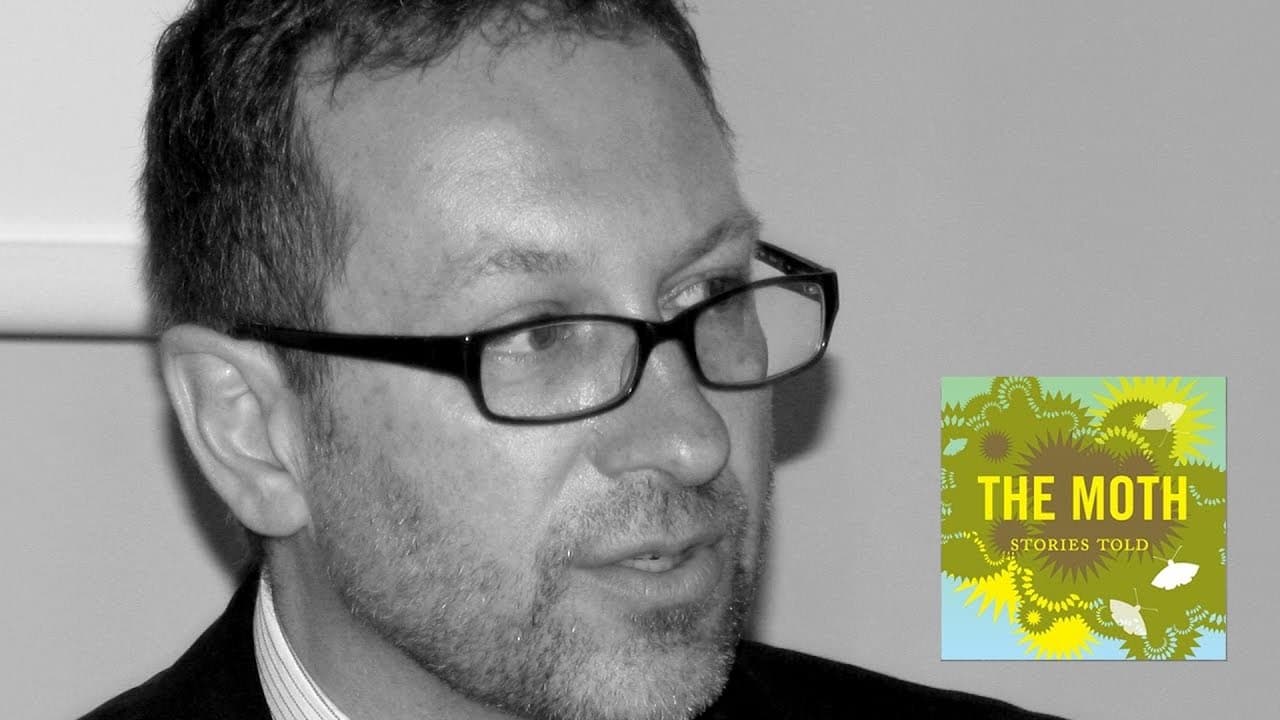
The Moth: The Imperfect Offering - Richard Matthew
TL;DR
Richard Matthew concludes that humanitarian work in war-torn countries remains necessary despite its risks and imperfections. After six armed people confront him in a Congo hotel, the social scientist questions whether his work is valuable and whether its dangers impose an irresponsible cost on his three young children. Encounters with uprooted families reaffirm his role in connecting acute needs with resources. Read on for how he weighs service against responsibility to his family.
Transcript
please welcome Richard Matthew thank you I was I was in a hotel in Goma which is in the Congo with a couple of Swiss friends of mine that people who have spent a lot of time working in that area and we're sitting having coffee and all of a sudden the door bursts open and six people come into the room and they're wearing bandanas over their face and... Read More
Key Insights
- 😂 Humanitarian work in war-torn countries involves risks and ethical considerations, particularly for individuals and their families.
- 💦 The needs of those uprooted by war and disaster are the most real and acute, requiring support from individuals carrying out humanitarian work.
- 💦 Humanitarian work, although imperfect, is important in bridging resources to areas with acute needs.
- 🦺 There is a constant struggle between personal safety and the responsibility to help others in conflict zones.
- 🥰 The validation and support from loved ones can have a profound impact on someone's commitment to humanitarian work.
- 💦 Balancing personal and professional lives can be challenging for individuals engaged in humanitarian work.
- 🫱 The experiences and stories of individuals affected by war can reaffirm the purpose and value of humanitarian efforts.
Install to Summarize YouTube Videos and Get Transcripts
Explore YouTube Video Summarizer or Get YouTube Transcript Extractor
Questions & Answers
Q: Why does Richard Matthew continue humanitarian work despite the risks?
Matthew believes people uprooted by war and disaster have real and acute needs. His encounters with people who have lost everything convince him that he can help bridge resources to places where support is needed.
Q: What happened to Richard Matthew at a hotel in the Congo?
Six people wearing face coverings and carrying weapons burst into the hotel room where Matthew and two Swiss friends were having coffee. They demanded to know why the visitors were in their country, and their voices grew louder until Congolese friends intervened and calmed the situation.
Q: What questions did the armed confrontation raise for Matthew?
He questioned how much he understood about the country and whether his work was valuable or merely meddling and making matters worse. He also began asking whether accepting such risks could impose a huge and irresponsible cost on his family.
Q: What kind of work does Richard Matthew do?
Matthew is a social scientist who studies the environment in war zones. His work examines whether drought can lead to conflict, how diamonds become embroiled in conflict, what happens to the environment during war, and how recovering countries can manage resources and new stresses such as climate change.
Q: Where does Matthew conduct his fieldwork?
He spends substantial time in war-torn countries in South Asia and Africa. He usually works with conservation organizations or UN agencies and has participated in many UN missions in sub-Saharan African countries.
Q: How did Matthew's five-year-old son react to his dangerous work?
His son asked whether Matthew could die while traveling far away. He then described dreaming that his father went to Africa, suffered something horrible, and never returned home, revealing that Matthew had not kept his work and family worlds as separate as he believed.
Q: What was Matthew's role on the UN mission in the Great Lakes region of Africa?
His role was to assess conditions in refugee camps. He traveled from one camp to another and interviewed people living there, including a young woman in a very small, hot dwelling with three children beside her.
Q: What risks had Matthew previously encountered in war zones?
Matthew had dealt with tropical diseases, unregulated traffic, and very young soldiers waving weapons. Although he felt prepared for those dangers, he had never experienced a group becoming so directly angry and increasingly agitated with him.
Summary & Key Takeaways
-
The speaker, a social scientist, recounts a harrowing experience of being confronted by armed individuals while doing humanitarian work in the Congo.
-
The incident prompts him to question the value and responsibility of his work, as well as the potential risks it poses to his family.
-
He shares stories of individuals affected by war and concludes that despite the imperfections and risks involved, his work is both important and necessary.
Read in Other Languages (beta)
Share This Summary 📚
Summarize YouTube Videos and Get Video Transcripts with 1-Click
Try YouTube Summary with ChatGPT & Claude or YouTube Transcript Generator
Explore More Summaries from World Science Festival 📚

Summarize YouTube Videos and Get Video Transcripts with 1-Click
Try YouTube Summary with ChatGPT & Claude or YouTube Transcript Generator