What Can NVIDIA’s New AI Do With Characters, Motion, and 3D Worlds?
TL;DR
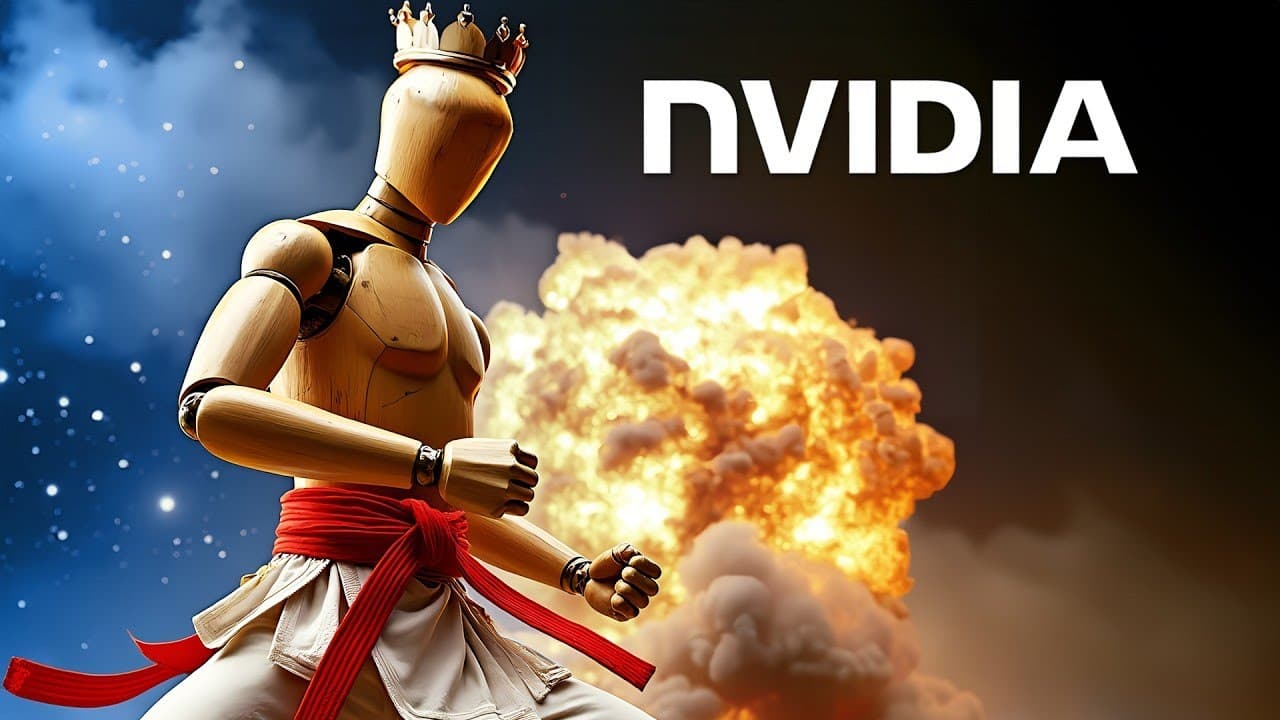
NVIDIA’s new AI technique can animate one virtual character across a wide range of tasks, including walking, sitting, cartwheels, dancing, and balancing on gravel. The broader research also demonstrates text-to-motion, 3D denoising that synthesizes shapes and materials, and a browser-based tool that generates playable 3D worlds on the fly. Read on to understand each capability and its current limitations.
Transcript
Today we will see a virtual character who thinks he’s king learning to do crazy things. Like this, and this. Just promise to not ask it to perform a cartwheel down the stairs, because…ouch. And we are also going to see what the heck this is. And then, this crazy world builder AI that you can try right now. And this problem is hard. Like, re... Read More
Key Insights
- 👶 A new AI technique enhances virtual character animation by enabling complex movements with realistic physics and behaviors.
- 💋 The ability to learn and adapt to new terrains marks a significant milestone for AI in animation.
- 💨 Text-to-motion introduces a user-friendly way to create animations from simple text inputs, expanding accessibility for creators.
- 👻 The denoising process in AI allows for the effective generation of 3D models with realistic surface qualities and materials.
- 💨 The integration of AI in world-building paves the way for dynamic and responsive virtual environments tailored to user specifications.
- 🏑 Future advancements could enable even more sophisticated applications, transforming various fields including gaming, education, and training simulations.
- 🌍 Real-time generation of 3D worlds challenges our perceptions of reality and simulation, creating unique interactive experiences.
Install to Summarize YouTube Videos and Get Transcripts
Explore YouTube Video Summarizer or Get YouTube Transcript Extractor
Questions & Answers
Q: What can NVIDIA’s new AI technique do with virtual characters?
It enables one virtual character to perform a wide range of tasks, including walking naturally, sitting, doing a cartwheel, dancing, and making a karate-like movement. The character can also pursue a target and maintain its balance on terrain such as gravel.
Q: How is NVIDIA’s technique different from the previous reinforcement-learning approach?
The previous technique shown in the transcript performs locomotion well but is limited when asked to do something beyond actions such as running or jumping. NVIDIA’s new technique gives one AI a wider repertoire of motions and lets it handle new terrain.
Q: Can the virtual character adapt to terrain it was not trained on?
Yes. The character was initially trained on a flat surface to reach a target location as quickly as possible, but it later handled new terrain such as gravel. Its movement there was imperfect, yet it could still maintain its balance.
Q: What is text-to-motion?
Text-to-motion lets a user write the movement they want and receive a corresponding character animation. In the demonstration, the broader motion system supports actions ranging from sitting and dancing to performing a cartwheel.
Q: How does denoising generate a 3D model?
The process begins with noise in 3D and progressively removes that noise until a 3D model emerges. The transcript compares this with text-to-image systems, which start from noise and gradually produce an image.
Q: Does the 3D generation technique create materials as well as shapes?
Yes. It performs both shape generation and material synthesis, so the resulting models have their own materials. When placed in a virtual environment, those materials respond to lighting and can display specular highlights.
Q: How does the AI world builder create a playable 3D environment?
It can begin with an input image of a place and generate more of the world on the fly as the user moves around. The resulting playable 3D world can resemble a real place, a painting, or a Minecraft-style environment.
Q: Can people try the AI world-building tool now?
Yes. The transcript says the tool can be tried in a browser through the link in the video description. Users can build a world and choose from many visual styles, although the featured techniques are still research and are not currently perfect.
Summary & Key Takeaways
-
The content discusses a new AI technique enabling a virtual character to perform various complex movements, including walking, sitting, and even dancing, displaying significant advancements in computer animation.
-
The innovative approach allows AI to not only adapt to new tasks but also to handle different terrains and movement styles, showcasing a level of realism previously unachievable in animations.
-
A focus on text-to-motion and text-to-3D technologies emphasizes the exciting potential for creating fully interactive virtual worlds based on simple textual inputs, revolutionizing content creation.
Read in Other Languages (beta)
Share This Summary 📚
Summarize YouTube Videos and Get Video Transcripts with 1-Click
Try YouTube Summary with ChatGPT & Claude or YouTube Transcript Generator
Explore More Summaries from Two Minute Papers 📚




Summarize YouTube Videos and Get Video Transcripts with 1-Click
Try YouTube Summary with ChatGPT & Claude or YouTube Transcript Generator