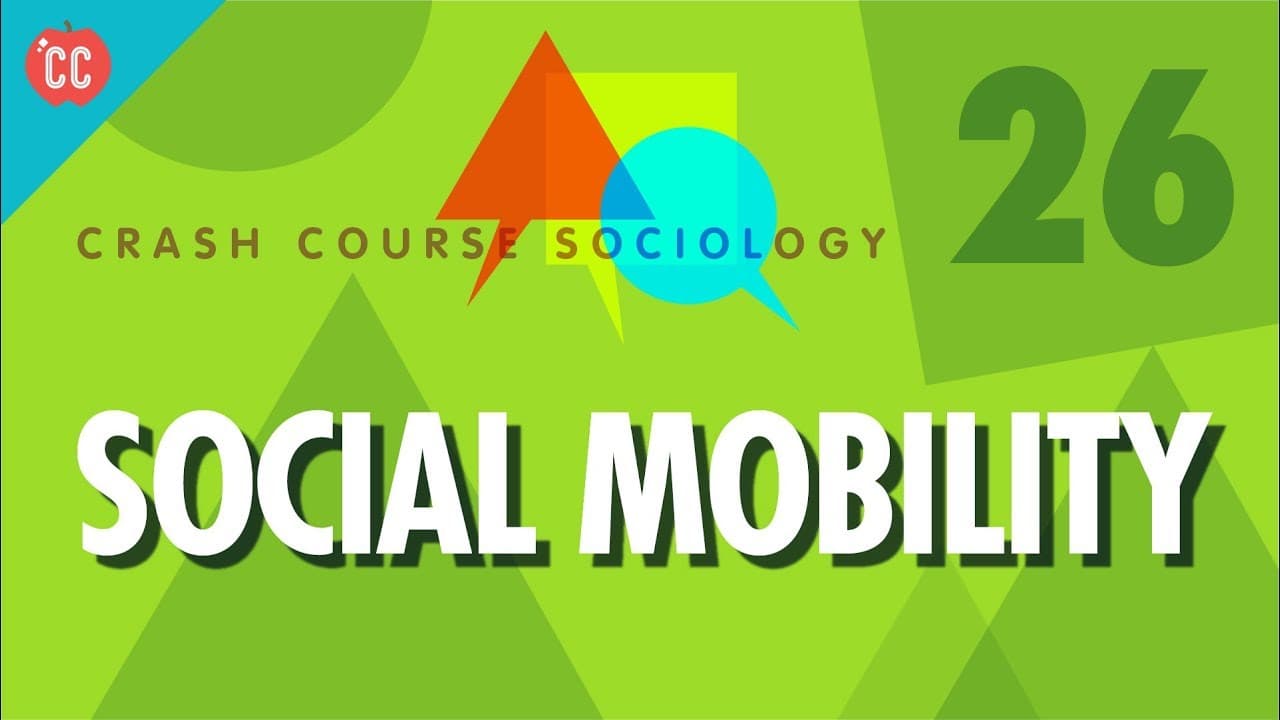
What Is Social Mobility and Why Is It Declining in the US?
TL;DR
Social mobility in the US is declining, with current trends showing that about one-third of men remain in the same occupational status as their fathers. Since the 1970s, income growth has largely been concentrated at the top, leading to increased inequality and stagnant opportunities for many, particularly among Black Americans and women. Factors like education, race, and marital status significantly influence one's ability to ascend the social ladder.
Transcript
Everyone loves a good rags to riches story. Books and movies and music are full of this idea. Whether it’s Gatsby turning himself from a nobody to a somebody, or Drake starting from the bottom, there’s something appealing about the idea that anyone can make it, if they try hard enough. And more than maybe anywhere else, that idea is embraced in the... Read More
Key Insights
- Social mobility can be intragenerational, within a person's lifetime, or intergenerational, across generations, impacting economic and social status.
- Absolute mobility refers to changes in income or status over time, while relative mobility compares an individual's status to peers.
- A third of US men remain in the same occupational status as their fathers, highlighting limited upward mobility.
- Since the 1970s, income growth has been concentrated at the top, leading to stagnation for the majority and declining absolute mobility.
- Race significantly affects mobility, with Black Americans experiencing more downward mobility and fewer opportunities for upward movement compared to White Americans.
- Gender also plays a role, with women experiencing more absolute mobility than in the past, yet still facing barriers, particularly if born into lower social classes.
- Marriage and dual incomes significantly enhance social mobility, as married couples tend to accumulate wealth faster than singles.
- Economic growth has not equally benefited all groups, with less-educated workers facing declining opportunities and increased inequality.
Install to Summarize YouTube Videos and Get Transcripts
Explore YouTube Video Summarizer or Get YouTube Transcript Extractor
Questions & Answers
Q: What types of social mobility are discussed in the video?
The video discusses intragenerational mobility, which refers to changes in an individual's social status during their lifetime, and intergenerational mobility, which involves changes across generations. It also covers absolute mobility, which is the overall change in income or status, and relative mobility, which compares an individual's status to their peers.
Q: How has social mobility in the US changed over time?
Social mobility in the US has shown a long-term upward trend, with improvements in living standards and income. However, since the 1970s, growth has been concentrated at the top of the income distribution, leading to stagnation for the majority and a decline in absolute mobility. This has resulted in fewer opportunities for upward movement for many Americans.
Q: How does race affect social mobility in the US?
Race significantly affects social mobility, with Black Americans experiencing less upward mobility and more downward mobility compared to White Americans. Black Americans born in the bottom income quintile are more likely to remain there and face higher rates of downward mobility, exacerbating inequality and limiting opportunities for economic advancement.
Q: What role does gender play in social mobility?
Gender plays a significant role in social mobility, with women generally experiencing more absolute mobility than in the past, as 85% earn higher wages than their mothers. However, women born into lower social classes are more likely to remain there compared to men and face more downward mobility, partly due to being more likely to head single-parent households.
Q: How does marriage influence social mobility?
Marriage positively influences social mobility, as married couples benefit from dual incomes, allowing them to accumulate wealth faster than singles. This financial advantage makes it easier for married individuals to ascend the social ladder, contributing to greater economic stability and opportunities for upward mobility.
Q: What challenges do less-educated workers face in terms of social mobility?
Less-educated workers face significant challenges in social mobility due to the decline of stable, well-paying jobs in industries like manufacturing. The available jobs tend to be low-paying service industry positions, contributing to lower absolute mobility. This, combined with rising costs of necessities, limits their opportunities for economic advancement and upward mobility.
Q: How has income inequality impacted social mobility?
Income inequality has negatively impacted social mobility by concentrating income growth at the top, leading to stagnation for the majority. This widening gap makes it harder for individuals, particularly those in the middle and lower income distributions, to climb the social ladder, as economic gains are not equally distributed across society.
Q: What are the implications of the findings from the Baltimore study on social mobility?
The Baltimore study by sociologists Karl Alexander and Doris Entwisle found that poverty has long-lasting effects on individuals' lives, with low socioeconomic status (SES) children facing significant barriers to upward mobility. The study highlights the persistent impact of early life circumstances on education and employment outcomes, with African American kids facing greater challenges compared to their White peers, underscoring the role of race and SES in social mobility.
Summary & Key Takeaways
-
The video explores social mobility, distinguishing between intragenerational and intergenerational mobility, and between absolute and relative mobility. It highlights trends showing declining absolute mobility in the US, particularly since the 1970s, due to income growth being concentrated at the top.
-
Race and gender significantly influence social mobility, with Black Americans and women facing more barriers. Black Americans experience higher rates of downward mobility, while women, despite gains, remain more likely to stay in lower classes if born there.
-
Marriage enhances social mobility due to combined incomes, and economic growth has not benefitted all equally. Less-educated workers face declining opportunities, and income inequality is increasing, making social mobility more challenging.
Read in Other Languages (beta)
Share This Summary 📚
Summarize YouTube Videos and Get Video Transcripts with 1-Click
Try YouTube Summary with ChatGPT & Claude or YouTube Transcript Generator
Explore More Summaries from CrashCourse 📚





Summarize YouTube Videos and Get Video Transcripts with 1-Click
Try YouTube Summary with ChatGPT & Claude or YouTube Transcript Generator