How to Plan Software Development Projects Effectively
TL;DR
To plan software development projects effectively, adopt an agile approach by focusing on delivering one feature at a time based on user needs, rather than exhaustive upfront planning. This method allows for continuous user feedback, which helps adjust and improve the product iteratively while avoiding the pitfalls of over-engineering and unnecessary complexity.
Transcript
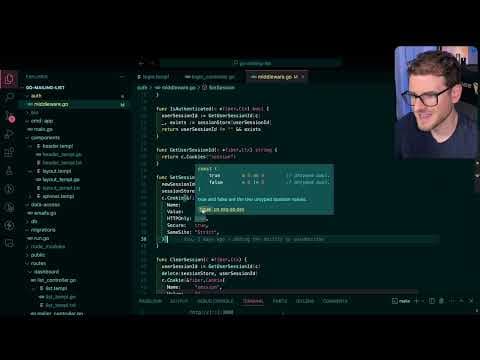
how's it going everyone so I want to have a little discussion about how do you build complex software how do you build out applications and I want to give you my thought process there's a lot of different ways that you can do this so for what I noticed in the industry there's like different mindsets of how you can potentially build out applications... Read More
Key Insights
- 🥺 Traditional development approaches often prioritize extensive upfront planning, which can lead to irrelevant designs and wasted resources.
- 💦 An agile development mindset encourages incremental work that focuses on user needs and real-time feedback.
- ❓ Avoiding over-engineering prevents the creation of complex and hard-to-maintain codebases.
- 👤 Releasing minimal features for user testing helps validate ideas and ensures usability.
- 👨💻 Developers should approach coding iteratively, focusing on one feature at a time for effective user engagement.
- 👤 User feedback can guide development, reducing the risk of unnecessary feature implementation.
- 👨💻 Quality coding practices, such as tests and clean code, enable developers to implement features efficiently while ensuring maintainability.
Install to Summarize YouTube Videos and Get Transcripts
Explore YouTube Video Summarizer or Get YouTube Transcript Extractor
Questions & Answers
Q: What is the main problem with using extensive UML diagrams in software development?
Extensive UML diagrams lead to a waterfall approach that often results in wasted time and effort. Developers may spend weeks creating detailed designs that do not align with user needs. By focusing on immediate requirements instead, developers can iterate quickly and adjust their work based on user feedback.
Q: How does the agile mindset contribute to effective software development?
The agile mindset prioritizes developing software in small, iterative cycles based on user feedback. Instead of discouraging experimentation, it encourages developers to release features incrementally, allowing them to gauge user responses and adjust features accordingly, thereby enhancing functionality and user satisfaction.
Q: Why should developers refrain from over-engineering their code?
Over-engineering can create complex systems that are difficult to maintain and adapt. By focusing on essential features and avoiding speculative coding for "what-if" scenarios, developers can create simpler, more efficient codebases that can be easily modified as needed based on actual user requirements.
Q: What role does user feedback play in the software development process?
User feedback is crucial for guiding the development process. By releasing functional prototypes to users, developers can receive insights on what features are essential and which are unnecessary. This reduces the risk of developing unwanted features and ensures that the final product better meets user expectations.
Q: How should developers handle the iterative nature of coding?
Developers should embrace an iterative coding process by working on a single feature at a time. After implementing a feature, they should gather user feedback and adjust the feature or add new functionality based on that input, ensuring the development stays aligned with user needs throughout its lifecycle.
Q: Why is it not necessary to plan every detail of a software application upfront?
Planning every detail can lead to rigidity in the development process and waste resources on features that may not be needed. Instead, focusing on fundamental functionality allows developers to adapt and evolve the software based on real-world use and user feedback, enhancing its relevance and usability.
Q: How can developers ensure the quality of their code without extensive planning?
Developers can maintain code quality through well-established coding standards and practices, such as writing unit tests and using clean coding principles. This allows them to implement features quickly while still ensuring maintainability, enabling easier updates and modifications in the future.
Summary & Key Takeaways
-
The author critiques traditional waterfall approaches in software development that emphasize extensive upfront planning, such as UML diagrams, which can lead to wasted effort in irrelevant designs.
-
Emphasizing an agile mindset, the author advocates for building software incrementally by focusing on necessary features to meet user needs rather than trying to predict future requirements through over-engineering.
-
Continuous user feedback is essential; releasing minimal features allows developers to adjust and improve based on actual user interactions and preferences.
Read in Other Languages (beta)
Share This Summary 📚
Summarize YouTube Videos and Get Video Transcripts with 1-Click
Try YouTube Summary with ChatGPT & Claude or YouTube Transcript Generator
Explore More Summaries from Web Dev Cody 📚

Summarize YouTube Videos and Get Video Transcripts with 1-Click
Try YouTube Summary with ChatGPT & Claude or YouTube Transcript Generator