How to Start Reading Classics and Why It Matters
TL;DR
Classics are worth reading because their insights into love, mortality, suffering, culture, and other enduring human concerns remain meaningful across generations. Start by treating them as works to explore rather than assignments to conquer, accepting initial confusion and leaving room for interpretation, discussion, and rereading as your understanding and life experience develop.
Transcript
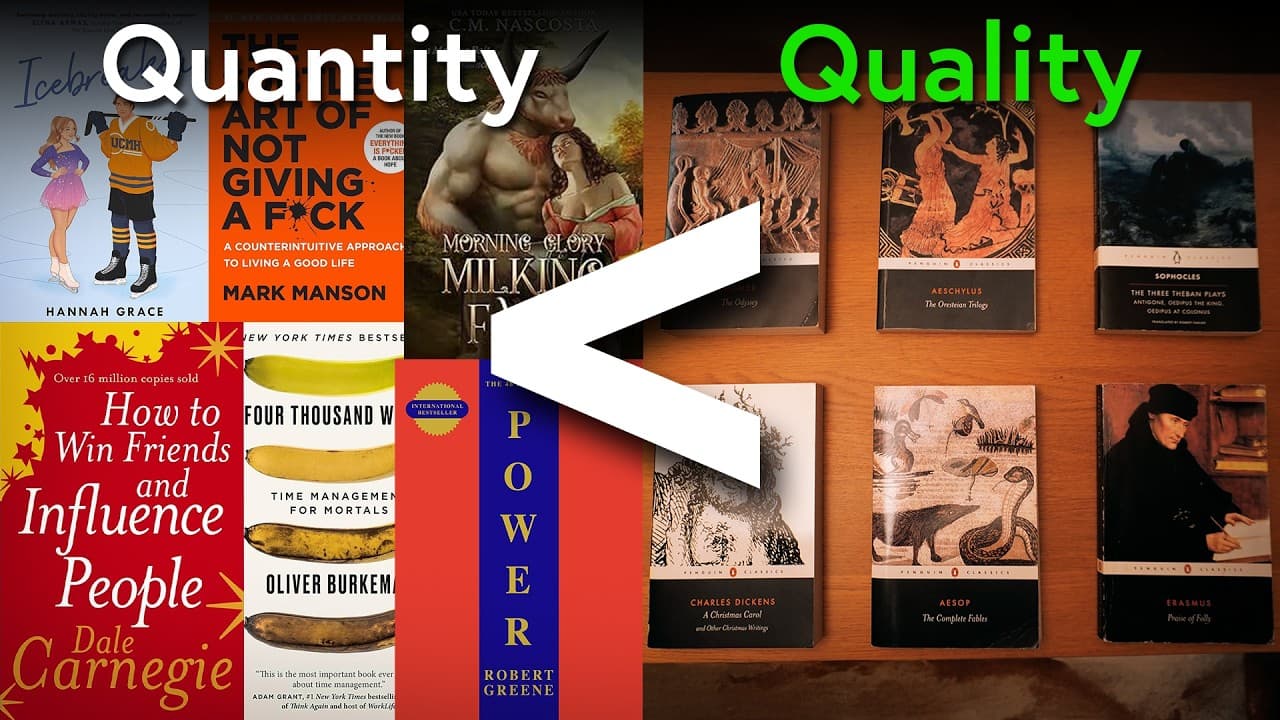
Modern literature is a hot mess, and we need a return to the classics. I mean, half of what women read is basically porn, and men are stuck with the same old self-help slot. You even see it in bookshops. Publishers recycle the same old [ __ ] just for the sake of trends or sales. And they're all award-winning, too. Whatever that means. Okay, it's h... Read More
Key Insights
- A classic is a work that has remained relevant despite its age, not a work that matters simply because it is old. Time reveals classics by showing which books continue to feel powerful, fresh, interesting, and insightful across generations.
- The central themes of classics are enduring parts of the human condition, including love, mortality, suffering, family conflict, heartbreak, meaning, and political tension. These concerns allow works from distant times and places to resonate with readers who live in very different circumstances.
- Classics reveal history through an intimate human perspective. They show not only what happened in an earlier society, but also how individuals thought, felt, struggled, and understood their surroundings, bringing readers closer to the lived experience behind historical change.
- Classic works have helped shape cultures, languages, customs, laws, morals, political systems, and ideas of heroism. Reading them strengthens awareness of cultural heritage and shows that many practices and assumptions of modern life developed from earlier intellectual and literary traditions.
- The intellectual value of classics comes from their resistance to easy summaries. Their themes can be indirect, ambiguous, and open to interpretation, requiring readers to examine the text, think independently, and reach conclusions influenced by their own knowledge and experiences.
- Classics generate continuing cultural discourse through study, criticism, translation, parody, celebration, and disagreement. A reader does not encounter only an isolated book, but also a work surrounded by accumulated interpretations and traces left across cultures, languages, and customs.
- Rereading a classic can reveal meanings missed during the first encounter. As readers gain knowledge, maturity, and life experience, their interpretations change, allowing the work to offer different insights without exhausting everything it has to say.
- Classics can provide both refuge and practical vision for confronting life. Because human beings have faced similar struggles for thousands of years, older works can help readers think about worthwhile goals, sound values, death, relationships, direction, and social conflict.
Install to Summarize YouTube Videos and Get Transcripts
Explore YouTube Video Summarizer or Get YouTube Transcript Extractor
Questions & Answers
Q: What makes a book a classic?
A book becomes a classic by remaining relevant, interesting, and insightful despite its age. Such a work usually expresses enduring truths about the human condition with thematic richness, beauty, and refinement. Age alone is insufficient. Time instead reveals whether a book continues to engage readers, generate discussion, and speak meaningfully across different generations, societies, and places.
Q: Do classics have to be old books?
Classics are not classics merely because they are old, although surviving over time helps establish their status. A recently published book may eventually be recognized as a modern classic, but many contemporary works will fade from attention. The small number that remain widely read and meaningful can gradually acquire classic status as time demonstrates their lasting relevance and quality.
Q: Why should people read classic literature?
People should read classics because these works combine enduring human insight, historical perspective, intellectual challenge, cultural influence, and literary quality. They address recurring experiences such as love, suffering, mortality, heartbreak, and political tension. They can also help readers understand their heritage, think independently, navigate difficult parts of life, and encounter books that have survived time's filtering process.
Q: How do classics help readers understand history?
Classics provide an intimate view of the past by showing how people thought, felt, and experienced their societies. A conventional history can explain that a major change occurred, while a classic work can place the reader beside an individual living through cultural or personal struggle. Literature therefore adds a vivid human lens to historical facts and social conditions.
Q: How have classics influenced modern culture?
Classics have shaped the cultures, languages, customs, laws, morals, political ideas, and literary models inherited by modern societies. Their influence persists even when people do not consciously recognize its source. Reading these works helps reveal where familiar assumptions and institutions came from, while creating a stronger connection to cultural heritage, identity, preservation, and measured improvement.
Q: Why are classic books intellectually challenging?
Classic books are intellectually challenging because they rarely reduce their ideas to explicit lists or simple conclusions. Their themes may be hidden, ambiguous, or open to several interpretations, so readers must examine the work and think for themselves. Different prejudices, experiences, and prior knowledge can produce different readings, which helps the books generate continuing criticism, analysis, debate, and celebration.
Q: Why should a classic book be reread?
A classic should be reread because one encounter rarely exhausts everything it can communicate. The first reading may feel confusing, but later readings can uncover overlooked themes and details. As a reader grows in knowledge, maturity, and experience, the same book can appear different and disclose new insights, creating the sense that more substance remains to be discovered.
Q: How can a beginner approach reading the classics?
A beginner can approach classics by accepting that the field is large and that some works are genuinely difficult. Initial confusion should not be treated as failure, since classics often require interpretation and reveal more through sustained engagement and rereading. The goal is to explore the work, think independently, and allow understanding to deepen as knowledge and life experience accumulate.
Summary & Key Takeaways
-
A classic is not valuable merely because it is old. It earns its status by remaining powerful, interesting, and insightful long after publication. Its themes address enduring aspects of the human condition, while time acts as a filter that reveals which works continue to matter across different societies and generations.
-
Classic works provide intimate access to earlier societies, showing not only historical events but also how people thought, struggled, and understood their world. They also illuminate the foundations of present cultures, customs, laws, morals, political ideas, and literary models, helping readers recognize the inherited influences that modern life often takes for granted.
-
Reading classics requires intellectual participation because their meanings are rarely reduced to simple takeaways. Readers must interpret themes, tolerate uncertainty, and engage with competing perspectives. These books reward rereading because changing knowledge, experiences, and maturity reveal previously missed ideas, making the same work feel different at successive stages of life.
Read in Other Languages (beta)
Share This Summary 📚
Summarize YouTube Videos and Get Video Transcripts with 1-Click
Try YouTube Summary with ChatGPT & Claude or YouTube Transcript Generator
Explore More Summaries from Odysseas 📚

Summarize YouTube Videos and Get Video Transcripts with 1-Click
Try YouTube Summary with ChatGPT & Claude or YouTube Transcript Generator